
This is a collaborative post.
Do you enjoy the convenience of eating oven chips, or do you prefer to pop down the chippy or prepare your own chips ‘from scratch?’ According to the National Food Survey, chip sales tripled in size from 1974 to 2014, with oven chips (including traditional oven chips alongside more innovative options like salt and pepper chips or cajun-spiced oven chips) taking preference over a trip to the chippy.
Oven chip companies worldwide are processing potatoes at an astonishing rate to keep up with the demand. A regular chip factory produces thousands of chips every hour and it’s estimated that one in three chips everywhere is cooked in a McCain Foods factory – one of the world’s largest manufacturers of potato products.
So, here’s how the humble oven chip makes its way from field to plate.

Selecting a field
Firstly, potato fields are carefully chosen to make sure they’re suitable for the chip-making process. The structure of the soil is examined closely to determine the right variety of potato to plant, as different potato types have varying tolerances for either sand, clay or silt-based soils. The shape and contours in potential fields are also scrutinised, as this impacts on production efficiency and environmental impact.
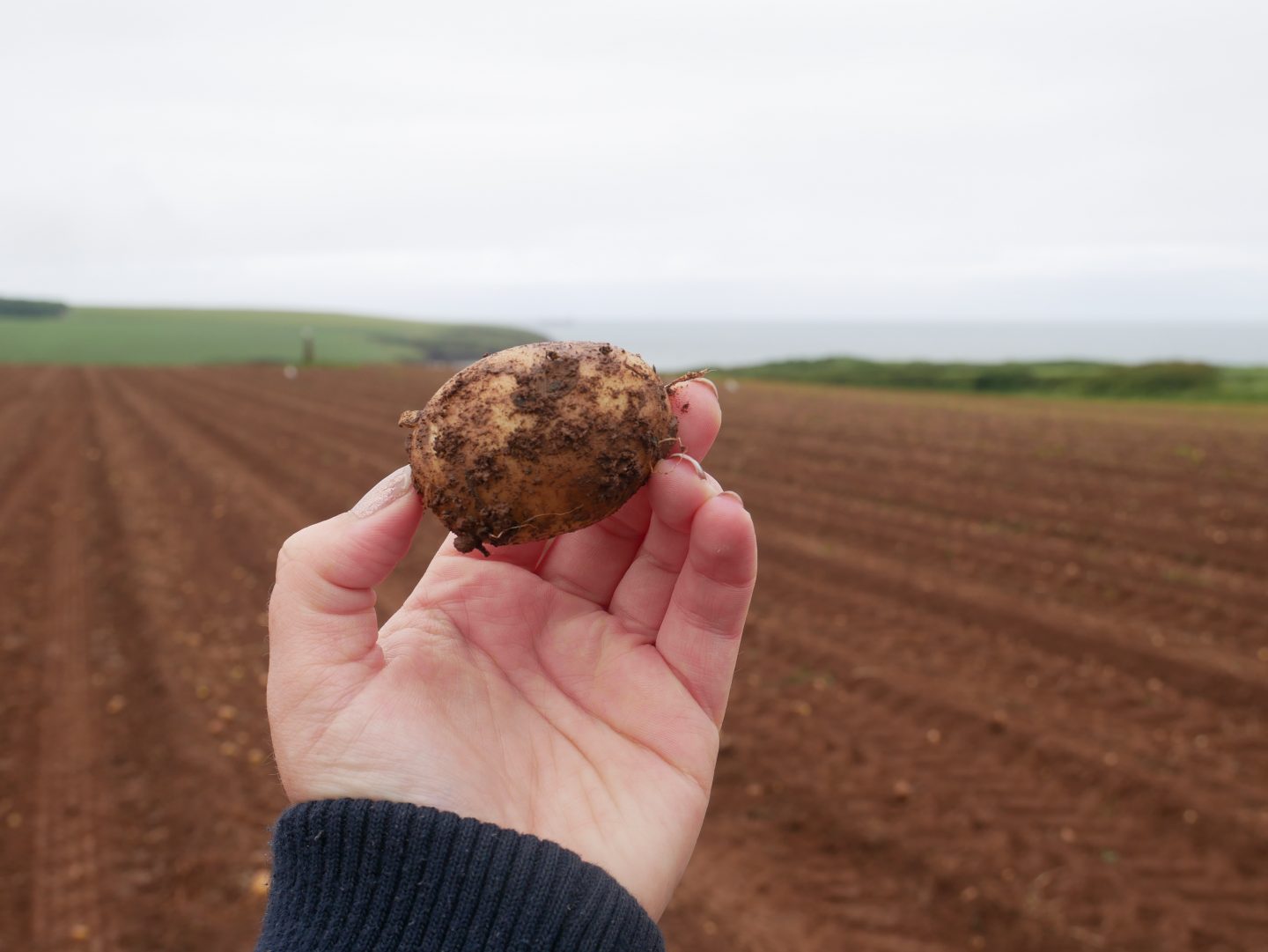
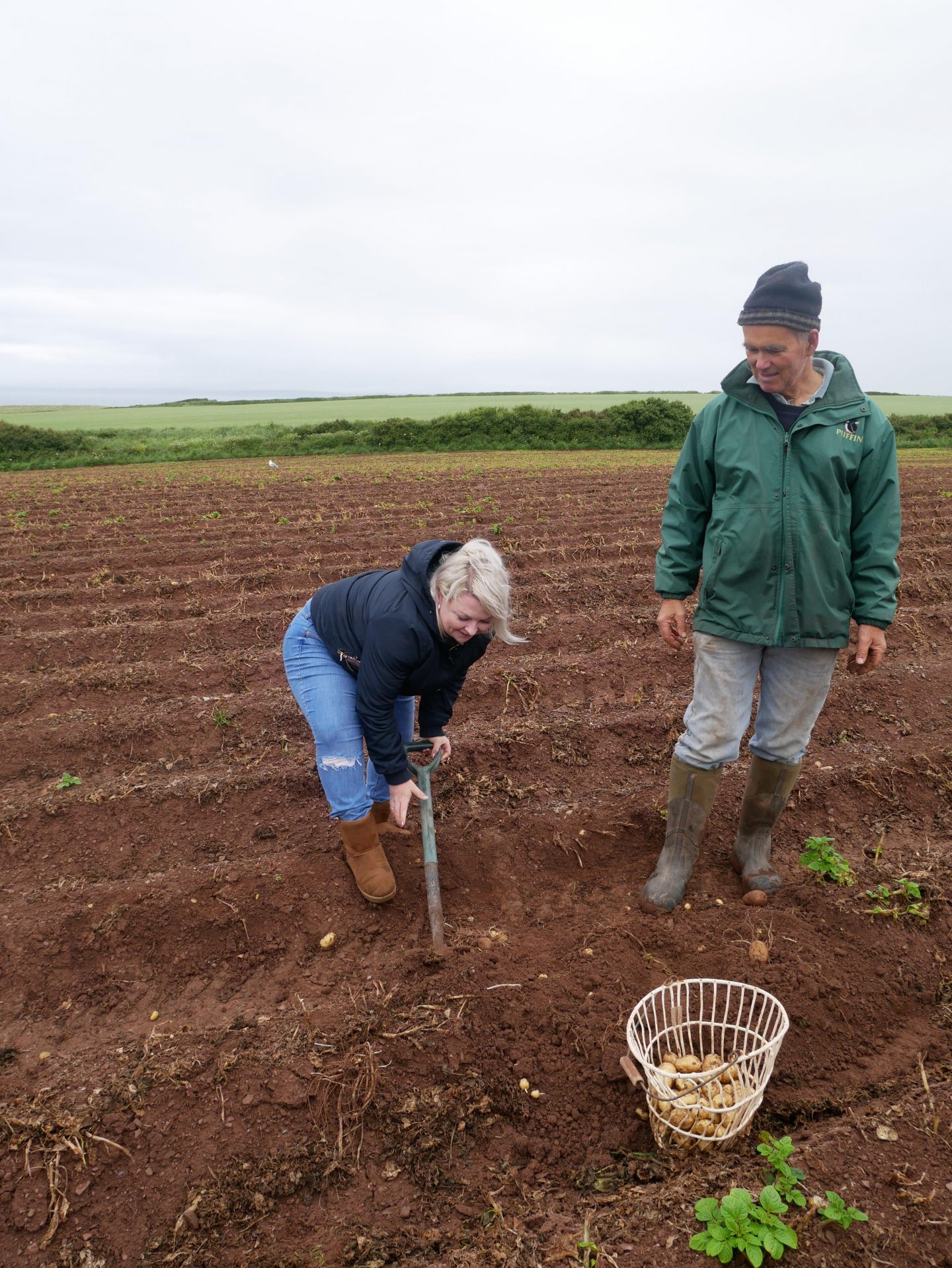
I was able to see first-hand how the quality and type of soil can have an impact on the variety of potatoes that ought to be grown when I visited Windmill Farm in Haverfordwest, Pembrokeshire as part of a press trip with Food and Drink Wales last year. Windmill Farm grows two types of Pembrokeshire Early potatoes – Maris Peer and Lady Cristal. These potatoes grow well in the mild climates and red sandstone soil common to Pembrokeshire.
socialpug_tweet tweet="How much do you know about the journey of oven chips, from field to plate? Find out in @TheRareWelshBit's post"]Seed stock selection
This next process in the chip-making process is important to ensure the highest-possible standards of crop health are sustained.
Seed is selected from growers across the UK. Manufacturers often age the seeds to ensure consistency. This involves growing a small, tough sprout from the seed potato. This then appears from the ground sooner and captures more sunlight across the season, resulting in an earlier-matured and more consistent crop.
Soil testing
Before any potatoes are planted, the ground is tested extensively to determine the nutritional content of the soil. This helps to inform the fertiliser regime, with nitrogen, phosphorus and potassium being the key components that control a plant’s growth.
To get the best-quality potato from a field, manufacturers need to carefully tailor their crop nutrition through their choice of fertiliser and application rates. Read more about soil quality on the Soil Association website.
Planting
Planting often takes place between March and May, although this is dependent on the season. During the planting process, the seed is handled with care in order to guarantee the best possible planting conditions.
It’s vital the seed is planted into a well-prepared and de-stoned seed bed, preferably one that can be dried and warmed by the spring sunshine. This gives the plants the best chance of producing high-yielding, top-quality crops when autumn rolls around.
The planting process is further controlled through the use of satellite-guidance technologies to encourage evenly sized crops to grow across the field.
Harvesting
Most manufacturers harvest their potatoes between July (when the earliest varieties are dug up and eaten) to October (when later varieties are placed into storage for the subsequent year).
As potatoes are such delicate crops, it’s imperative to be gentle throughout the harvesting process. This is to reduce the risk of damage caused between digging them from the ground and placing them into storage.
Delivery
After the potatoes are picked, they’re sold to a chip company. Before this, they’re taken to a plant for weighing. The grower is paid for the number of tonnes brought in. A sample is then taken from every load in order to grade the potatoes for quality and colour. Each load must meet tight quality standards, otherwise the entire load could be rejected.
Storage
Next, the potatoes are whisked off to storage sheds. To get rid of any stones that may have been accidentally fallen into the mix during harvesting, the spuds are sluiced in a water rock remover.
The potatoes are then stored in temperature-controlled environments to prevent the starch from turning into sugar and destroying the potato. Temperature control also regulates the presence of disease and controls sprout growth. Potatoes can be stored this way for roughly four months.
Vigorous testing
Field tests are carried out to assess yield and storage potential of the potatoes, together with other important factors like fry colour, dry matter, potential diseases and defects.
Bruise tests are performed while crops are harvested to make sure machines are erected correctly and damage risk is reduced.
Once again, the spuds are shunted into a rock remover, then a washer, a length and size grader and, lastly, into high-pressure steam peelers.
Loosened peel is often left stuck on the potatoes, even after the previous processes have been carried out. So, to remove the peel, the potatoes are placed onto a chain of lengthy, curved brushes. The unwanted peel is then fed to livestock.
Chip production
Finally, the potatoes are processed into the finished product. Once the potatoes arrive at the factories after being quality checked, the crops are washed and sorted by size.
The skins are removed and the potatoes are sliced into various sizes. However, sun or wind-burnt spuds or those with serious defects aren’t permitted to enter the processing area.
The next step is to shift the potatoes to the massive water-filled holding tanks. The spuds then move along a conveyor belt to a slicing machine. This dexterous piece of kit features two razor-sharp blades – one for crinkle cut and one for straight.
Know how straight cuts are given their square shape? Firstly, the spuds are propelled through a water-gun-like piece of apparatus. Then, a cross-hatch of knives slices them perfectly, giving them their well-known ‘straight-cut’ appearance.
Once the tatties are sliced into strips, there are usually quite a lot of leftovers. These remnants aren’t the right size to send out to stores, as they’re often too short or too small. Instead, they’ll be used in other potato products, like hash browns.
Blanching
The chips are taken to a vat filled with vegetable oil (a blancher) that bubbles away at a high temperature, cooking them to perfection.
Next up, they go into a fryer and are par-fried for a few minutes, depending on the variety of potato.
The potato strips are then transported to a vibrating conveyor. It’s important to remove any excess cooking oil, so they’re shaken forcefully. After this, they’re dispatched to the freezer where they’re stored for roughly 20 minutes.

Packaging
Now, it’s time for the chips to be packaged up. This final process involves a packaging machine that weighs set batches of chips, before sorting them into polythene bags. This nifty machine then folds, seals and cuts the bag from the roll.
The bags of chips are carted into cardboard boxes and kept in chilled rooms before being delivered to warehouses throughout the country. Whenever a store wants oven chips, they simply place an order with the warehouse to receive their shipment.
And there you have it – the story of making oven chips. As you can see, it’s quite the process. So, next time you’re munching on a plate of golden brown oven chips, remember there’s more to these much-loved potato treats than meets the eye!
socialpug_tweet tweet="Follow the journey of an oven chip in @TheRareWelshBit's insightful post."]Do you eat oven chips or do you prefer to prepare your own chips ‘from scratch’? Share your thoughts in the comment box below.
This is a collaborative post.
So much more goes into getting food to our platesxl than many of us imagine.
I was really surprised at how much work goes into making an oven chip too!
Wow, what a journey that a potato goes on to become a chip! We tend to just buy the extra special supermarket chips (much tastier and chunkier!), but I do love chip shop chips too!
I know, I was shocked too! I usually make my own chips but I love chippy chips too!
I do like a good chip and you certainly can’t beat homemade 🙂
I agree – my Mum’s homemade chips are the best, in fact!
I have to admit my freezer is full of frozen chips and potatoes, they are just too convenient!
Haha, I try not to buy them otherwise I just get too tempted.
I never knew there were that many steps to making good chips! Now I’ll appreciate mine even more! Haha!
Me neither. It’s surprising the journey those chips go on, haha.
Wow that’s a long process for a chip. I usually tend to make my own chips as opposed to buying oven ones x
Me too, I love homemade chips and they’re much healthier as well.
Great post Kacie, especially because I love potatoes and chips in general! It’s so interesting to see the process detailed like this, it really makes you think!
Thanks Lisa, glad you found the post informative!
What an interesting day out, would never have considered how chips are made
Yes, the time I spent on Windmill Farm was really interesting and I never knew how much went into making a simple oven chip either!
i love making my own from scratch, i find they taste so much better than frozen plus i can cut them to my required size
Me too, nothing like a good homemade chunky chip!