
While this is not a sponsored post, the products from Pembrokeshire Beach Food Co. featured in this blog post were provided on a complimentary basis (with no obligation to write this blog post).
With the Pembrokeshire Beach Food Co. spearheading the launch of National Laverbread Day on April 14th, there couldn’t be a better time to discover the Welsh delicacy of Laverbread (laver seaweed).

Named after the Welsh term, “bara lawr”, Welsh Laverbread is a traditional Welsh delicacy produced using laver seaweed, sustainably foraged from the south-west Wales coastline.
Awarded European Protected Designation of Origin (PDO) status in 2017, the unique taste and appearance of Welsh Laverbread results from the cleanliness and temperature of the sea water, and the method by which it is produced, making it a characteristic of its origin.
Originally, Laverbread hails from Pembrokeshire, but it can also be found growing in the Gower Peninsula in Swansea.
After harvesting, the laver is boiled for around 10 hours, before being minced or pureed into a dark greenish-black, viscid substance. While it may not look or sound overly appealing, many people find that the marine, slightly salty taste tends to grow on them (yes, really!)
If the unsightly appearance or fishy flavour of Welsh Laverbread doesn’t exactly have you dashing to the shops to get your hands on a jar, perhaps its numerous health benefits will. Not only is laver low in calories and rich in protein, but it also contains iodine, alongside a range of vitamins.

National Laverbread Day
To celebrate and raise awareness of Welsh Laverbread, the Pembrokeshire Beach Food Co – headed up by Jonathan Williams – is calling for the launch of a national day dedicated to the traditional Welsh delicacy, on April 14th.
Why April 14th? Well, the date coincides with the time when the Japanese celebrate the ‘Mother of the Sea Day’ in honour of Kathleen Mary Drew-Baker, whose research into porphyria seaweed helped to transform the Japanese nori (dried laver) industry.
Where to buy Laverbread
Traditionally, Laverbread is sold in tubs or jars by fishmongers at fresh produce markets around south-west Wales. Previously, I’ve bought it in Swansea Market and Cardiff Market.
However, Laverbread can also be sourced online from the Pembrokeshire Beach Food Co., alongside a variety of Laverbread and other seaweed products, from fresh, frozen and tinned Laverbread and dried Laverbread flakes, to more creative options like Kelpchup (Seaweed Ketchup), Seaweed Pesto, and Barti Ddu – a seaweed-infused Caribbean rum (previously featured in my three-course Welsh dinner menu).
Similarly, you can also buy Welsh Laverbread online from Swansea-based Selwyn’s Seafoods, who also sell cooked cockles and seaweed sacks.
Although Parson’s Laverbread (sold in 120g tins) was previously sold in various supermarkets, it’s now unavailable to buy at all the stores I’ve checked at, including online. However, it is available to buy by the case from the Parson’s Pickles website, and by the tin on the Pembrokeshire Beach Food Co. website.
Traditional Laverbread recipes
Traditionally, the Welsh like to eat Laverbread raw, spread onto hot toast, or mixed with rolled oats to form flat patties known as ‘Lavercakes’, which are fried in butter or bacon fat, until crispy.
Traditional Welsh Lavercakes
Lavercakes get a mention in Camden’s book, Britannia:
“The seaweed is washed clean from the sand, and sweated between two tile stones. The weed is then shred small and well-kneaded, as they do dough for bread, and made up into great balls or rolls, which some eat raw, and others fry with oatmeal and butter”.
A popular breakfast choice among Welsh miners back in the 18th Century, lavercakes are the ultimate hallmark of an authentic full Welsh breakfast. While the English have fried bread, the Scots have oatcakes, and the Irish have soda bread, the Welsh regional variation of the traditional cooked breakfast hinges upon these crispy, fried lavercakes.
While the original components of a traditional Welsh breakfast are the topic of debate, many believe it should include Welsh bacon, laverbread or lavercakes, and eggs as a minimum, while others would add tomatoes, mushrooms, and cockles (often added to lavercakes, or cooked and seasoned with lemon juice or vinegar) to the plate.

Laverbread and cockles
Another popular way to eat Laverbread in Wales, is to serve it alongside some fresh, juicy cockles. Traditionally, you should use Penclawdd cockles, sourced from the Gower coastline in south Wales.
As previously mentioned, the cockles could be added to a traditional lavercake recipe. Alternatively, some recipes see cooked Laverbread being mixed with cockles and drizzled with lemon or vinegar to balance out the saltiness of the dish, like this recipe from Visit Wales.
Contemporary Laverbread recipes
As tasty as traditional lavercakes or Laverbread with cockles can be, contemporary Laverbread recipes can be far more creative and innovative, with modern-day chefs using Laverbread in homemade butter, fish sauces, sourdough loaves, and more.
To celebrate the launch of National Laverbread Day on April 14th, the Pembrokeshire Beach Food Co is sharing a range of Laverbread recipes over on its website. I can’t wait to try out the Laverbread rarebit!
I’m sharing my lavercake recipe below, based on a recipe found on the BBC website. Hopefully, this will inspire you to sample traditional Welsh Laverbread for yourself this National Laverbread Day!

How to make lavercakes using Welsh Laverbread
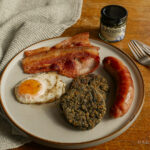
Welsh Lavercakes
Equipment
- 1 small mixing bowl
- 1 Spatula
Ingredients
- 240 g Laverbread uncooked
- 150 g rolled oats
- 8 slices Welsh unsmoked back bacon or streaky bacon rashers
- 1 tbsp vegetable oil
- 2 tbsp plain flour
Instructions
- Place the Laverbread into a medium-sized mixing bowl.
- Add the rolled oats to the Laverbread, a tablespoon a time, stirring until throughly combined.
- Once combined, sprinkle the plain flour over your work surface, to prevent any sticking.
- Using your hands, form the Laverbread and oat mixture into small, flat patties – around 1cm thick. Alternatively, you can also make smaller balls, or elongated, sausage-like patties.
- Heat the vegetable oil in a non-stick frying pan and add the raw lavercakes to the pan. Fry for 3-4 minutes per side, then remove from the pan and place onto some kitchen towel to drain off any excess oil.
- Serve your lavercakes hot, alone or as part of a traditional Welsh breakfast.
Notes
- If you like, you can also add fresh cockles to your lavercakes, for a traditional Welsh touch. Read more about this in my blog post.
- If your lavercakes are slightly on the mushy side, or difficult to form into patties, simply add some more oats.
- While shaping the lavercakes by hand can get a little messy, I find this is the best way to form them into tight, compact patties, so you can be confident they won’t disintegrate in the pan.
Nutrition
Have you ever tasted Welsh Laverbread? Will you be experimenting with any Welsh Laverbread recipes to celebrate National Laverbread Day on April 14th? Tell me all about it by leaving a comment below.
I have linked this recipe to #CookBlogShare, run by Sisley & Chloe, hosted by Cat at Curly’s Cooking.
Remember to PIN this post so you don’t lose the recipe!
Before you leave, check out some of my other popular traditional Welsh recipes:
- Welsh ham cawl
- Welsh onion cake
- Welsh rarebit
- Glamorgan sausages
- Welsh cakes
- Welsh porc faggots
- Crempogau (Welsh pancakes)
- Welsh Onion Cake

While this is not a sponsored post, the products from Pembrokeshire Beach Food Co. featured in this blog post were provided on a complimentary basis (with no obligation to write this blog post).
Very informative, your laver cakes look like a great addition to a delicious breakfast.
Thanks Cat 🙂 Glad you like the look of them x
Got to try your lavercakes…love the idea of serving them with cockles. Sounds genius.
I’m guessing if I can only get cooked laver bread, in a jar say, I just play around with the oaty proportion till I get a pliable “dough”?
Hello 🙂 Glad you like the look of them! Cooking them in bacon fat and serving them with cockles really makes a difference! 🙂
As far as I’m aware, laverbread is usually cooked to process it so it can be minced before sale, whether sold fresh or in jars/tins. So, you will still need to cook the laverbread you buy in jars and tins (it’s not pre-cooked, apart from the initial simmering). I made these lavercakes using jarred laverbread from Pembrokeshire Beach Co.
The consistency of the lavercakes won’t be quite dough-like; they’ll be fairly sloppy, but once they hit the hot oil they should begin to crisp up and form together.
Hope this helps, but please let me know if you have any other questions 😀
I’ve heard of laverbread but I actually had no idea what it was. The look of it wouldn’t bother me, but it depends on how fishy it tasted, I think I’d need to try it. Such a unique delicacy x
It does have quite a fishy flavour, which can be strong when eaten on toast or in lavercakes. I like cooking with laverbread though; it works very well in sauces and you can add it to bread dough, and many other dishes.
I have heard of laverbread and never tried it before, it does seem easy to make and am intrigued to try it now
It’s an unusual flavour but it really grows on you (honest)! 😉
As someone who used to live for a while in Japan, I have had many dishes with seaweed as an ingredient and this does give an additional dimension. The taste does grow on you and I imagine it would be very similar to the Welsh laver cakes. I look forward to giving them a try at breakfast when next in the UK, enjoying the Welsh countryside.
Ah yes! I think Japanese nori seaweed is similar to our Welsh laver seaweed. Hope you enjoy visiting Wales!
I’ve not heard of Laverbread before. It sounds interesting I am sure I’d enjoy it. I do like seaweed in various forms.
It isn’t all that well known, to be fair, but it does seem to be gaining more traction.
I have never tried laver cakes before, but I’d love it. Whilst I can’t really imagine what the laver tastes like, I think the cakes are really good, especially that you fry them in bacon fat.
The laver tastes like the sea – probably the best way to describe it! It tastes delicious fried with the oats in the bacon fat. Mmmm! <3
Wow, I have never heard of Laverbread before, but it sounds like something I would definitely like to try!
It isn’t very well known outside Wales, and even within Wales, to some extent.
I’ve heard of lavabread before but never really knew much about it, the name is soooo misleading!
I know what you mean; if you didn’t know about laver seaweed, I can see how you might not have a clue what it is!
I had never heard of it before but now I know about it, I really want to try! It sounds like something I would definitely enjoy!
It is growing on me; I wasn’t sure what to make of it at first. I enjoy it more in pasta sauces etc than I do in laver cakes, in all honesty! 🙂
I enjoyed a meal of laver with Perl Wen, some years ago, and wondered if you have ideas for a recipe? I will try grilled onto the laver cakes.
That sounds delicious. I love Perl Wen, and Caws Cenarth’s other cheeses. I bet it would make for a lovely sauce with laverbread chopped up and the cheese. Mmm!
Now I’ve read this I realise I need some laverbread in my life. Always telling myself I need to eat more seaweed. Loving your lavercakes too.
Definitely, give it a go. It’s not for everyone’s tastes, but perhaps it will grow on you! 😀
thanks for introducing me to Laverbread . i’ve never it before until now but so glad to add it to our brunch repertoire. So filling and tasty!
My pleasure! I hope you get to taste it for yourself some day.
I’ve never heard of this but sounds right up my street. Will save and give it a try – thanks for posting.
Glad you like the look of it – it’s an interesting ingredient!
I’ve never tried laverbread although I have heard of it. I do like your little breakfast cakes, they look so tasty.
Thanks Janice! Laverbread is what some would call an acquired taste, but do try it one day if you get the chance 🙂
Super interesting read. I’ve always been aware of laverbread but never actually tried it!
Thanks Chloe! It’s an interesting food and it seems to be growing more popular recently.
Laverbread should be fried in a little bacon fat and then spread on fried bread also fried in the bacon fat. Most delicious. Perhaps a sprinkle of vinegar. I’ve eaten it this way for over 70 yrs.
That sounds delicious. I’ve heard it is traditional for it to be cooked in bacon fat with cockles. I love the idea of spreading it onto bread fried in bacon fat – I’ll have to give that a try. Thanks Norman!
Kacie,
Great stuff!
In your opinion should beans be included with the Welsh breakfast?
Tim Sumrall
EBS Fellow
Hello Tim,
Personally, I think it’s a matter of personal preference; I know some people say they’re not traditional and that they don’t belong on a breakfast, but personally I enjoy them and so I think, why not, if you fancy them over a tomato?
Looking forward to hearing your thoughts on it too! 😀 Thanks for commenting.
Kacie
Local variations on Welsh breakfast but I was brought up on.
Laverbread .
Cockles.
Sofltly Poached eggs.
Bacon(cooked in same pan along with cockles and laverbread).
Thick slice of fried bread(topped with the poached eggs so the yoke would soak into the bread.
Mushrooms if in season.
Sausages.
I am just about old enough to remember the pig and the chickens at the end of our garden.
Traditionally a local slaughterman would come and slaughter the pig. It was normall practice not to pay the slaughterman money, but to give him the blood and the head to make black pudding and brawn.his pofit would be derived from selling the black pudding and the brawn. Therefore you would not often see black pudding with a traditional welsh breakfast.
Hi Ian,
Thanks so much for taking the time to leave a comment – much appreciated! 🙂
Sounds delicious. I haven’t tried it with an egg and/or mushrooms before. If you are local to Cardiff, Milkwood in Pontcanna serve a dish that sounds similar to that, and I believe you can add an egg if you wish. It’s really good – my favourite place to eat laverbread locally.
Interesting to hear the story about the slaughterman and the pig too!
This sounds like and looks to be the same plant as is called “nori” in Japan, and of which is made the wrappers for sushi.
Yes, indeed, they are the same! Welsh Laverbread is just processed differently as it’s boiled and then minced into a paste.
Such an interesting read — I’ve heard of laverbread so many times but never actually knew what it was or how it’s eaten. Love how you explain the history and make it feel approachable. The lavercakes sound amazing (especially fried in bacon fat 😄). Definitely tempted to try them… though I’m still a bit nervous about how “sea-y” the flavour is!
Thanks, glad you enjoyed the read 🙂 It is certainly one of those “hit and miss” foods that people seem to either love, or hate. I enjoy it cooked with cockles or bacon, or made into laver cakes, but the taste can be overpowering on its own. Hope you enjoy the laver cakes if you end up trying them – don’t forget to let me know what you think 🙂