
Savouring a flaky, buttery croissant as you wander along the Seine or stroll along the Champs-Élysées is an unmissable food experience to have when in Paris – the so-called City of Lights. For the many lucky locals who live here, it’s a popular lunchtime or evening pastime.
So, what is the best way to order your croissant (or baguette, or brioche) at a Parisian bakery, without standing out too much as a tourist? Here’s how to order a croissant like a local, and blend in with the sophisticated surroundings.
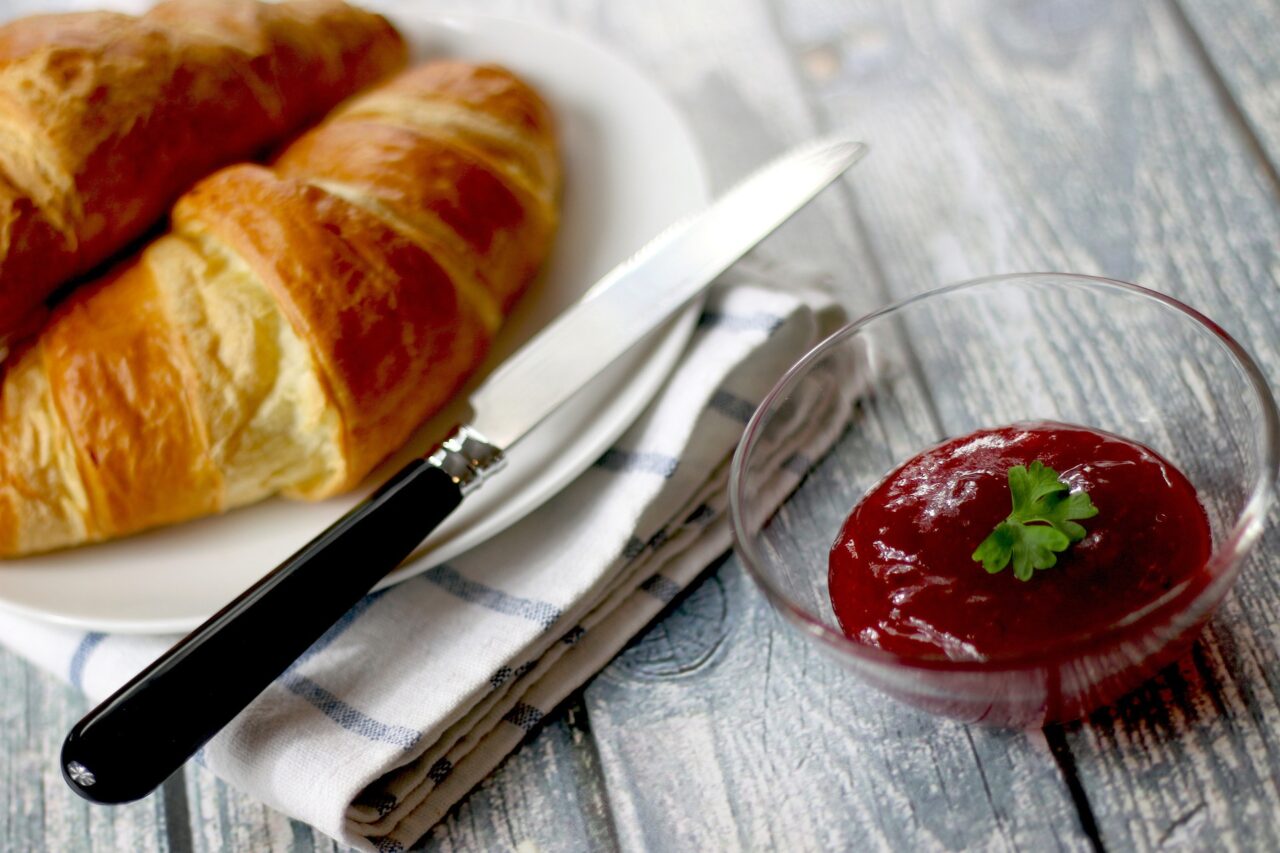
Learn how to order a croissant (in French)
If you’ve travelled to other countries before, you may be used to getting by simply by speaking English to the locals.
However, if you’re visiting France, here’s something to bear in mind: according to a 2018 survey, France has the lowest level of English proficiency in the whole of the European Union.
So, if your heart is set on enjoying an authentic French croissant, be sure to learn the local lingo before setting off for your destination.
If you’re looking to accompany your croissant with a coffee or tea, it’ll pay for you to learn a few phrases that’ll help you to order your drink, too. While the expression “Un café au lait” is common in France, this usually refers to the coffee people make at home; stick to options such as cappuccino, Americano, espresso, or a traditional café noisette!
Choose a boulangerie or café
No matter whether you’re exploring the City of Lights (La Ville-Lumière) or hopping from one enchanted village to another in the Champagne wine region, you’ll almost always be surrounded by boulangeries, patisseries, and cafés. But, while they all offer high standards, they’re certainly not all made equal.
When in Paris, don’t miss out on the world-famous creations of Laurent Duchêne, Maison Pichard, or Du Pain et des Idées. Alternatively, if you’re in the countryside, consider enjoying a more local experience by finding a historical or highly rated bakery.
Be polite and friendly
When it comes to ordering a croissant in French for the first time, mistakes and pronunciation errors are a normal part of the process.
If there is one thing that you should focus on getting right from the start, however, it’s your greetings phrases, as well as expressions used to apologise, politely ask for a favour, or to thank others.
In this case, you may find it beneficial to take a few French lessons before your trip. For example, when learning with Lingoda, you’ll be able to find a teacher who matches your needs and can help you to improve your French proficiency at your own pace.
Discover different croissants and viennoiseries
If you love to eat like a local, the chances are that you’ll have tried a pasticciotto in Lecce, a bagel in New York, and tortilla de patatas in Spain. And, now that you’re heading to France, you can’t miss out on the opportunity to try a croissant.
France is the native home of croissants, and other types of viennoiseries. And, as such, the country offers a nearly endless range of options when it comes to enjoying a continental breakfast.
Sometimes, however, the sheer variety means that can get things pretty confusing if you’re just looking to order a basic croissant. If you’re a real foodie like me, get clued up on some of the most common types of pastries and desserts – like croissant aux amandes and pain au chocolat – ahead of your trip.
Ordering a baguette to enjoy later is a normal part of life in French, so be sure to grab a fresh baguette to enjoy later on that day, when you’re back in your hotel room perhaps. Don’t just simply walk into. a boulangerie with requests of “Une baguette, s’il vous plait”, though – be sure to learn more about the different types of French bread first!
Be ready for follow-up questions
Once you’ve successfully placed your order, be prepared to answer any follow-up questions you may be asked in order to confirm exactly what it is that you want to order, as well as any other questions your server might ask. After all, you don’t want to go all the trouble of sounding like a native when ordering your croissant, only to fall to answer simple questions like, “Ce sera tout?” (i.e., “Will that be all?/”Anything else?”)
Your server or waiter might also ask you whether you want to eat-in or whether you’d prefer to take your order away with you, or whether you’d like a coffee to accompany your croissant, for example. If they are unsure of what you ordered, they might confirm the order with you to avoid any misunderstanding. Be prepared for these interactions, and enjoy the experience; no doubt the locals will appreciate your efforts to speak French and, when you’re perched in a boulangerie nibbling on a croissant à la a true Parisian local.
What are your top tips for communicating with French locals? Do you have any must-learn phrases to share? Please feel free to leave a comment below.