
I visited Tunisia as part of a press trip with Sawa Taste of Tunisia, funded by USAID Visit Tunisia with discounted air fare from Tunisian airline, Nouvelair.
Discover the best of traditional Tunisian cuisine on a Tunisian food tour with Sawa Taste of Tunisia. Join me on a four-day taster tour showcasing the highlights of Sawa’s culinary experiences, from Tunisian street food to the best local independent restaurants and producers.
Once seen as the granary of Rome for its plentiful harvests, Tunisia isn’t the first place that springs to mind when we consider contemporary culinary destinations. Instead, this North African country is perhaps best known for its colourful souks, magnificent mosques, golden beaches, and unique blend of Arab and Berber culture.
With the Mediterranean on its doorstep, however, Tunisian food benefits from fusions of flavours from different cuisines. From grapes to grains, the country’s varied terroir and warm climate enables quality produce to thrive here.
So, why is it that Tunisian food still remains somewhat underexplored? Despite its rich culinary heritage, Tunisia is still yet to be covered by the prestigious Michelin Guide and, aside for Channel 4’s Ottolenghi’s Mediterranean Feast (2012) and ITV’s Jamie Cooks the Mediterranean (2023), Tunisian cuisine seems to have largely fallen off the radar of well-known food personalities.
A Tunisian food tour with Sawa Taste of Tunisia
Introducing Sawa Taste of Tunisia, created by two food-loving friends determined to put Tunisia on the foodie map. Jamie Furniss is an anthropologist of North African culture and society, while Lamia Temimi is a passionate home cook and B&B owner born in Tunisia to an Algerian father and Sicilian mother.
Together, they’ve launched a series of Tunisian culinary tours featuring small, independent female- and family-led food and drink businesses in off-the-beaten-path locations. Packages include airport transfers, accommodation, food and drink, attraction entrance fees, and an experienced guide and translator, in what’s thought to be the first all-encompassing Tunisian food tour of its kind.
As I discover on a four-day taster tour visiting Cap Bon, the capital city of Tunis, and the idyllic village of Sidi Bou Saïd, there’s more to Tunisian cuisine than cous cous and harissa – although it’s a great place to start!
Cap Bon: home of harissa, floral waters & ceramics
A lush green peninsula jutting out towards Sicily in the Mediterranean Sea, Cap Bon is praised for its beautiful beaches, flourishing vineyards and fruitful olive groves.
Home from home
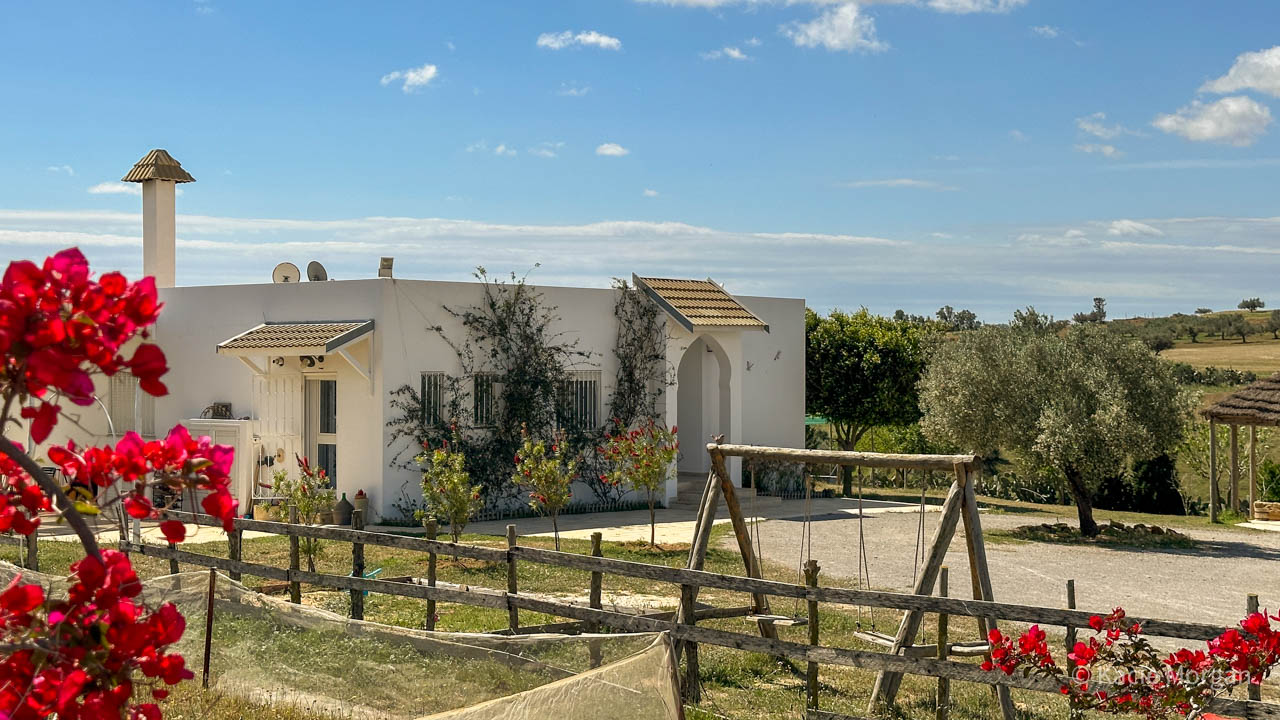
Owned by Lamia and her husband, Arslene, countryside homestead and B&B, Sawa Ghite Rural provides a welcoming base for our time in Cap Bon. After settling in, we gather for coffee, bachkoutou (Tunisian linseed biscuits) and mignardise (sesame-seeded nougatine filled with nuts) on Lamia’s garden patio.

Just a few hours later, we’re eating again – something you soon get used to in Tunisia! Sitting in Lamia’s dining room, we feast on a traditional Tunisian dinner. Stand-out dishes include grilled fish with fennel, homemade tagine (an egg-based dish, similar to Italian frittata), chorba frik (Tunisian grain-based soup), and locally made harissa.
A typical Tunisian breakfast: worth the early wake-up call
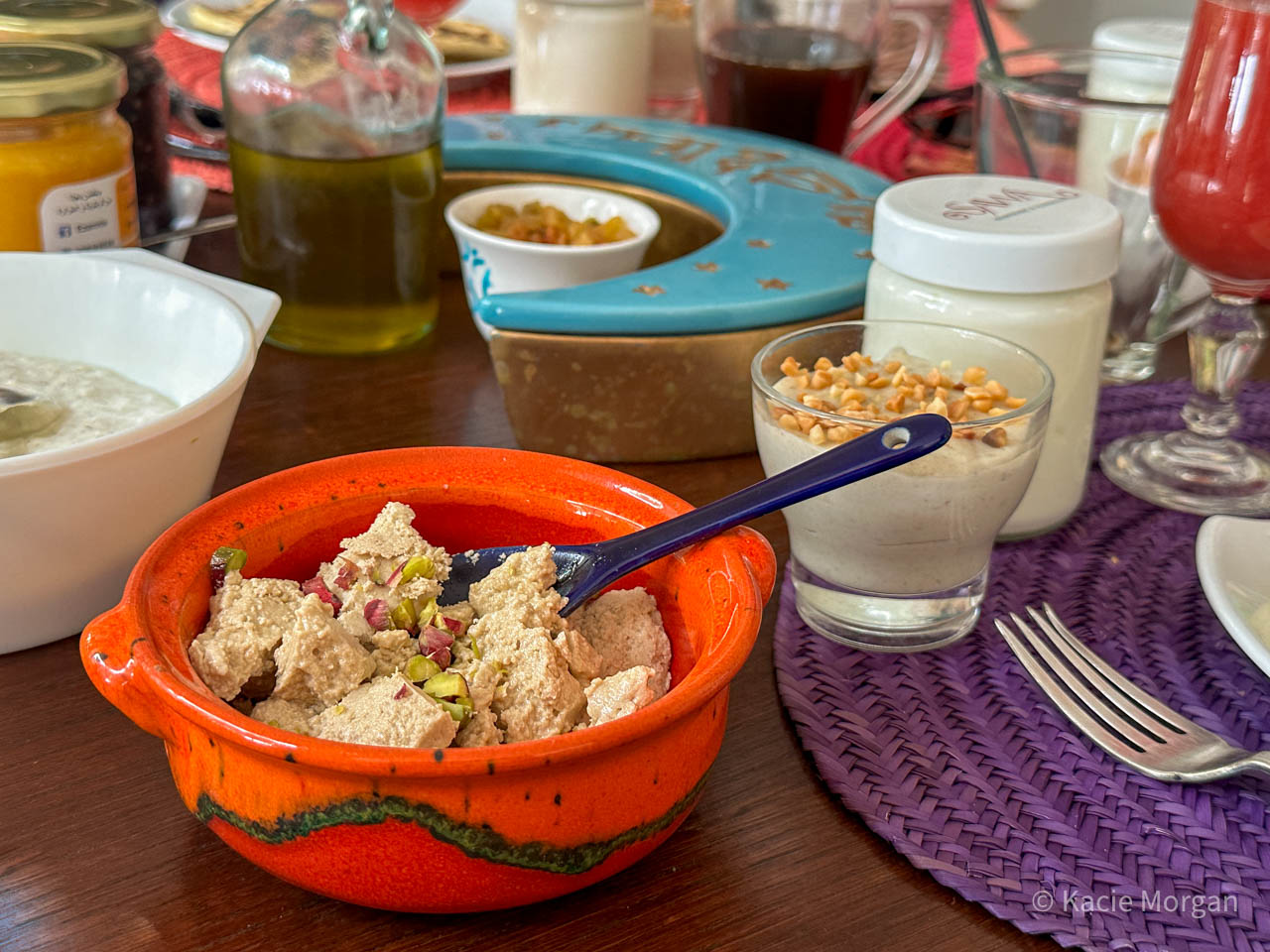
The following day, we awake to the early morning chorus of the roosters before devouring a traditional Tunisian breakfast of flaky mlawi (or “mlewi”) flatbreads made using semolina flour, served alongside local honey, jam, cheese, boiled eggs, cucumber, ricotta with olive oil and thyme, sorghum pudding, halwa chamia, bachkoutou, blood orange juice, and coffee.
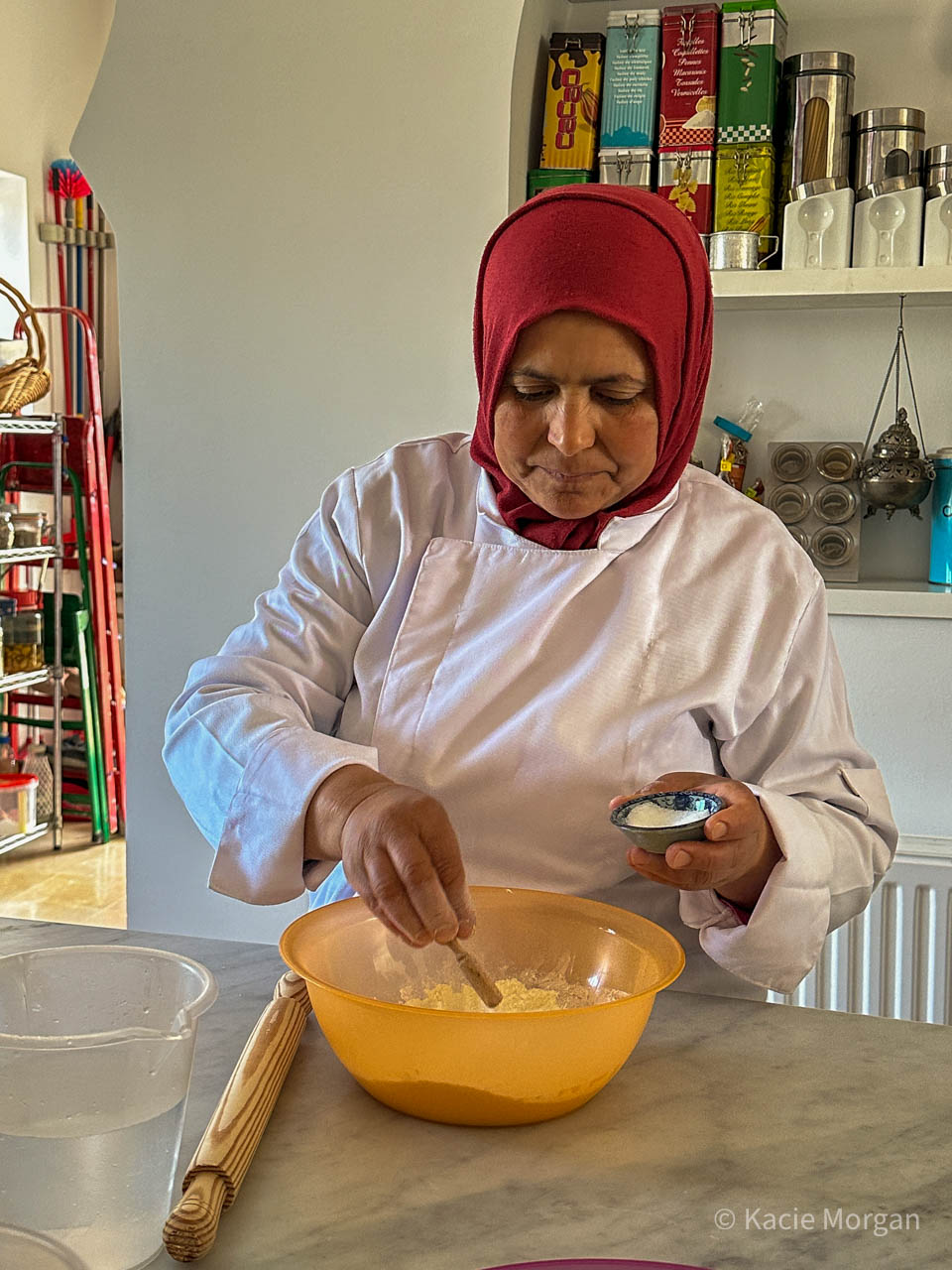
Depending on which tour you book, you may get to enjoy a lesson in mlawi-making with passionate local home cook, Moufida.

Harissa: the spicy Tunisian condiment with UNESCO heritage status
After breakfast we drive to Dar l’Harissa (“House of Harissa”), in the nearby town of Nabeul. Recognised by UNESCO as an intangible cultural heritage of humanity in 2022, harissa holds deep cultural significance due to the traditional methods used to produce it, with the process usually overseen by women.
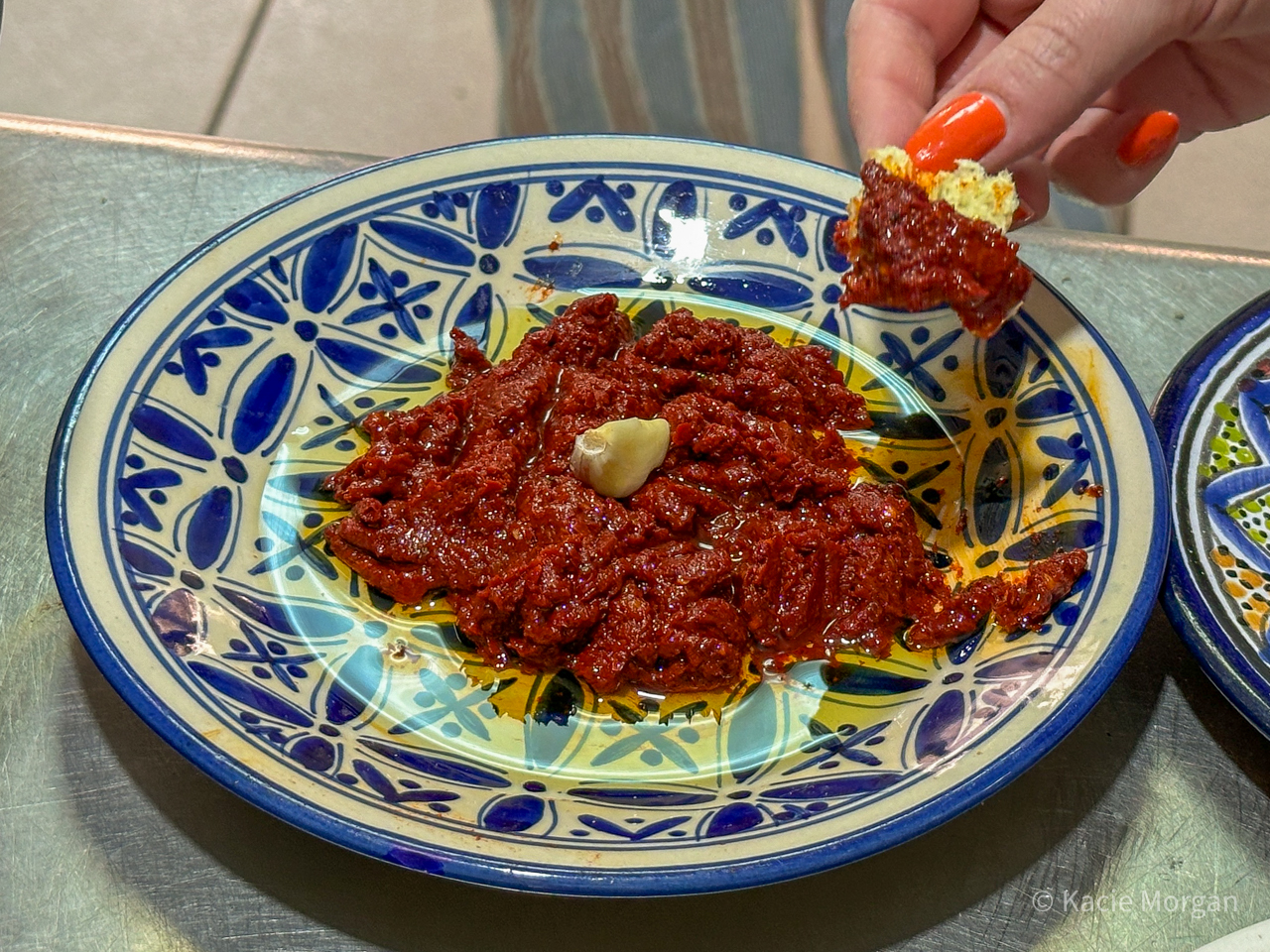
This spicy red chilli pepper paste is served at almost every mealtime in Tunisia, from breakfast through to dinner. Whether you mix it with olive oil and scoop it up with bread, use it to baste meat or fish, or use it in a tagine or shakshuka recipe, it adds an irresistible flavour and fieriness to Tunisian cuisine.
How to make harissa
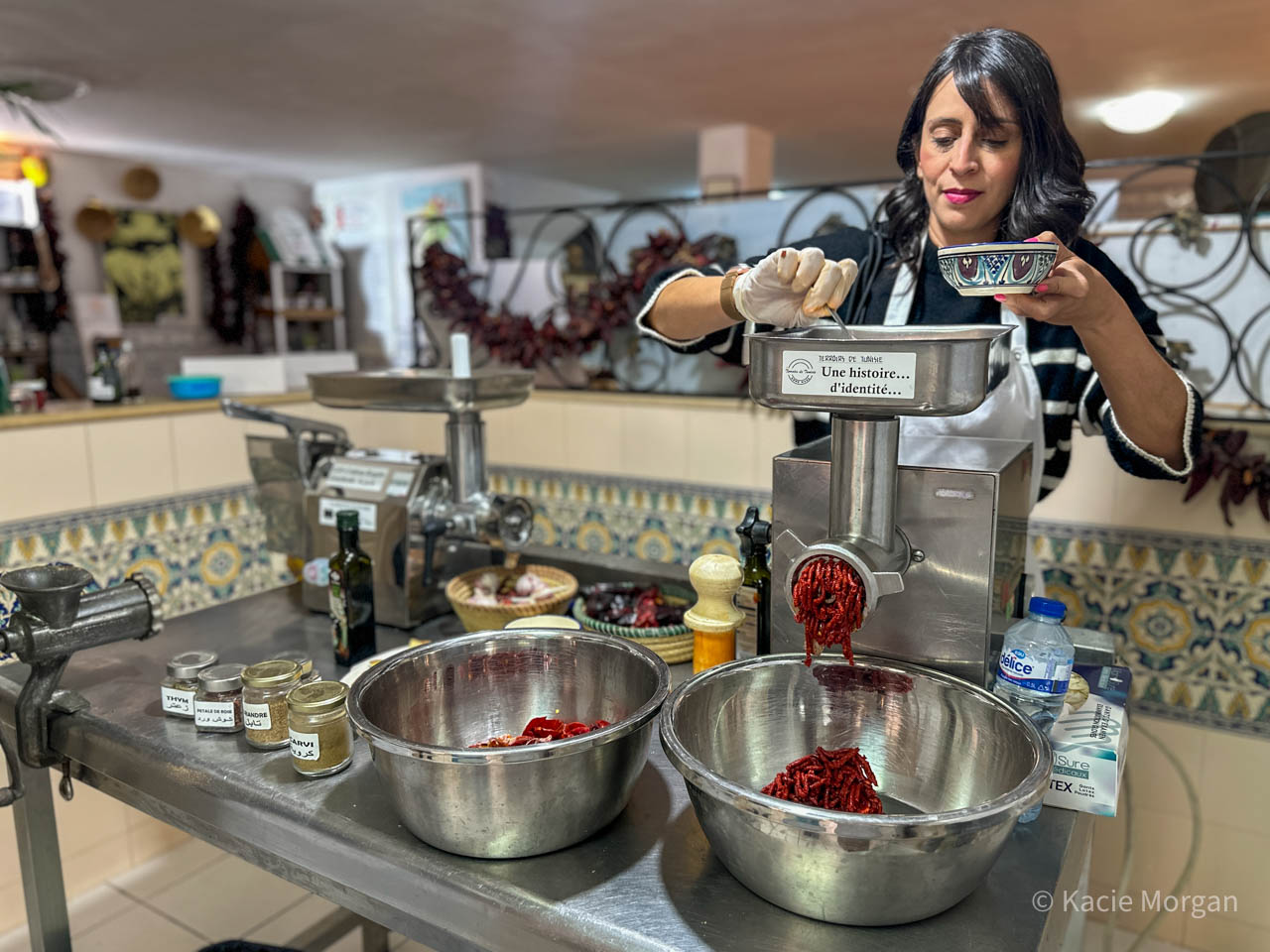
Run by Imed Attig, President of the Tunisian Association of Intangible Cultural Heritage, and his wife, Héla Haddad, Dar l’Harissa offers harissa masterclasses and produces award-winning harissa, condiments, and spices branded Terroirs de Tunisie.
A simple mix of sun-dried chillies, garlic, and salt forms the basics of harissa. However, as Imed explains, each Tunisian family puts its own twist on the classic recipe with olive oil, caraway seeds, ground coriander, cumin, coriander and rose petals among the most popular additions.
The sun-dried chillies are cleaned, de-stemmed, de-seeded and soaked in water for 10-15 minutes before being mixed with the other ingredients. Once combined, the mixture is crushed either by hand using a spice grinder or, more commonly nowadays, by a mechanical meat grinder.
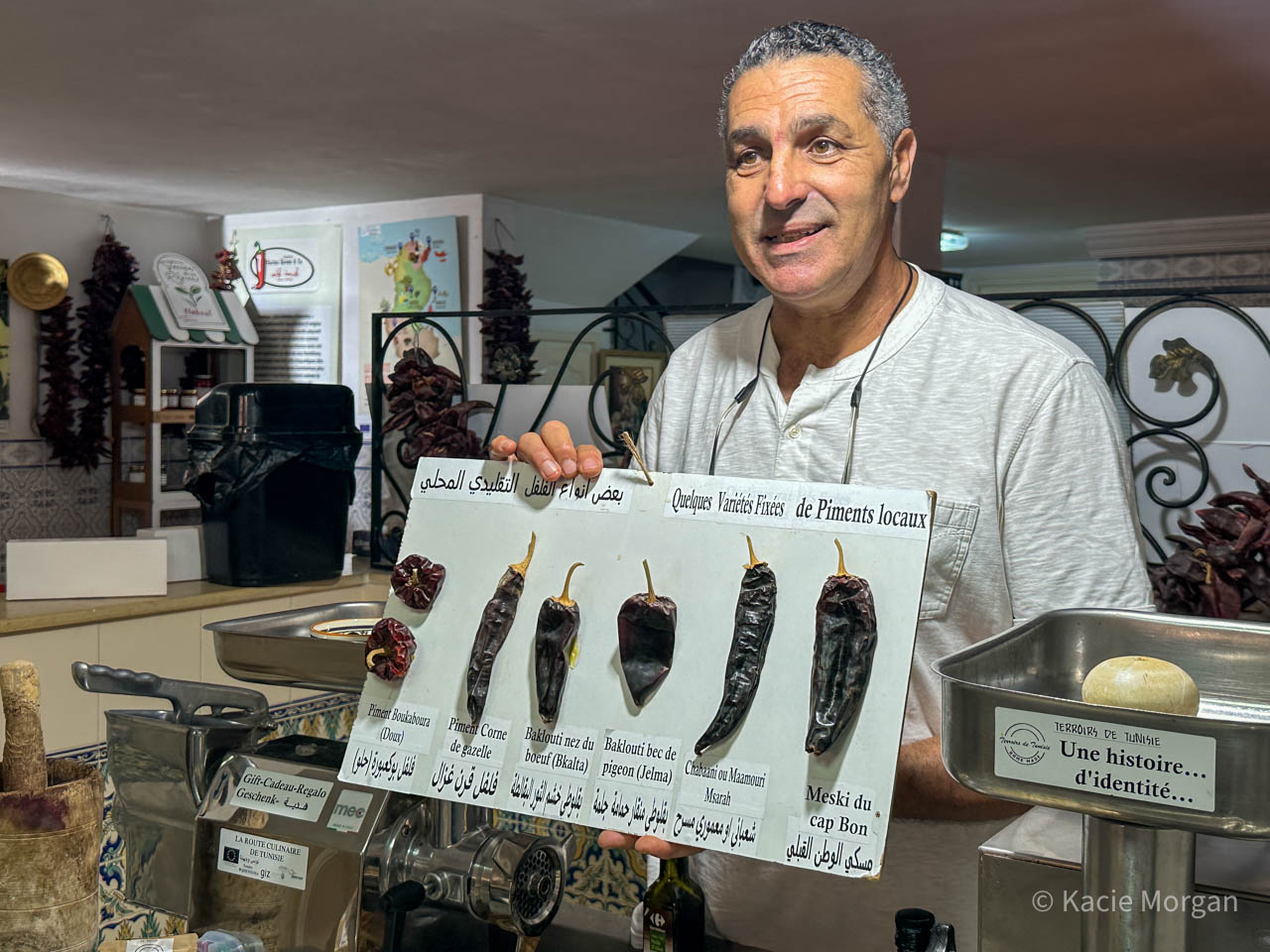
Traditionally, Baklouti or Meski du Cap Bon peppers are preferred due to their gentle heat and pleasant flavour. Introduced to Tunisia around 400 years ago after being brought back to Spain from the New World, these peppers thrive in the climate and soil of the Cap Bon peninsula. Notably, one of Tunisia’s biggest exports is its Le Phare du Cap Bon harissa paste, named after the lighthouse perched at the tip of the peninsula.
Cous cous: Tunisia’s famous national dish
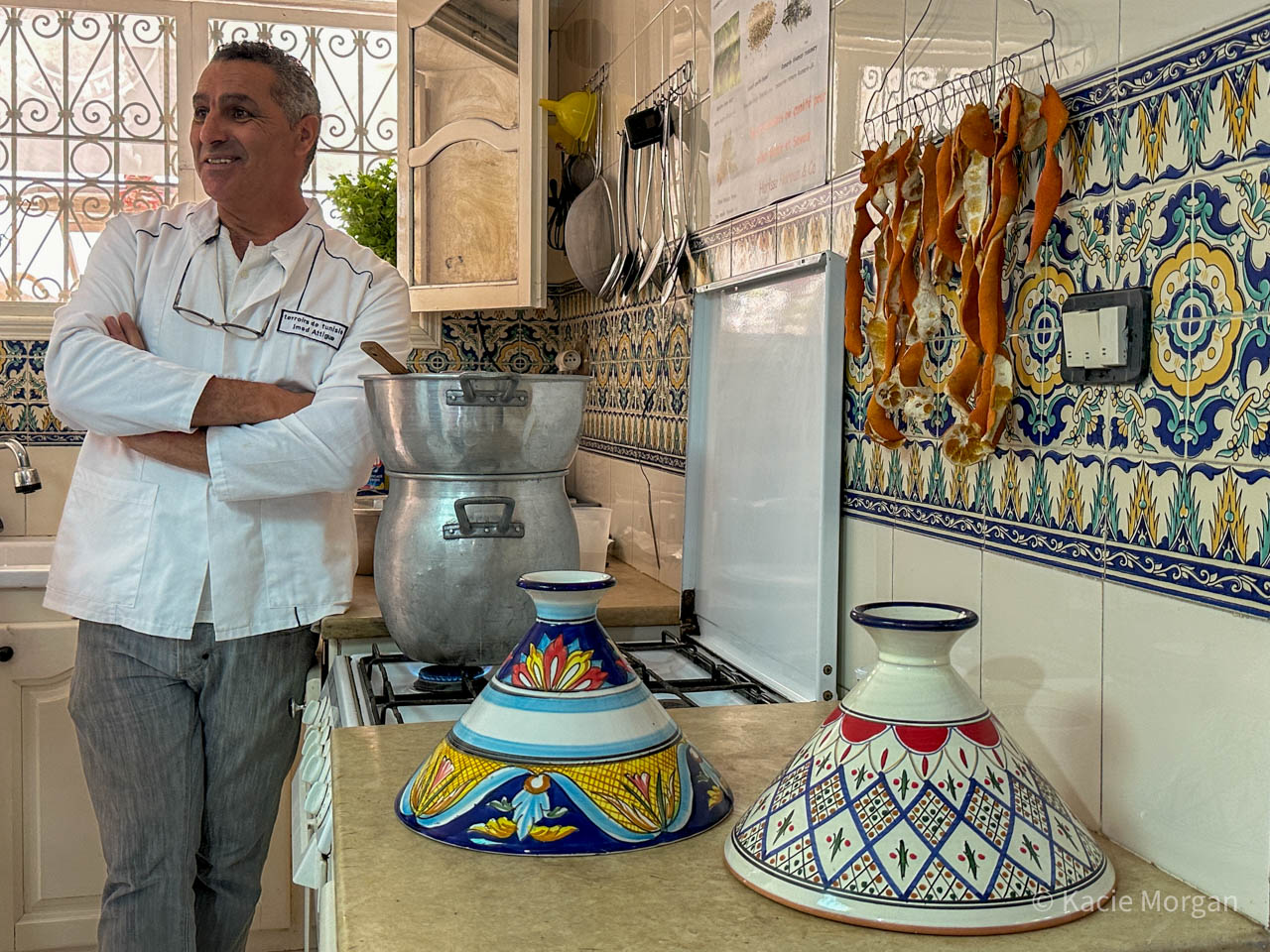
With our homemade harissa carefully packed into jars, Imed teaches us how to prepare the Tunisian national dish, cous cous (known locally as “koski”).
A form of pasta made by mixing course durum semolina flour with water and olive oil, steaming it and hand-rolling it into small pieces or passing it through a fine sieve known as a “kish-kash”, cous cous is popular across north Africa and particularly in Tunisia, Morocco, and Algeria.
How to cook cous cous
Traditionally, cous cous is cooked in a double-chambered food steamer known as a “couscoussier”, popular in Berber cuisine. A fish or meat-based vegetable broth is placed in the bottom compartment, while the cous cous is placed overhead and steamed over the broth. Afterwards, the stew is stirred through the cous cous to add moisture and flavour. Once cooked, the cous cous is transferred to a tajine and embellished with boiled eggs, meat, dried fruits, ground nuts, and chickpeas.
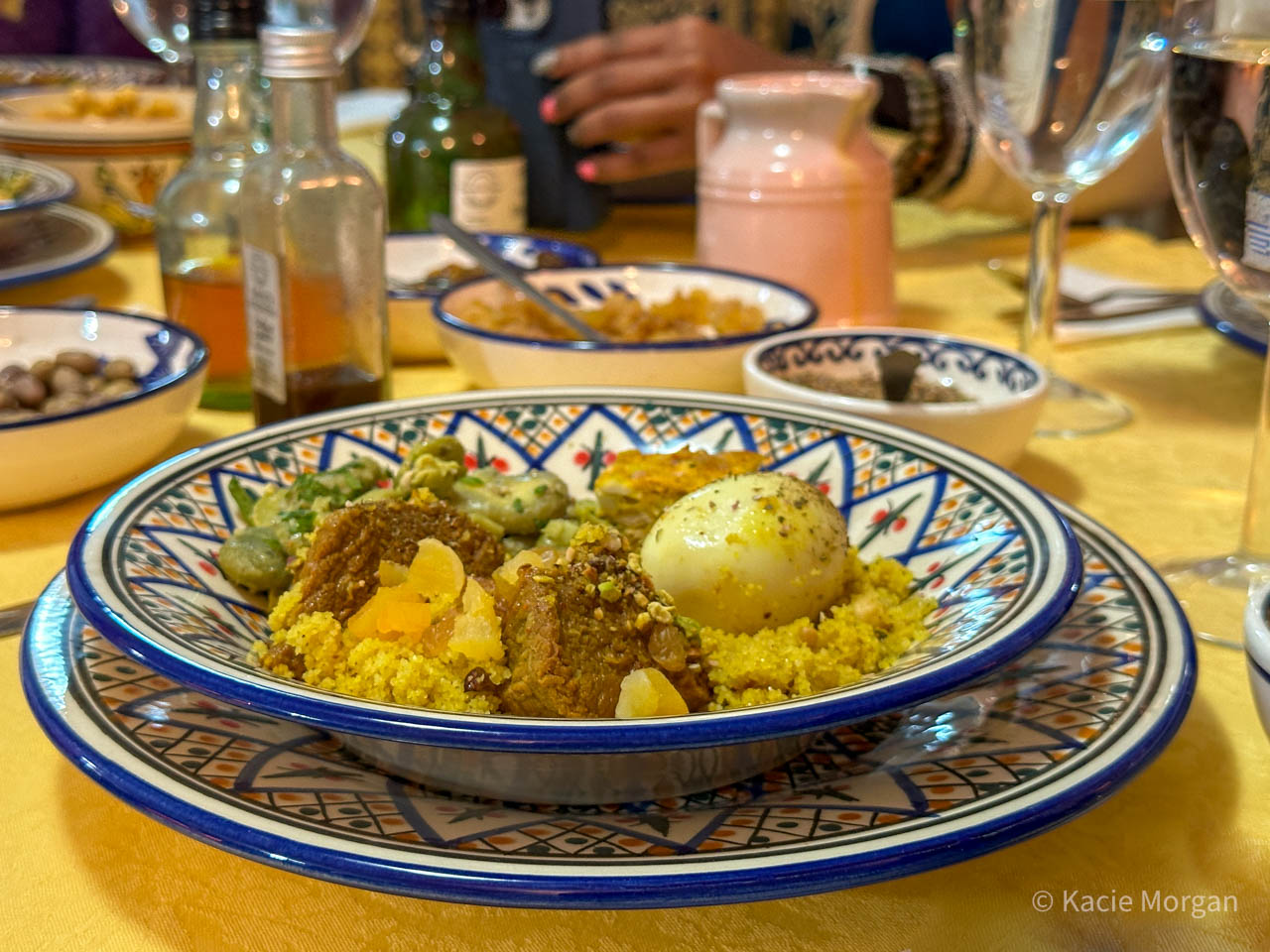
Following our cookery class, we dig into our cous cous together as part of a lavish lunch alongside tagine, spiced fava beans and fresh olives. For dessert, a mouthwatering trio of strawberries and melon soaked in geranium syrup, and scattered with geranium sugar and sesame seeds; bachkoutou; and makroudh, a date-stuffed semolina pastry soaked in orange blossom water, fried or baked and coated with honey and sesame seeds.
Colourful ceramics: traditional Tunisian pottery
The eye-popping patterned plates our lunch was served on at Dar l’Harissa are common in Tunisia and particularly in Nabeul, where an abundance of clay has enabled a long-standing pottery tradition to prosper.
These traditional ceramic pottery designs can be seen not only in the crockery used in local restaurants, but also in the charming earthenware tiles stretched across the façades of Nabeul’s houses, shop fronts and public buildings.
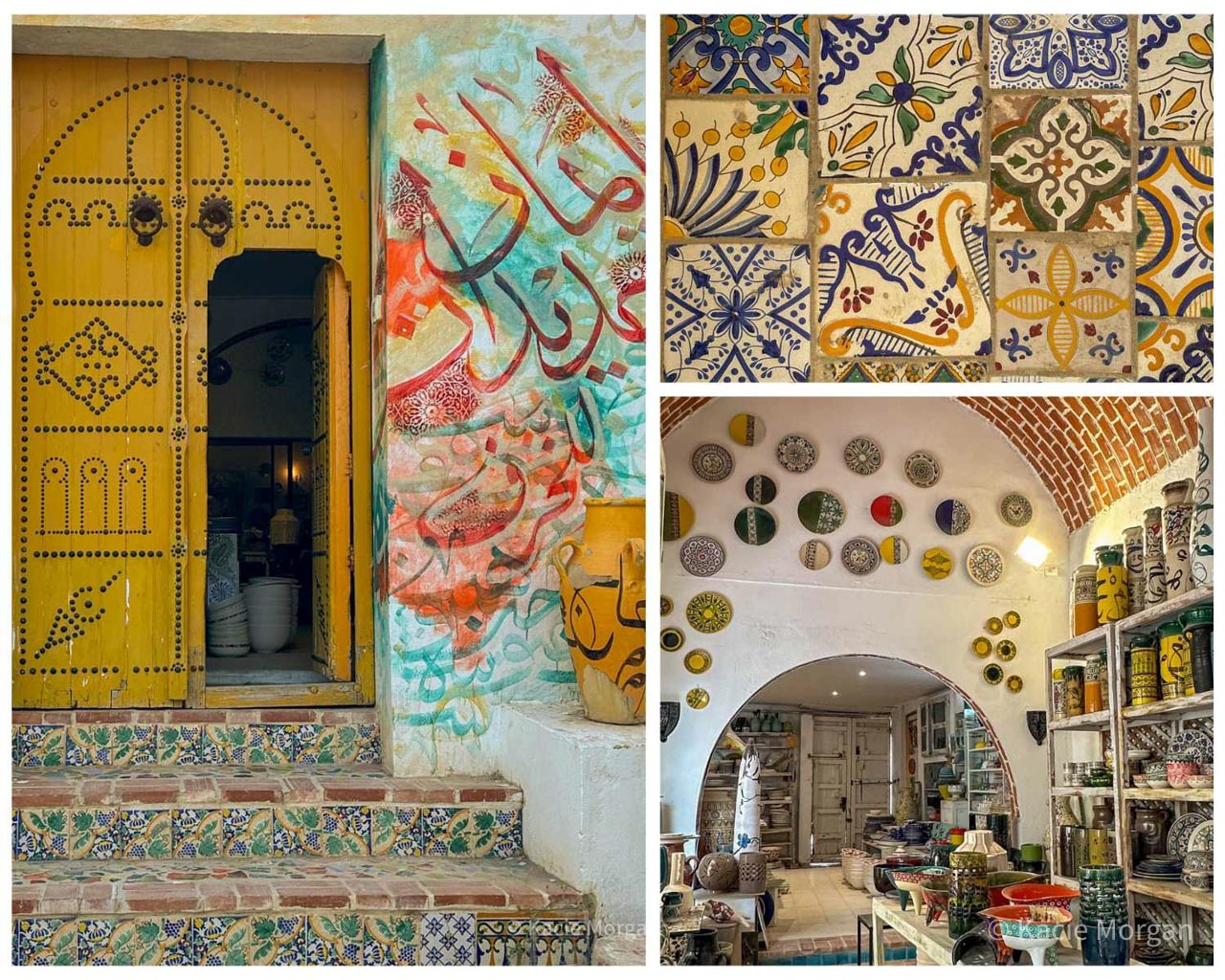
Famous for her unique designs, ceramicist Imane Hadidane of Arceram not only supplies countless restaurants throughout Tunisia, she also produces porcelain for Prince Albert of Monaco (manufactured ‘out of Monaco’, but made in Tunisia).
Stepping into Imane’s pottery workshop in Nabeul, we’re met with stacks of patterned plates, jars, bowls, vases and pots in all shapes and sizes, in just about every colour you can think of.
Floral water: the sweet scent of Tunisia
Whether drizzled over strawberry salad, added to coffee or food, taken as a health ailment, or used for cosmetic purposes, traditional floral water lies at the heart of Tunisian culture. Nowhere is this truer than in the so-called capital of floral water, Nabeul, where orange blossom trees (a source of neroli extract, used to make fragrance) line the streets and a floral water festival takes place every year.
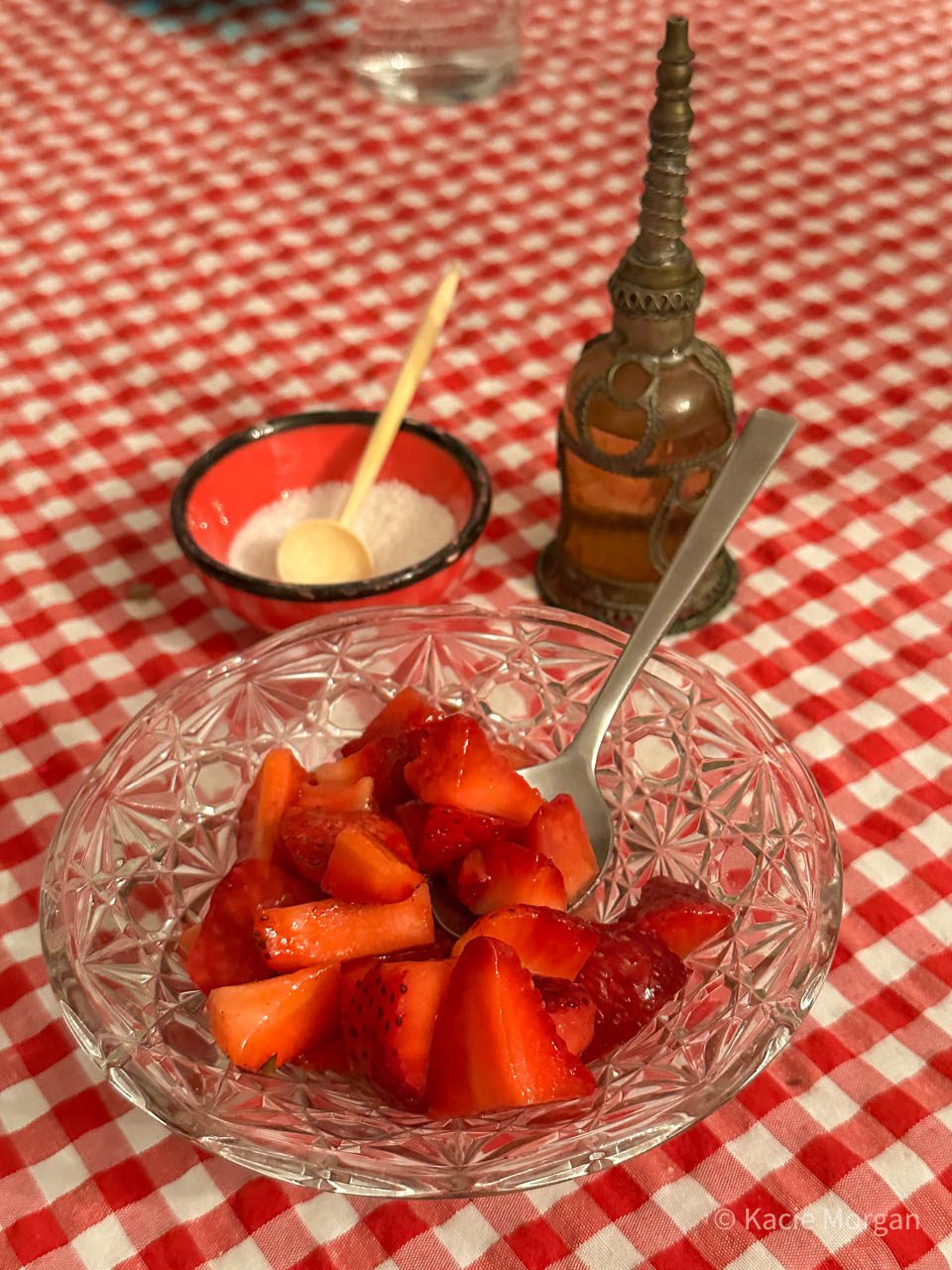
Like harissa, the floral water distillation process is usually overseen by the females of the family, with the flower-picking season commencing in spring. Besides orange blossom, geranium, jasmine, and rose waters are also popular alongside herbal waters like mint, rosemary and thyme.
During our Tunisian food tour with Sawa, local distiller, Rania Mansour-Snoussi of Ezemnia, also in Nabeul, kindly showed us how she produces floral water using fragrant geranium flowers.
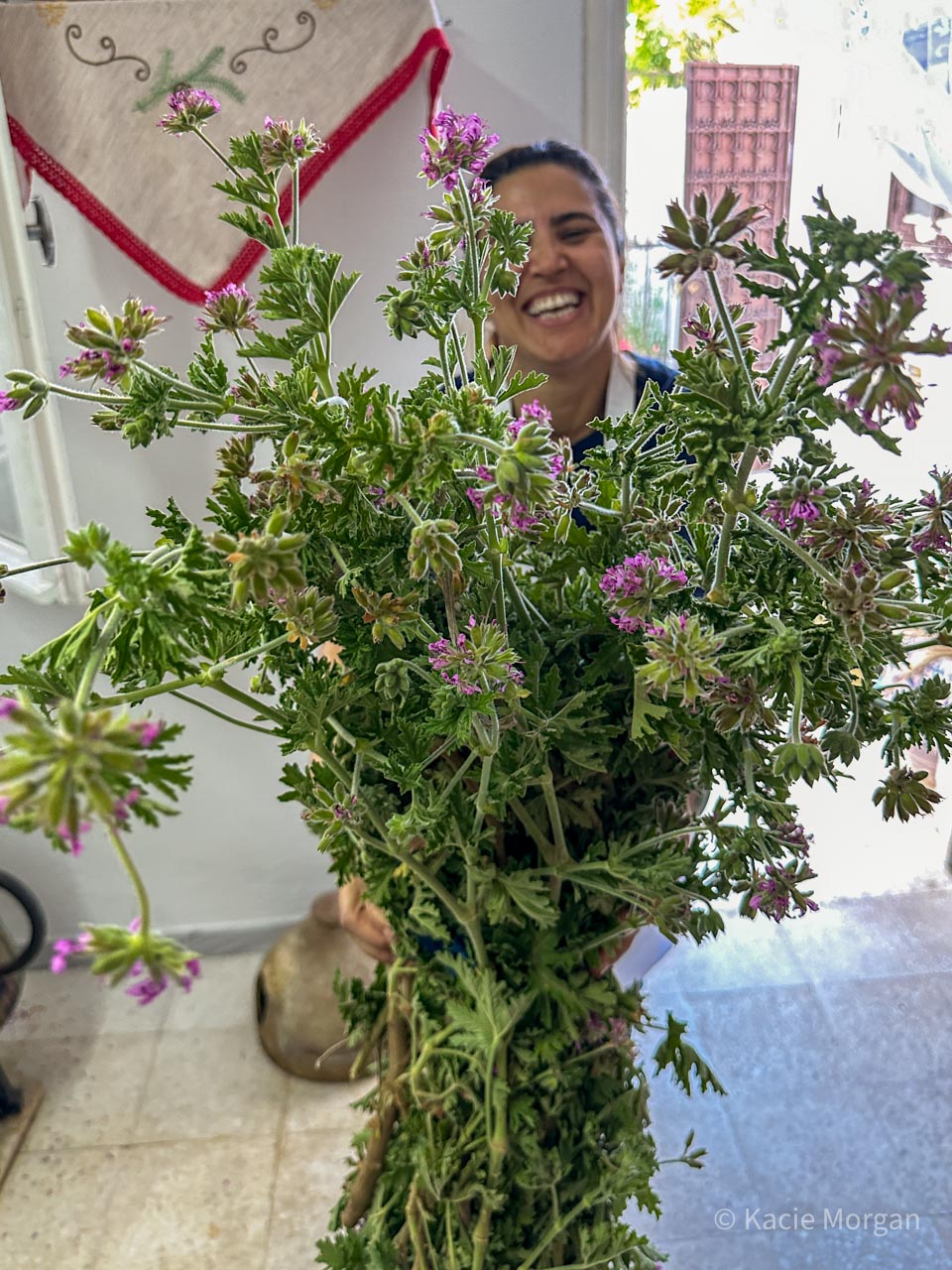
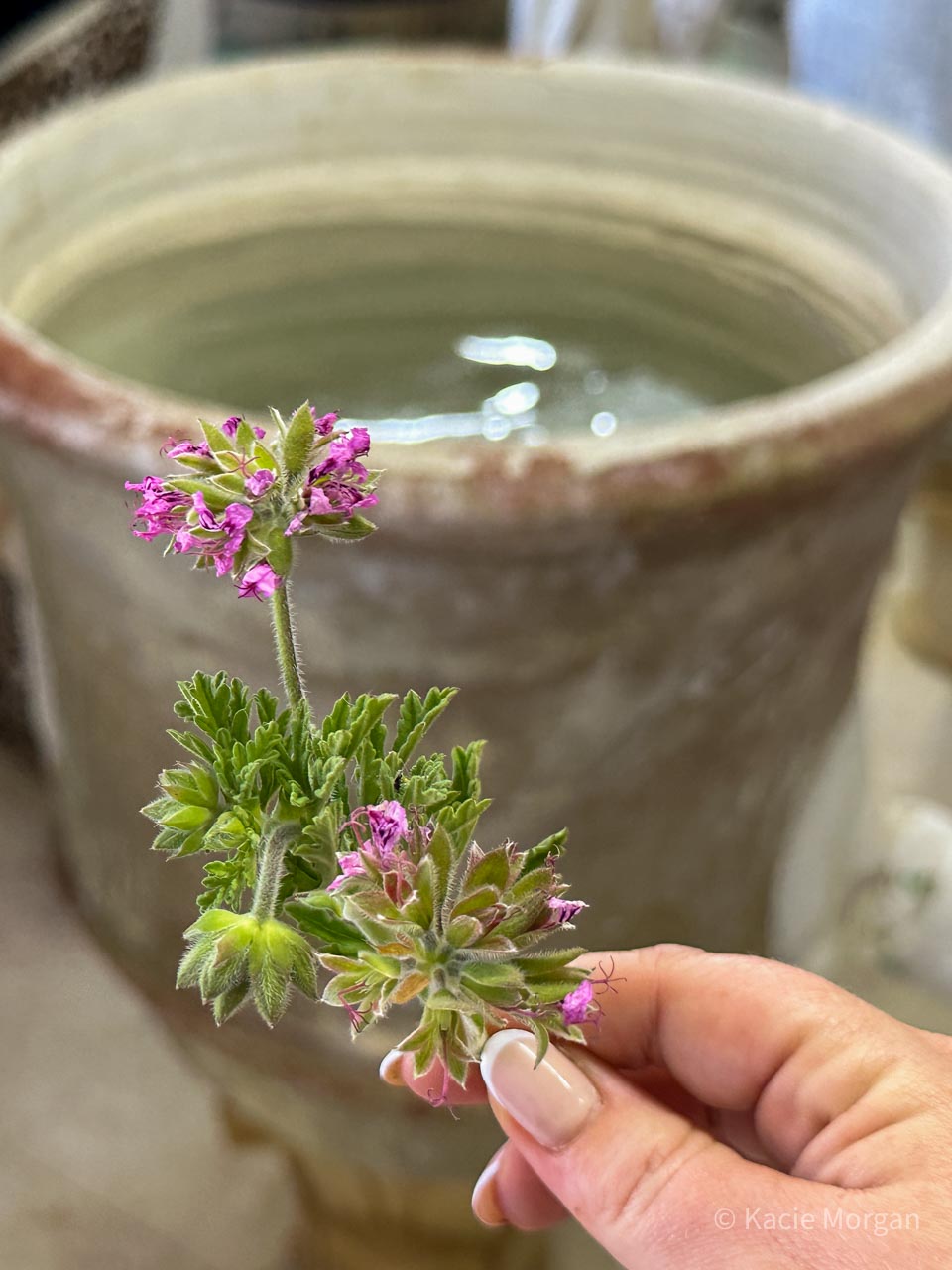
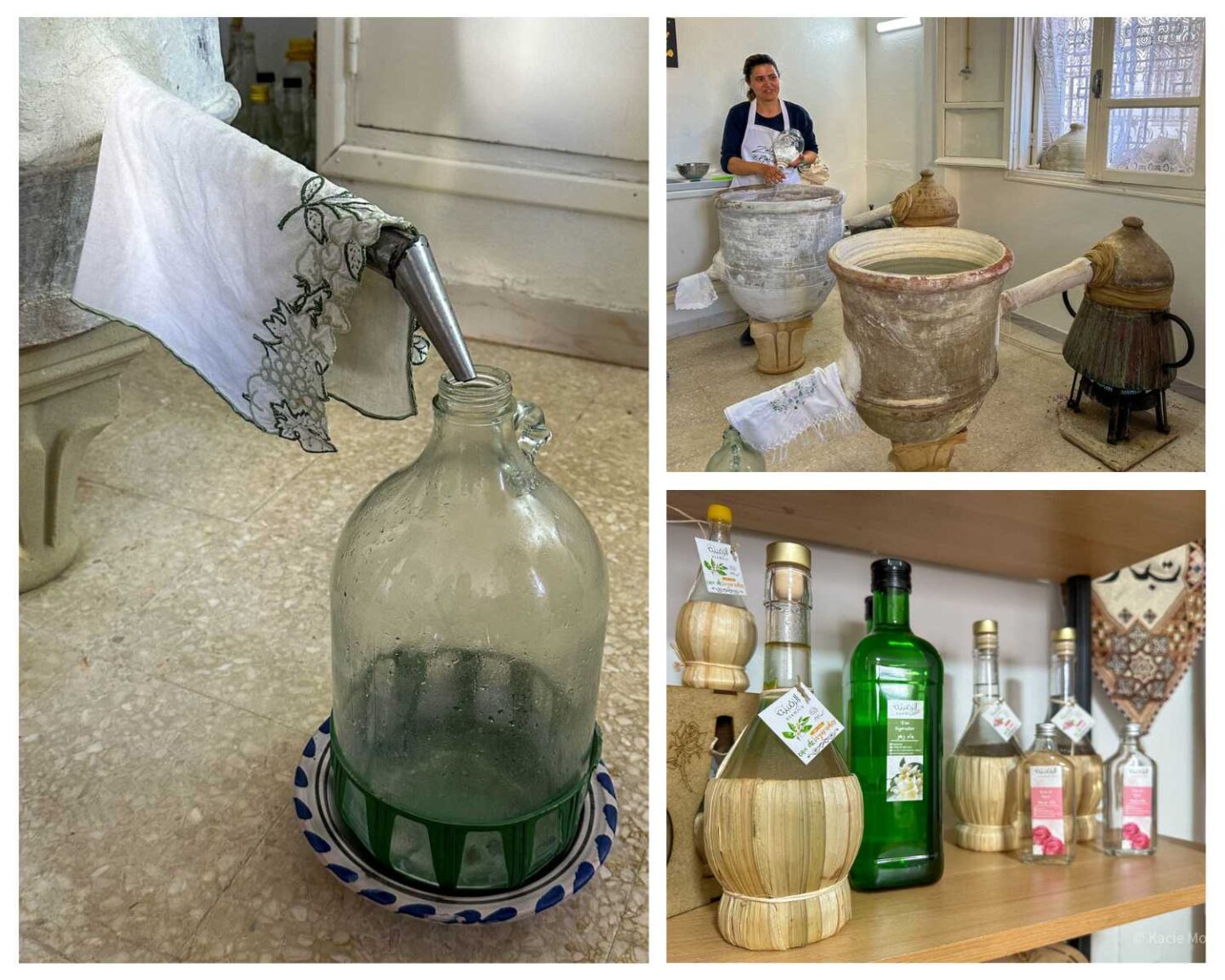
Dating back to Mesopotamian times, the artisanal evaporation process involves placing the flowers into cauldron-like copper stills at a ratio of one kilo of flowers, to one litre of water. The flowers are heated for several hours, and the resulting steam is mixed with cold water via a tube and condensed into a second vessel – the fechka – as sweet-scented floral water, or “Z’har”, as it’s locally known.
Afterwards, the floral water is bottled and labelled for sale, and Rania also uses it to produce condiments, jams, preserves and beauty products.
The art of plating
After exploring Nabeul’s culinary traditions, we head to guesthouse and creative residency, Villa Ma-Amoura in nearby El Maâmoura. Here, we’re welcomed by creative artist and architect, Jamila El Kamel, who’s prepared us a set vegetarian dinner using some of the traditional local foods we’ve sampled today.

The daughter of famous Tunisian artist, Faozi El Kamel, Jamila’s creative inheritance can be seen both throughout her lovingly curated home and in the vibrant vegetarian dishes she crafts for her overnight guests, supper clubs and retreat experiences.
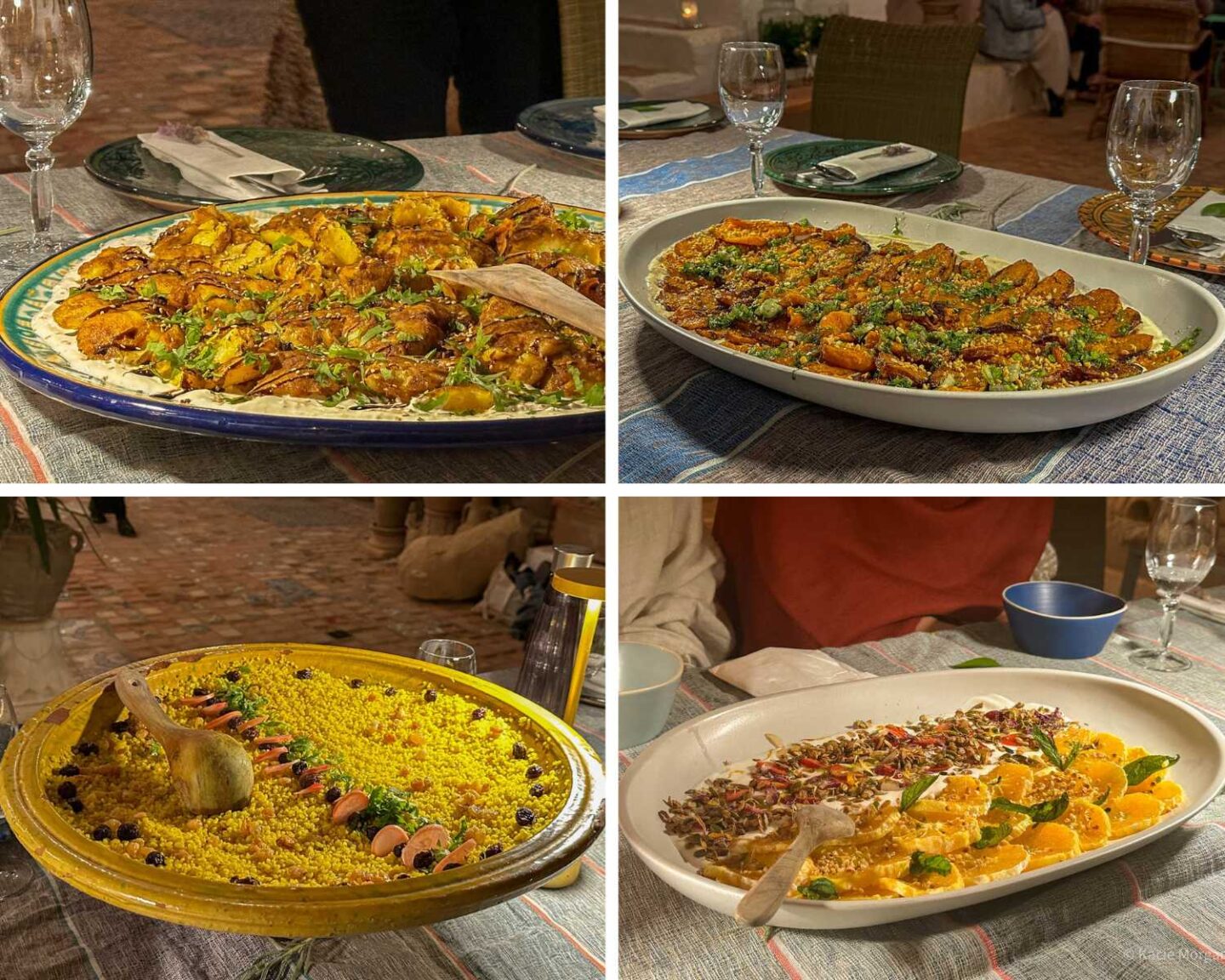
We’re treated to a show-stopping selection of creative plant-based dishes made using local produce, beautifully plated on colourful ceramics. Highlights include oven-braised smashed potato with harissa cream, onion ricotta, and lemon and orange ricotta; homemade bulgur wheat with spices, pickles and raisins; fried pumpkin with tahini sauce and sesame seeds; and oranges with orange blossom water, olive oil, and basil.
Tunis: wining, dining & scoffing street food in the capital
The following morning, we meet for breakfast before embarking on a two-hour drive to the bustling capital city of Tunis.
Marché Central de Tunis (Tunis Central Market)
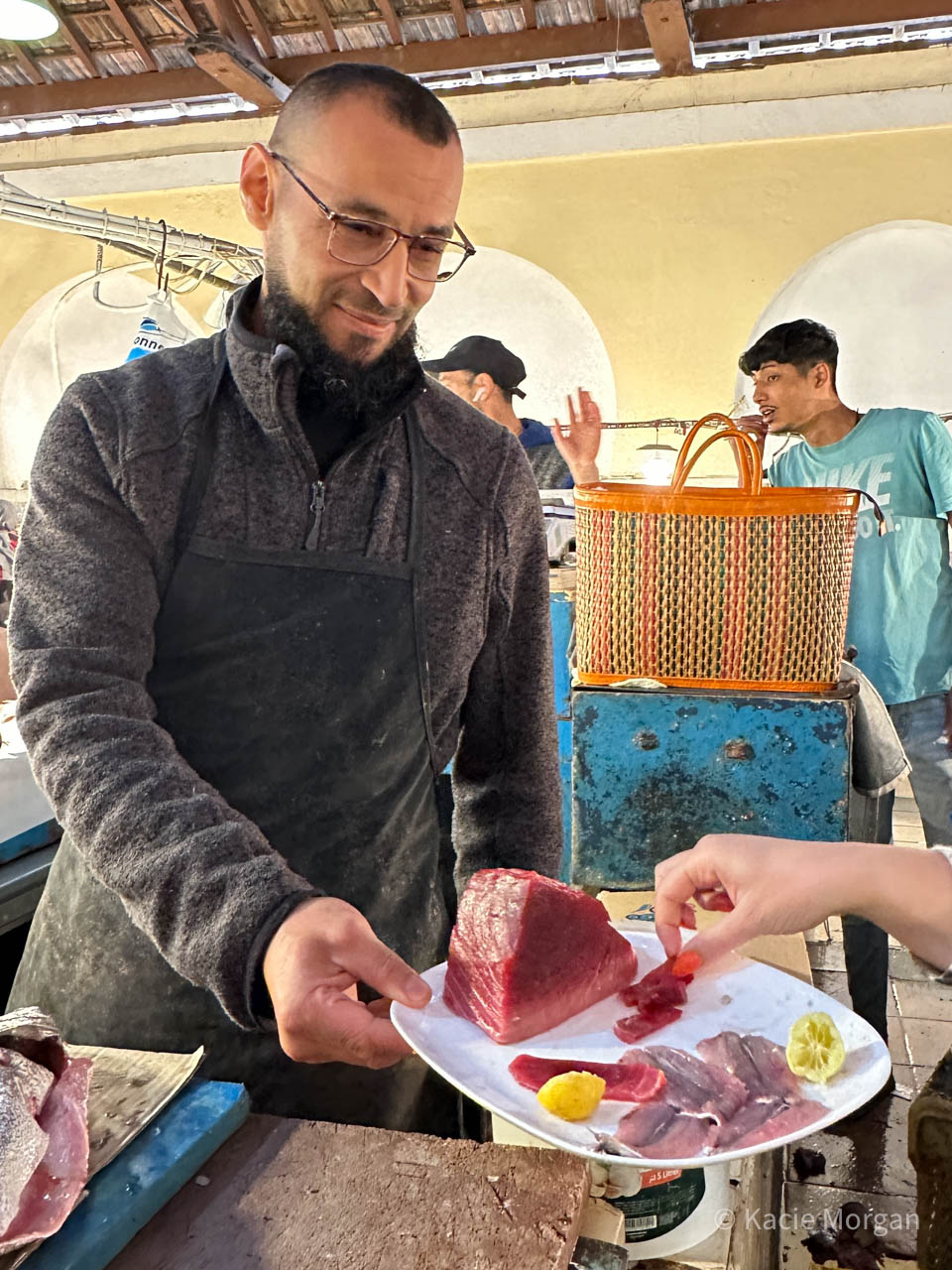
Our first stop is Marché Central de Tunis (Tunis Central Market), where we’re joining local restaurateur, Sadri Smoali on a market tour as he shops for fresh, local ingredients for use in his kitchen that day.
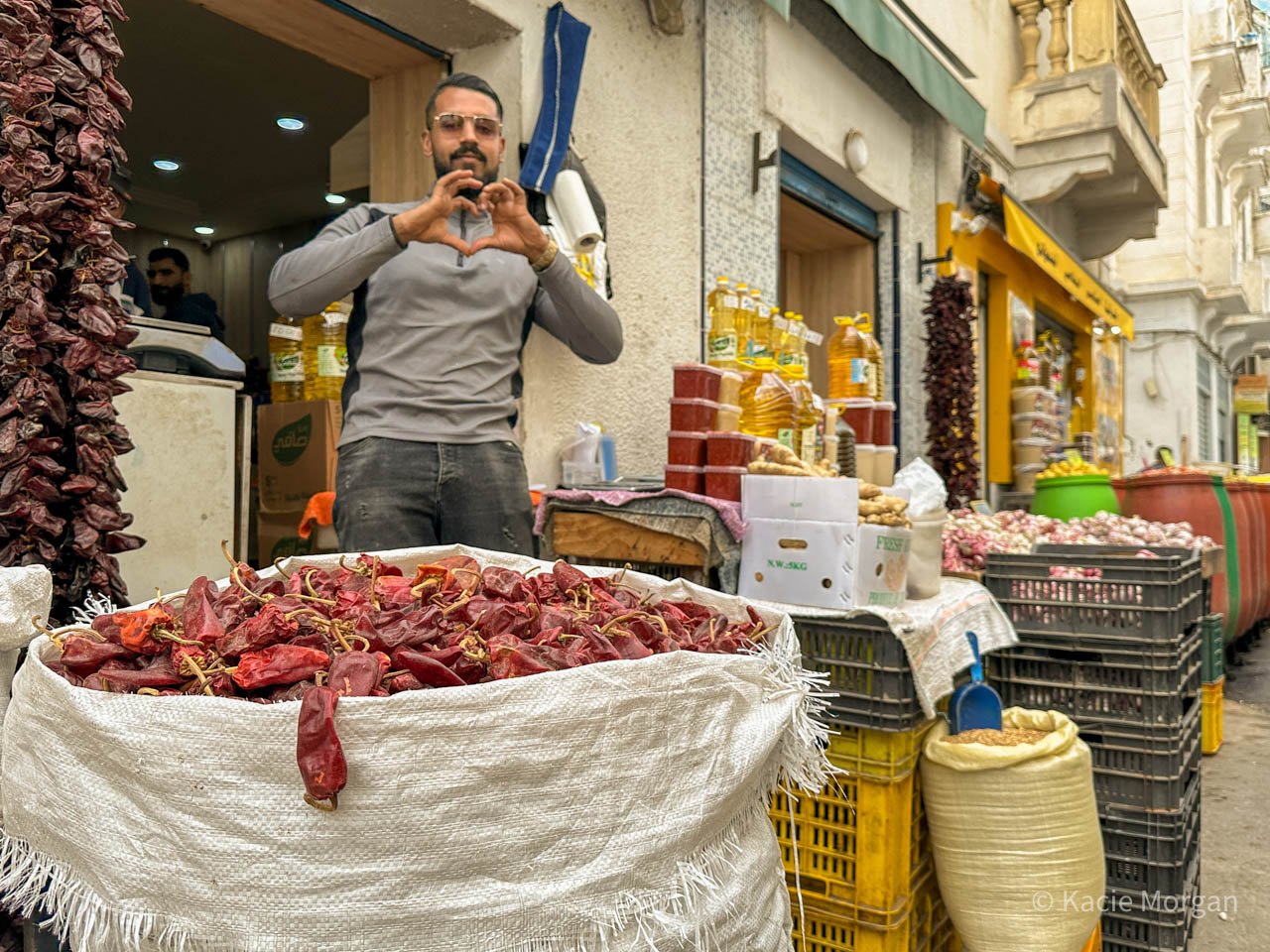
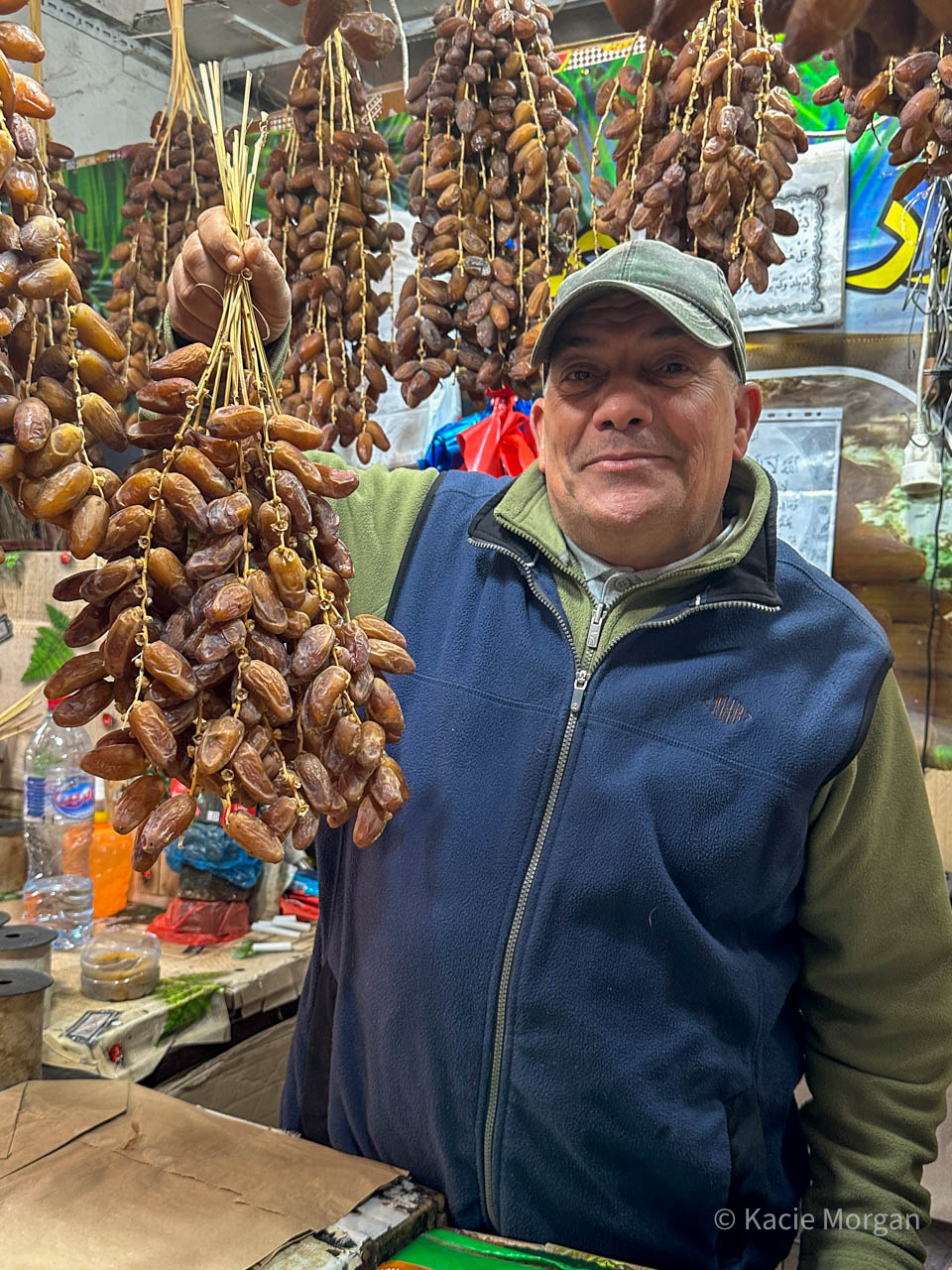
From fresh fish and flowers to Beldi lemons, Tunisian dates, local cheese and Cap Bon chillies, there’s no end to the extent of local, seasonal produce you can find here.

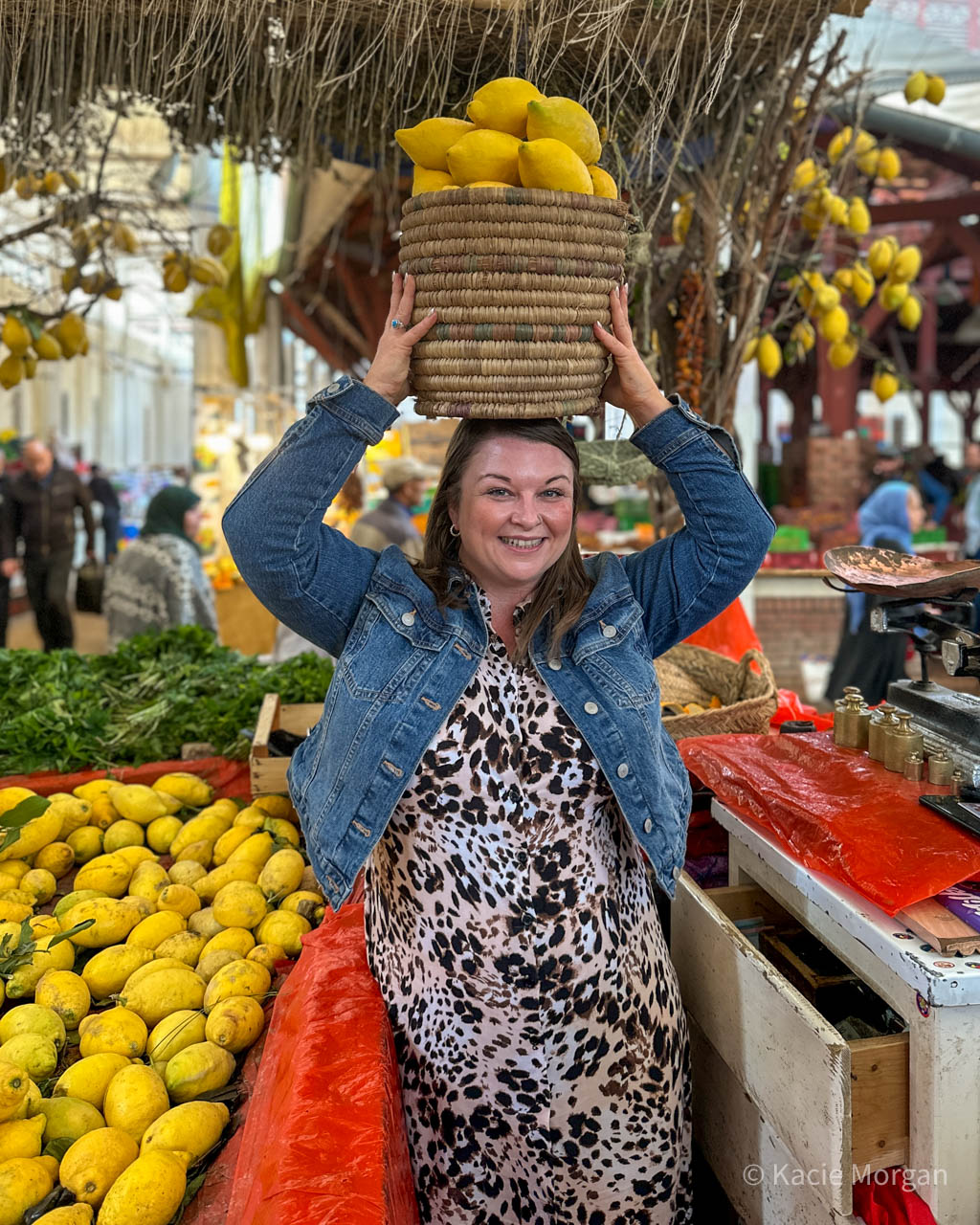
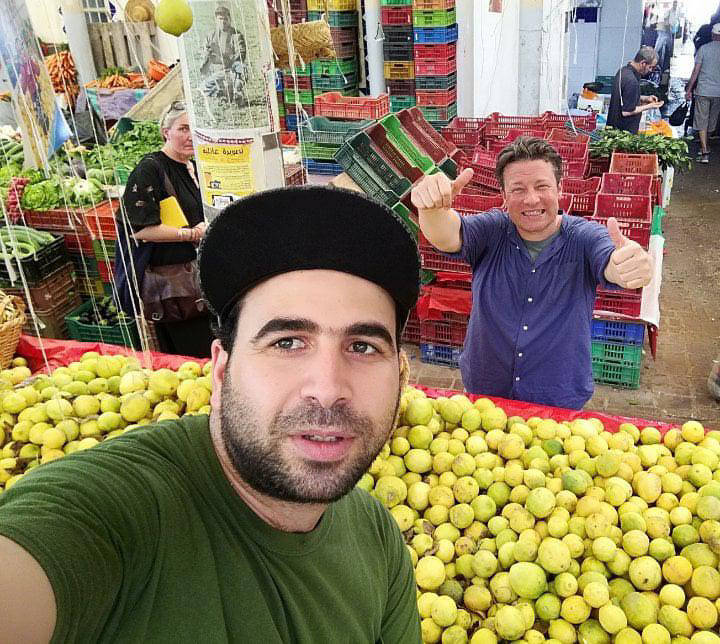
A number of the stall holders featured on Jamie Cooks The Mediterranean (2023). Hamza Ayari combines his passion for photography with his love for fresh Tunisian produce, inviting passers-by to pose with his lemon art installation for photos and videos which he shares on his Facebook and Instagram channels.
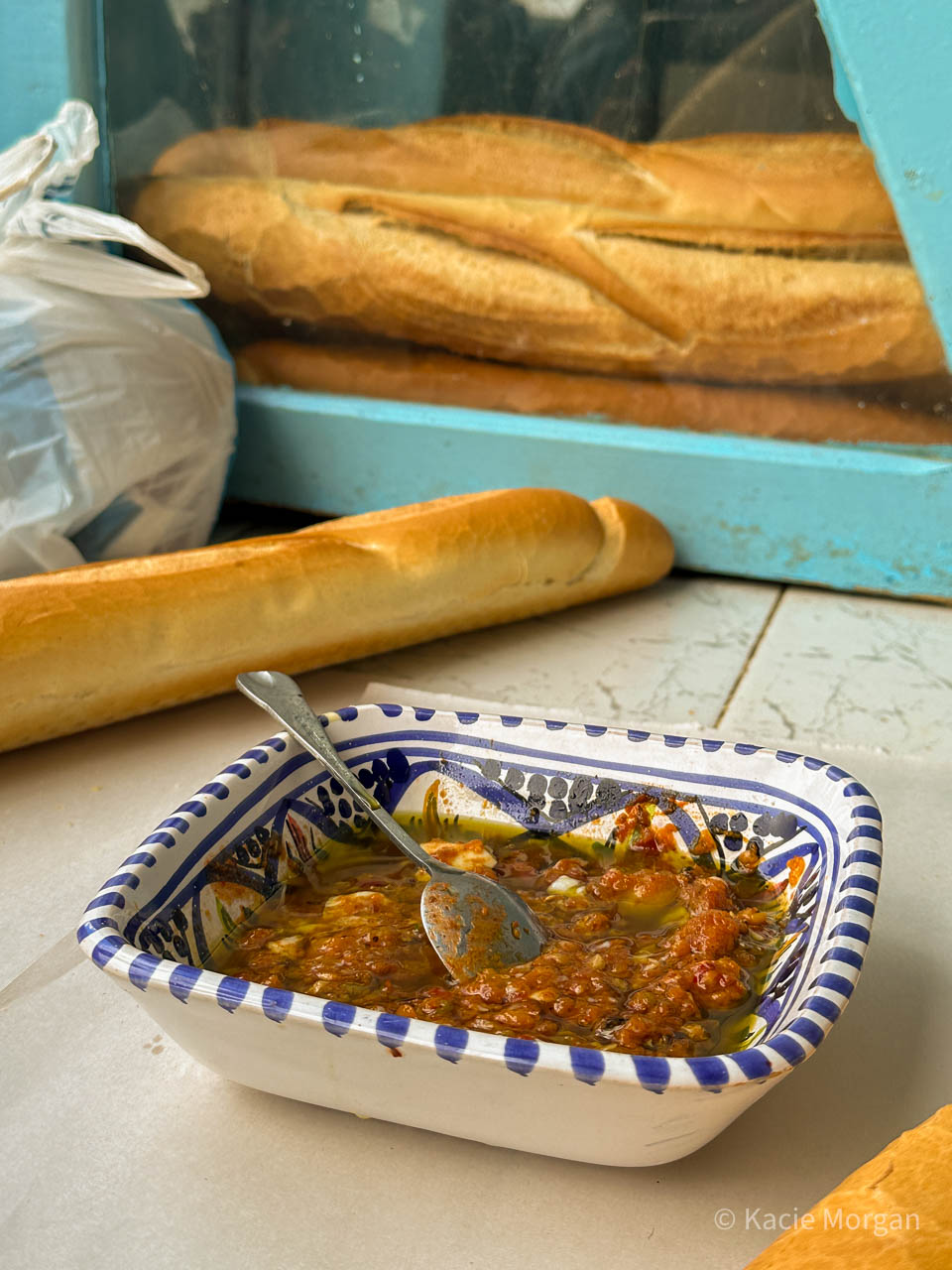
And the market stalls aren’t the only attraction. After our tour, Sadri leads us to a street food stall just outside the market, where we share a traditional Tunisian plate of tuna, olive oil, egg, harissa, olives, lemon and salad with mechouia salad: a moreish mix of olive oil, egg, garlic and peppers (and, sometimes, onions and tomatoes). No cutlery needed; simply tear up a chunk of crusty baguette, and use a fresh piece to scoop up each mouthful.

Dine in a dar in the Medina of Tunis
Styled like the traditional riads of Morocco, Tunisian dars (the Arabic word for “home”) are intimate boutique hotels and restaurants built within converted old mansions or townhouses, often within historic districts and medinas.
Dar Slah
After our market tour, we stroll through the vibrant UNESCO-listed Medina of Tunis to Sadri’s restaurant, Dar Slah. With pride of place on one of the souk’s most colourful streets, Rue de la Kasbah, Dar Slah offers an authentic Tunisian menu with innovative twists. Think squid ink cous cous, hazelnut stew with veal, and fish-stuffed quince.
We’re lucky enough to learn how to make some of the dishes from the menu ourselves in an engaging cookery class with Sadri’s wife, Sofie.
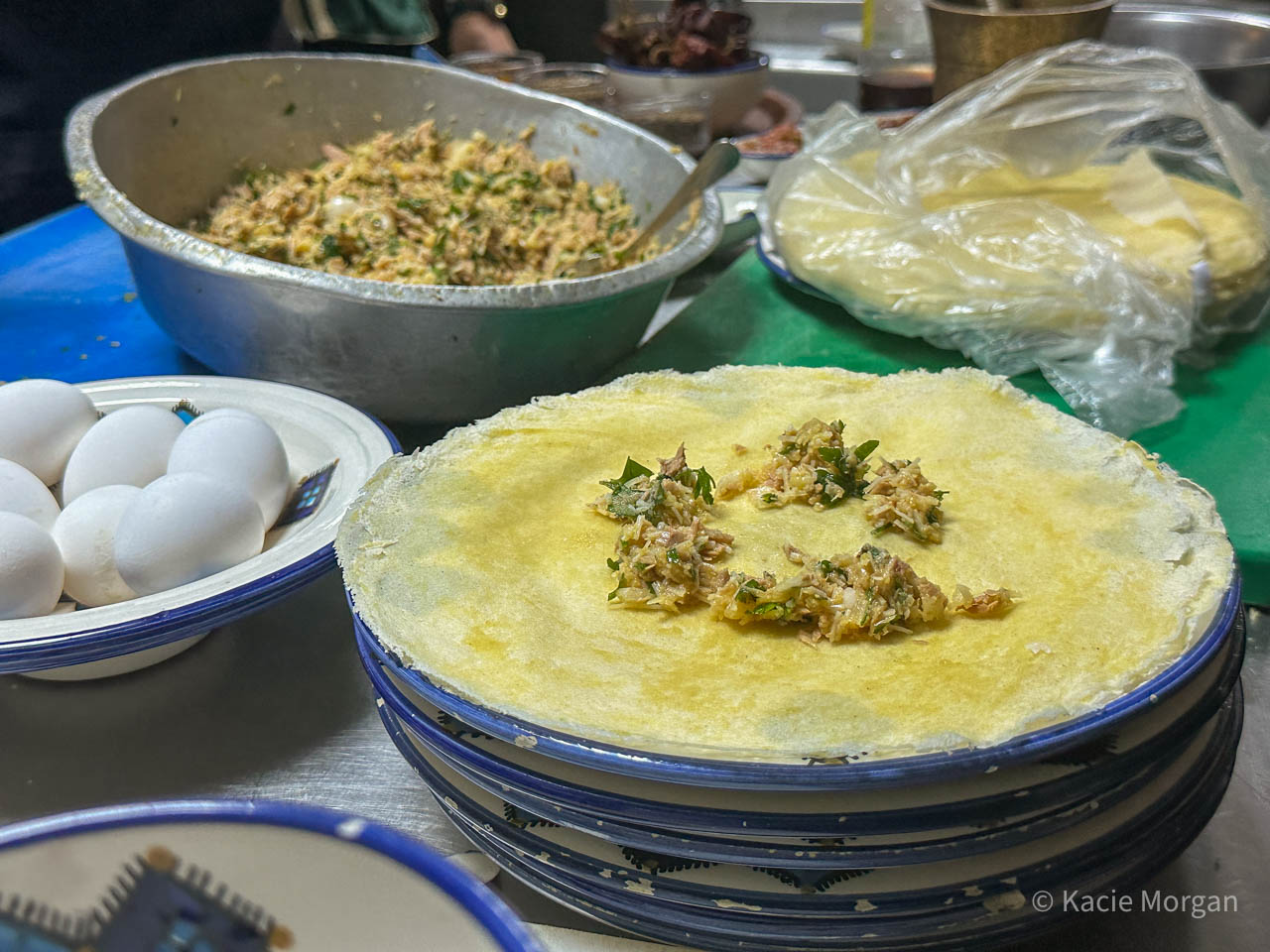
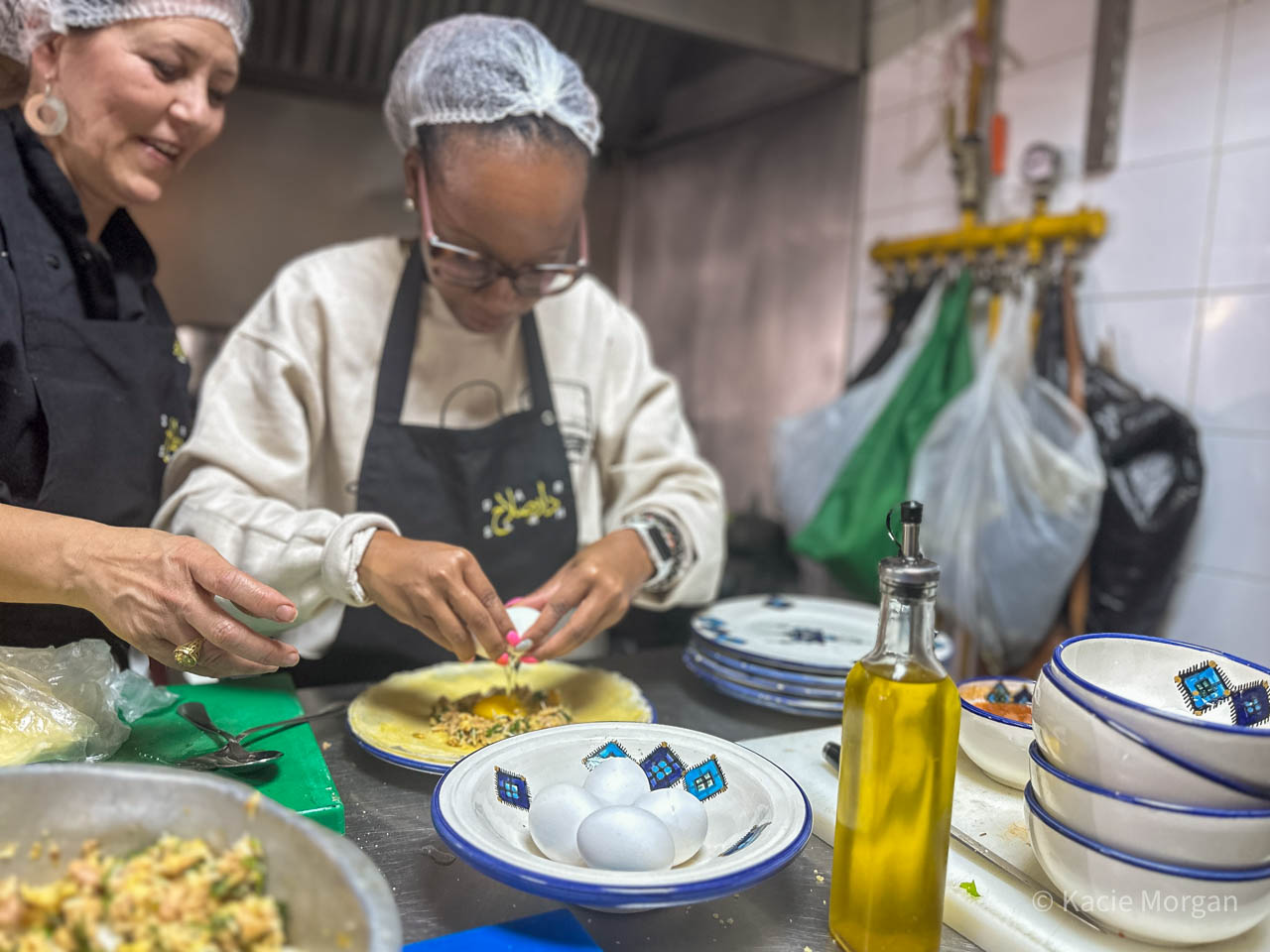
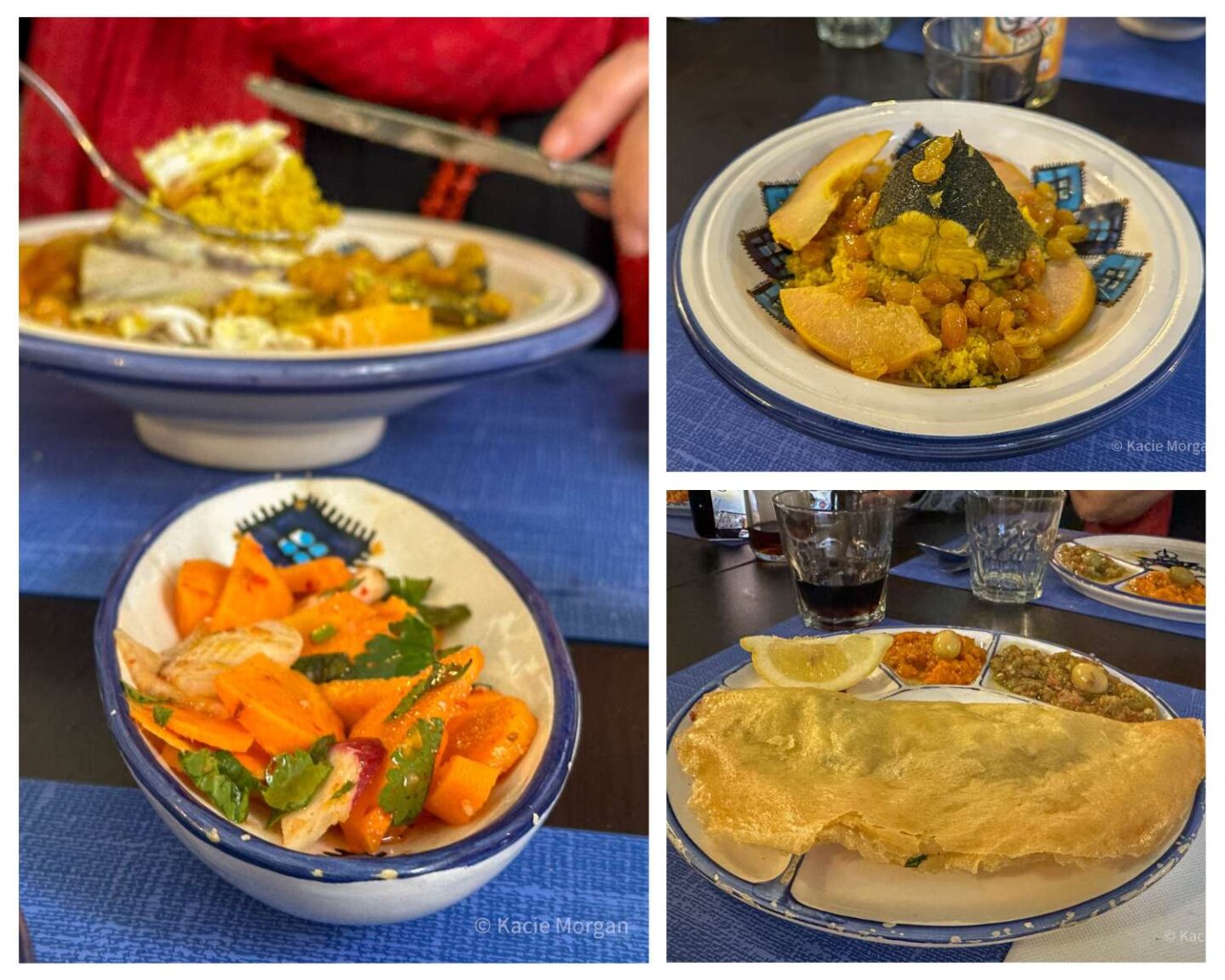
While I enjoyed learning how to make torshi (Tunisian pickle), mechouia salad, and cous cous with fish and quince, Tunisian briq was my most memorable dish. This flaky, deep-fried Tunisian malsouka pastry is filled with tuna, potato, onions, parsley and egg (although fillings can vary) served with lemon, harissa and omek houria (carrot salad).
Dar el Jeld
Five-star boutique spa hotel and restaurant Dar el Jeld is another fine example of a traditional Tunisian dar hotel, also based within the Medina. From its lavish lounges with gilded ceilings and mosaic walls, to the stained glass lanterns hanging from the ceiling, this exquisitely restored restaurant and hotel oozes sophisticated glamour.
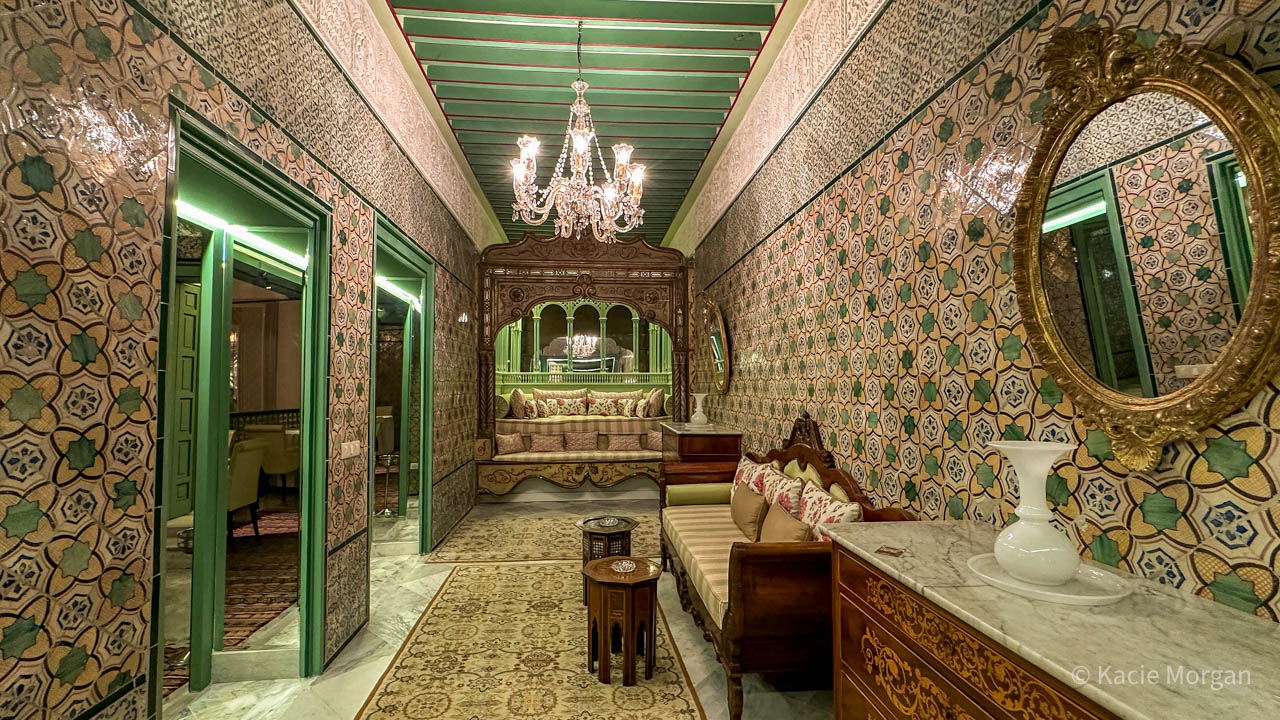
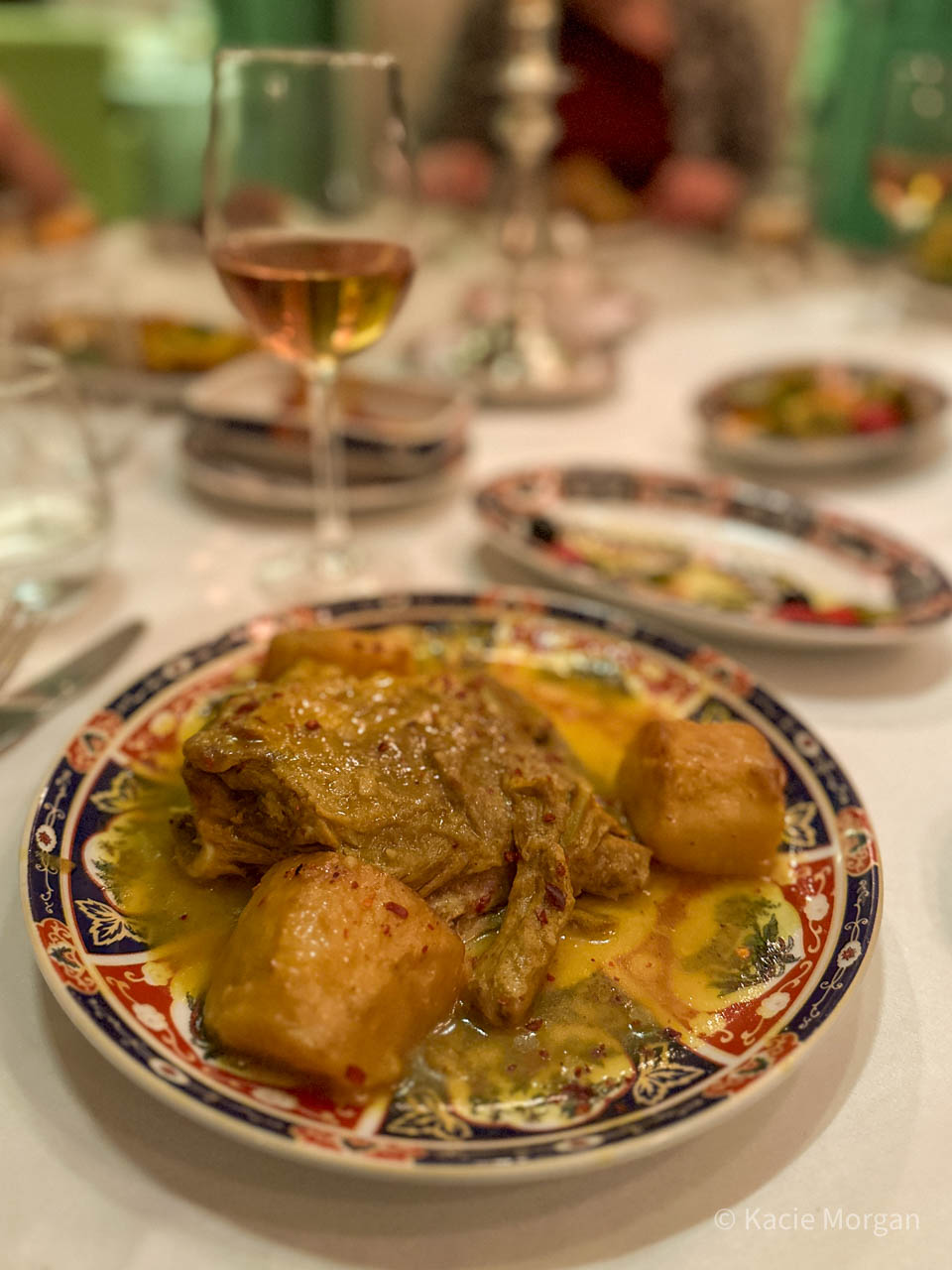
Dining here on another day during our Tunisian food tour, we feast on typical Tunisian dishes like soupe de tortmeche (soup peppered with mini beef dumplings and Tunisian-style ravioli) octopus salad, spinach tagine and roast lamb with potatoes, while listen to the melodic tunes sounding out from the gentleman plucking the traditional 78-stringed kanun in the corner.
Scoffing street food in the souks
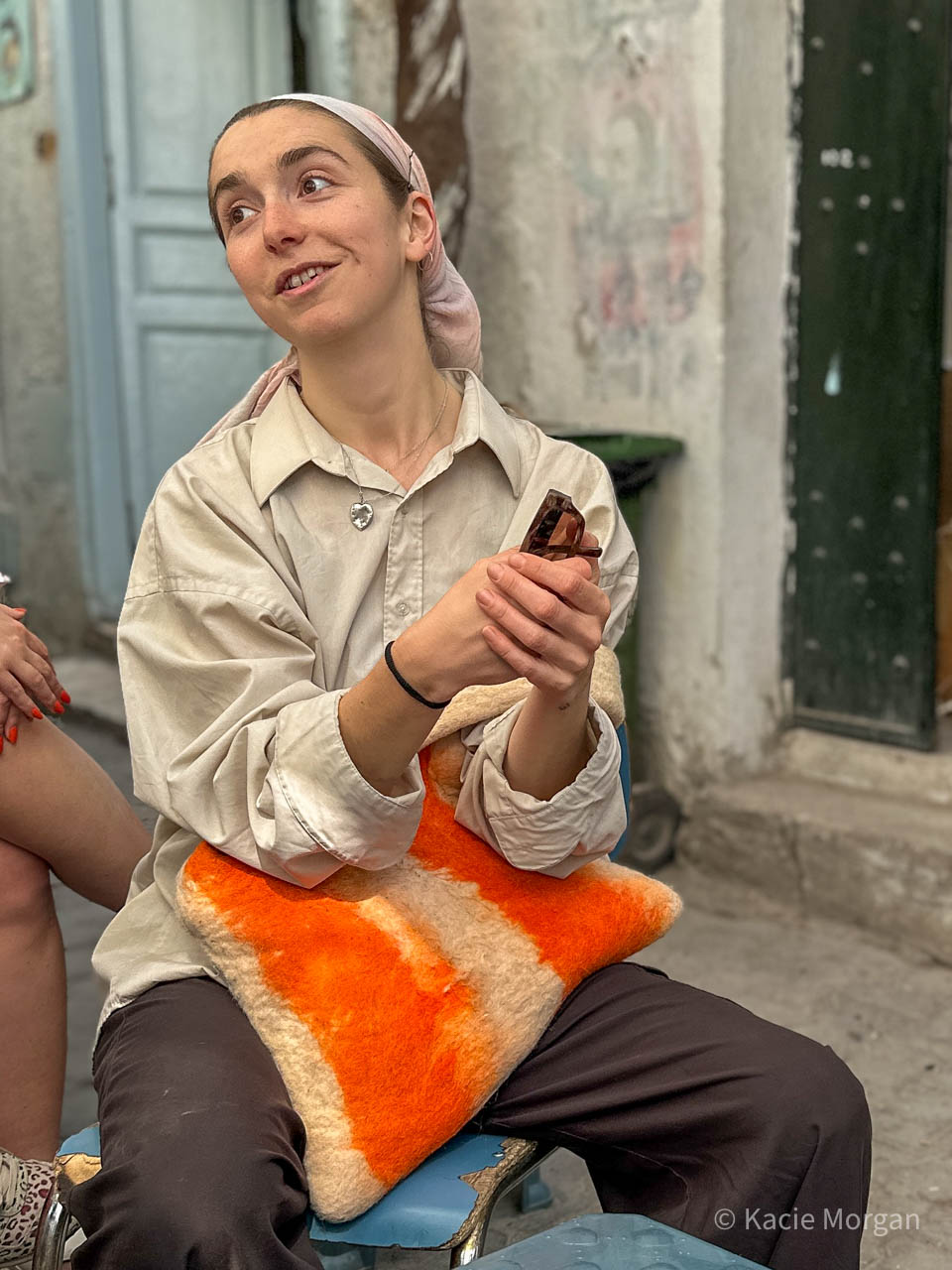
Home to an endless selection of Tunisian street food stalls selling everything from local cous cous to Indian-inspired chapati, the Medina of Tunis is a top spot for casual cheap eats. No Tunisian food tour would be truly complete without stopping here! Strolling through the souks with local artist, researcher and cultural programmer Emily Sarsam – co-founder of highly respected Tunisian food culture publication, Broudou Magazine – as our guide, we’re well-placed to explore the Medina by belly.
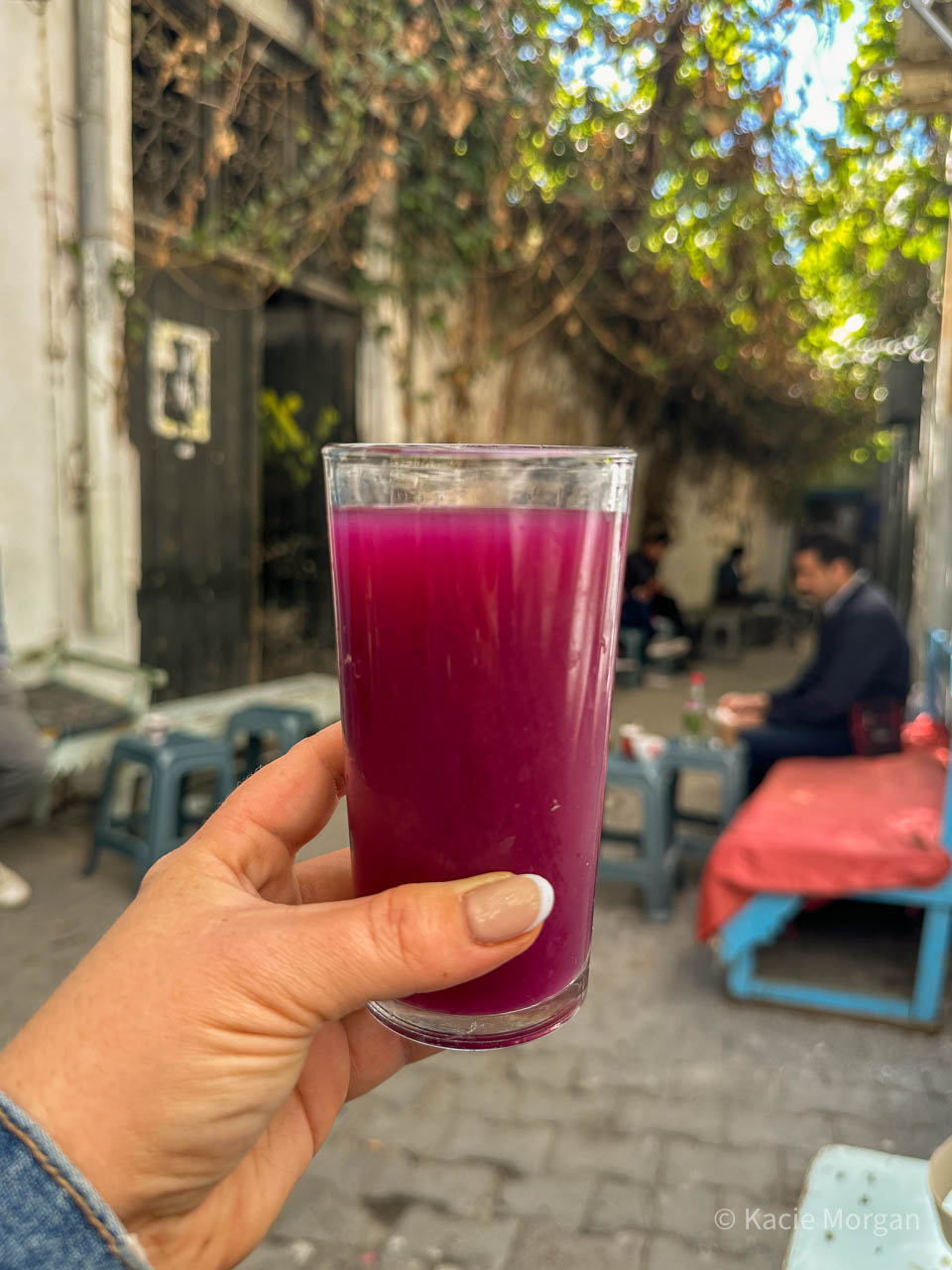
Sipping on grape juice fresh from the vine at the aptly-named 800-year-old Grapevine Cafe (a.k.a The Market Cafe), Emily explains how the history and culture of Tunis has shaped the city, including its food and drink scene.
Moving on, we stop at Sandwich al Khalifa, whose iconic kaskrout hlou sandwiches have kept locals coming back since 1960. A baguette stuffed with nutty halwa chamia, creamy butter and jam, this sweet sandwich is almost like a Tunisian twist on classic American peanut butter and jelly.
Indulging our sweet tooth further, we munch on makroudh (just like those we had at Dar l’Harissa) and pick up some Sicilian and Maltese treats from a time-old family patisserie, Patisserie Garza to nibble on just in case we get peckish after our Tunisian food tour (yeah, right!)

Sampling traditional Tunisian keftaji and lablabi for the first time was a real highlight. Huddled around a table outside Restaurant Ouled Ahmed – established almost 60 years ago – on Rue d’Algérie, we tear up a crusty white baguette, before passing it back to the chef. He returns the bowl to us topped with a spicy broth, chickpeas, harissa, poached egg and parsley (sometimes, tuna is also added). After mixing it together vigorously, we ravenously dig in.
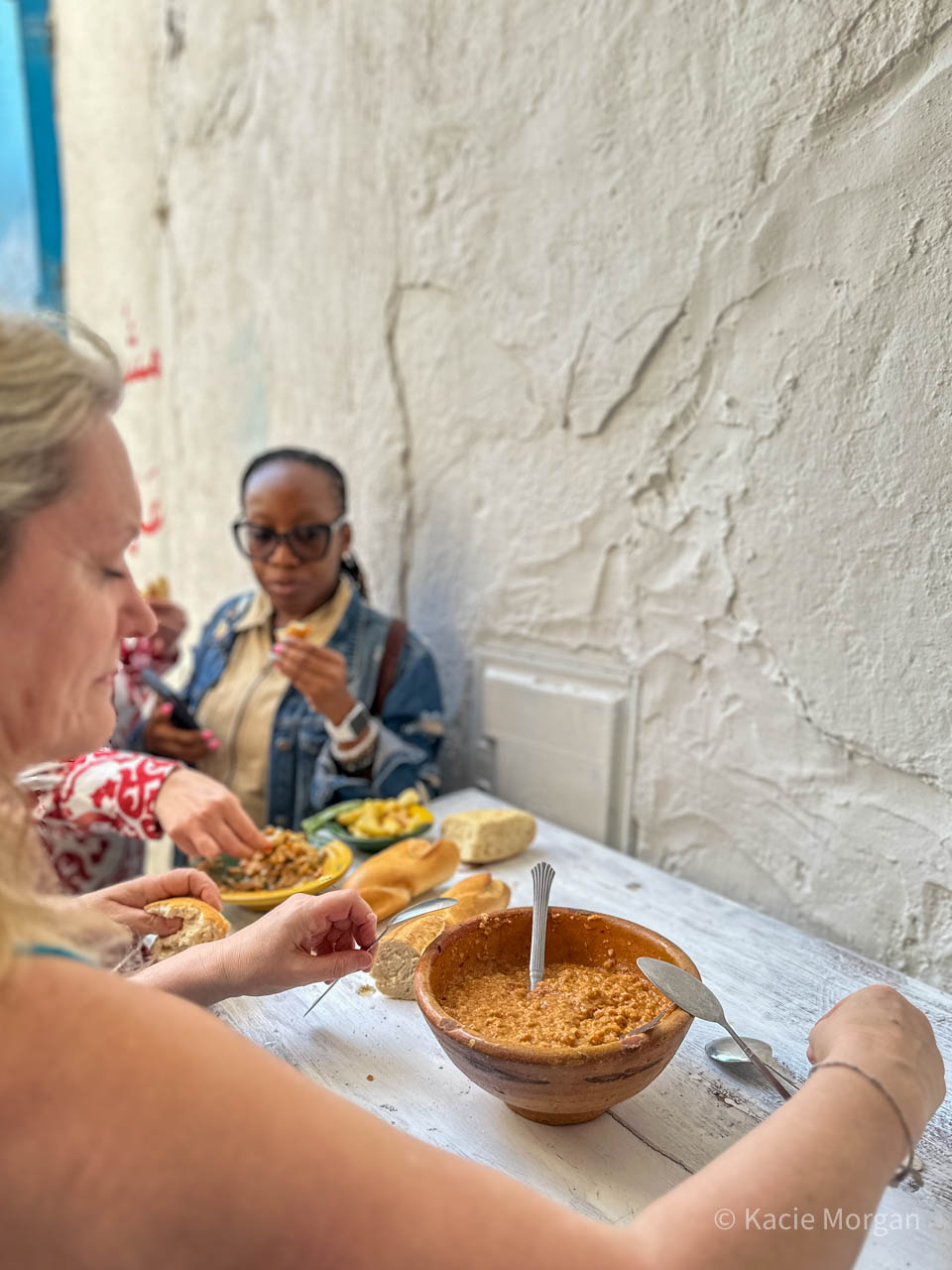
Without a single knife or fork in sight, torn chunks of freshly baked baguette provide the perfect vessel for this harissa-spiced chickpea soup.
Served with crispy French fries and fried green peppers, keftaji is a mixture of fried vegetables, egg and spices. Like lablebi, it’s ideal for mopping up with morsels of fresh bread.
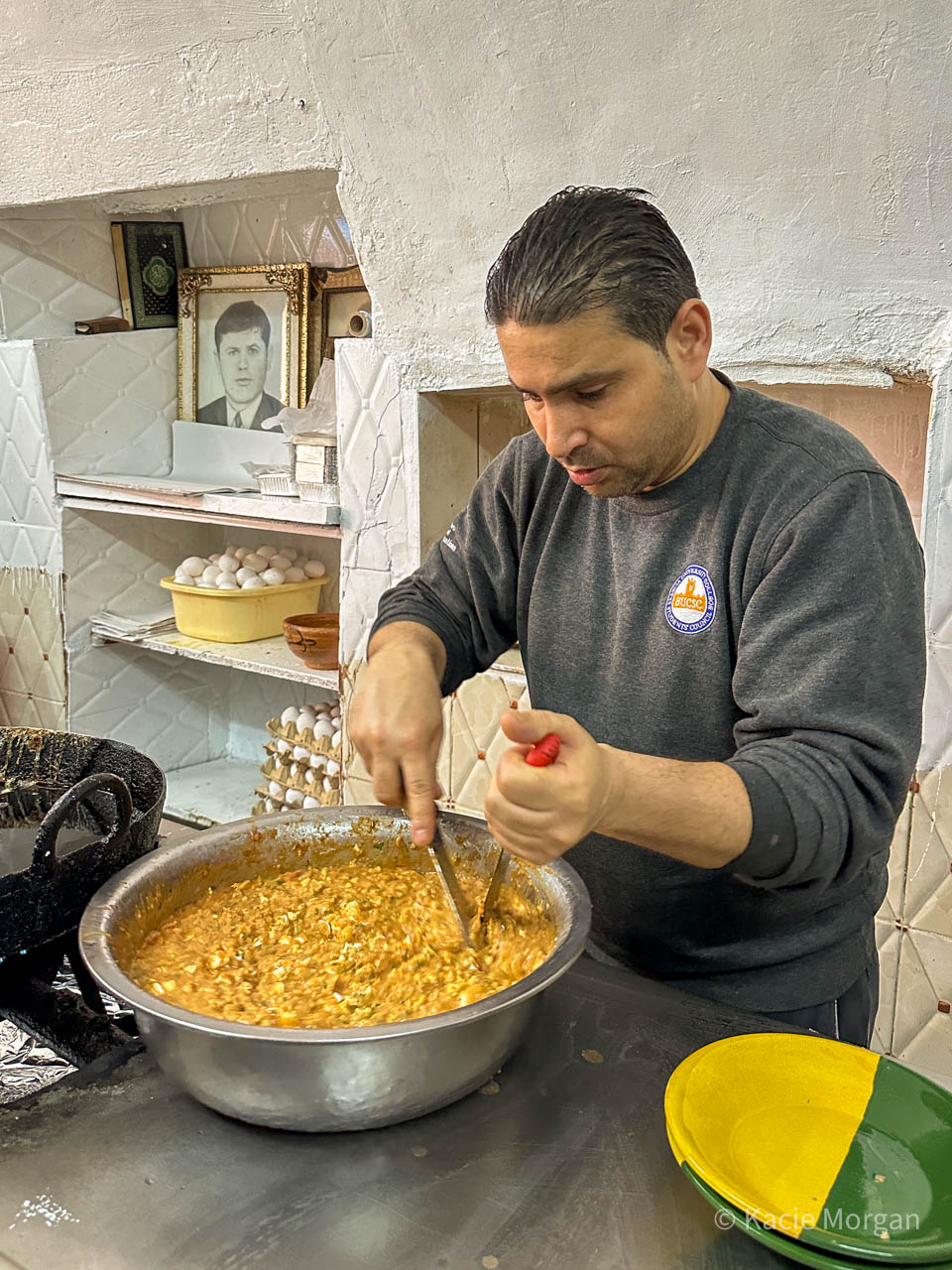
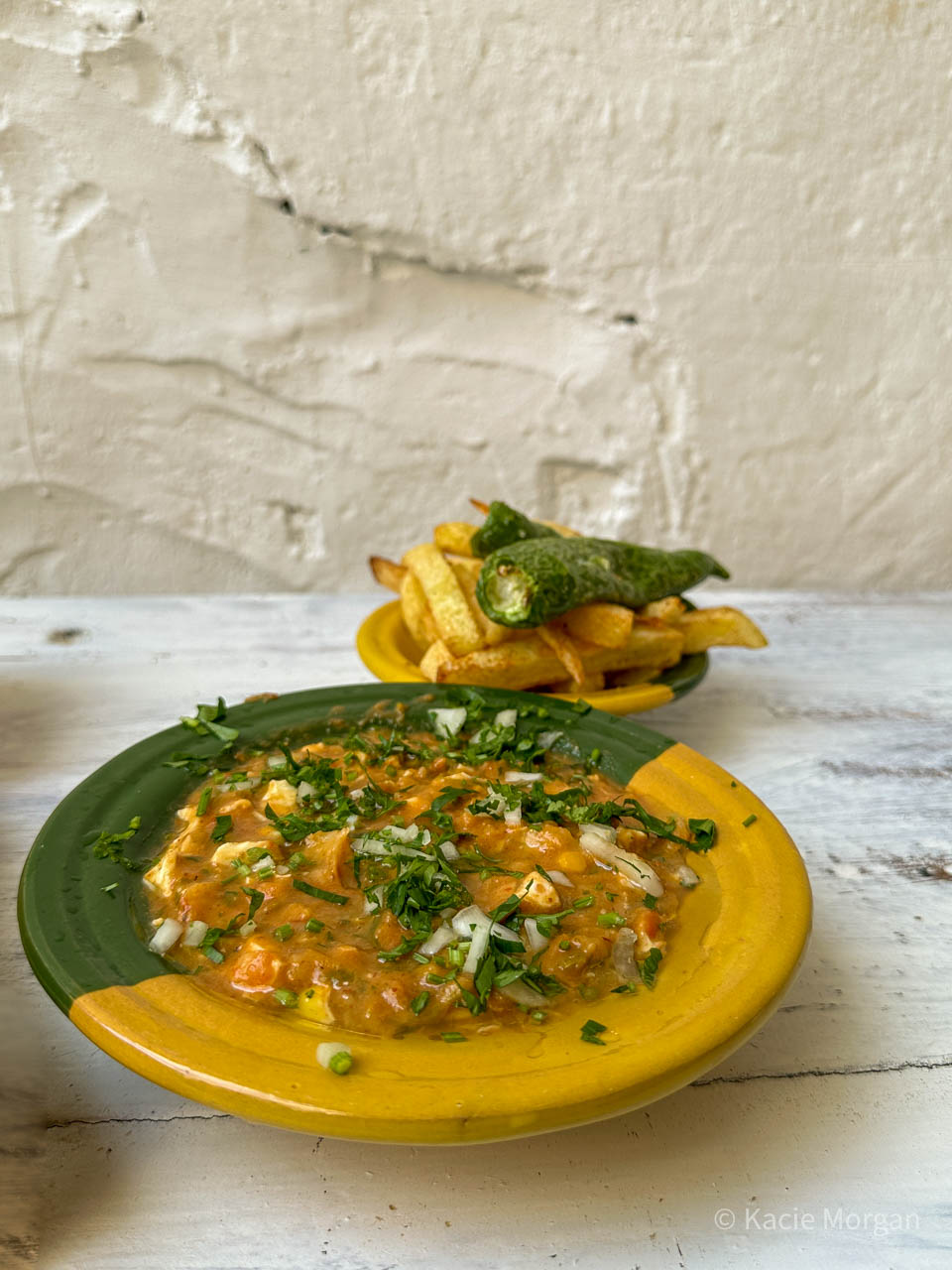
Not only do keftaji and lablebi taste absolutely divine, but I loved the interactivity with the chef and the sharing element of these dishes. This, combined with the authenticity of the food and the insightful anecdotes Emily shared as we ate, made this one of the highlights of our Tunisian food tour.
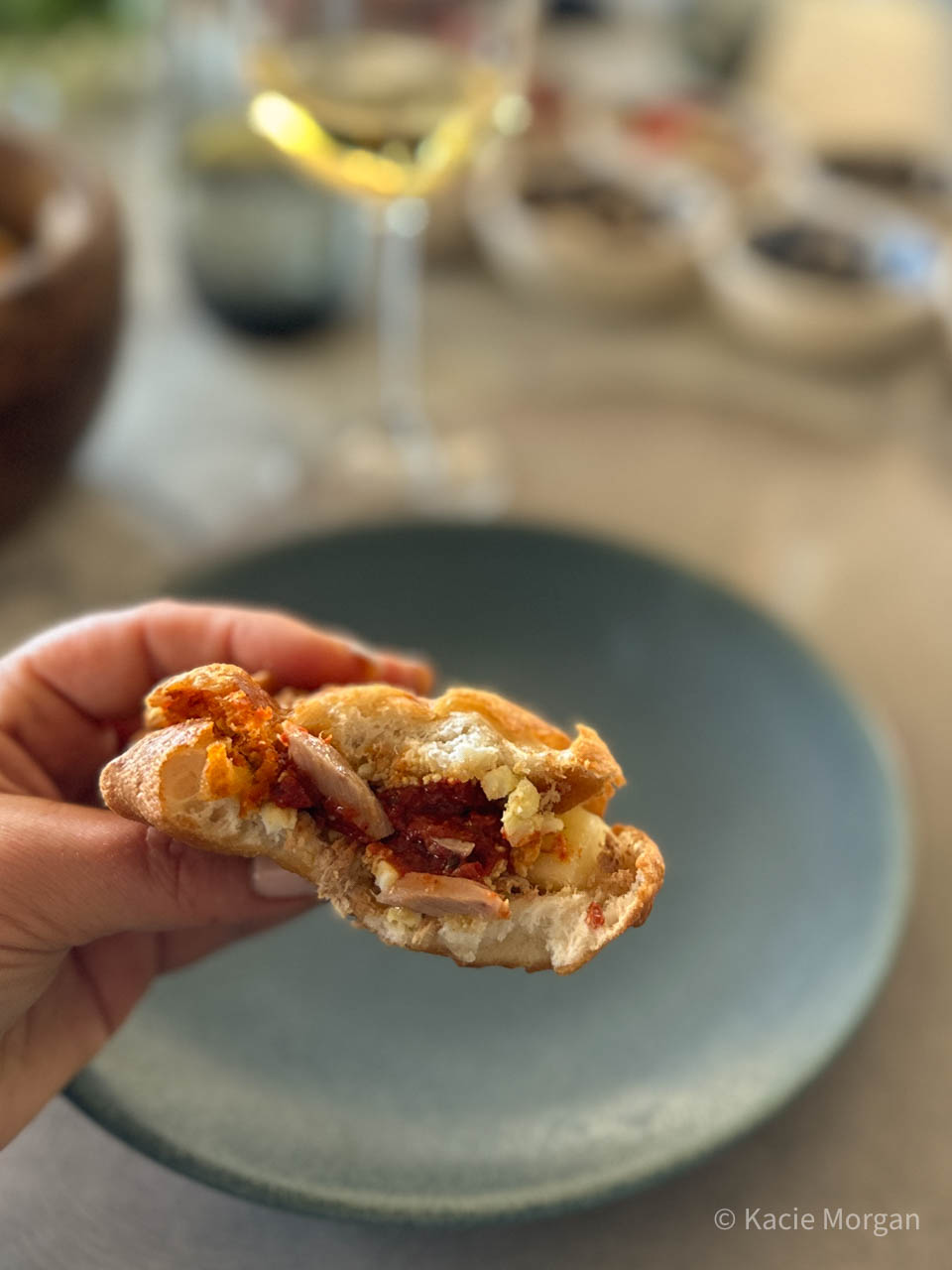
Despite the absence of an official title above its door (although Google Maps lists it as “beignet tunis medina“), the street cafe we visit for our next stop has been loved by locals since the 1970s. Here, we observed the preparation of traditional Tunisian fricassée, a savoury fried brioche sandwich filled with potato, harissa, tuna, black olives, egg and mechouia salad.
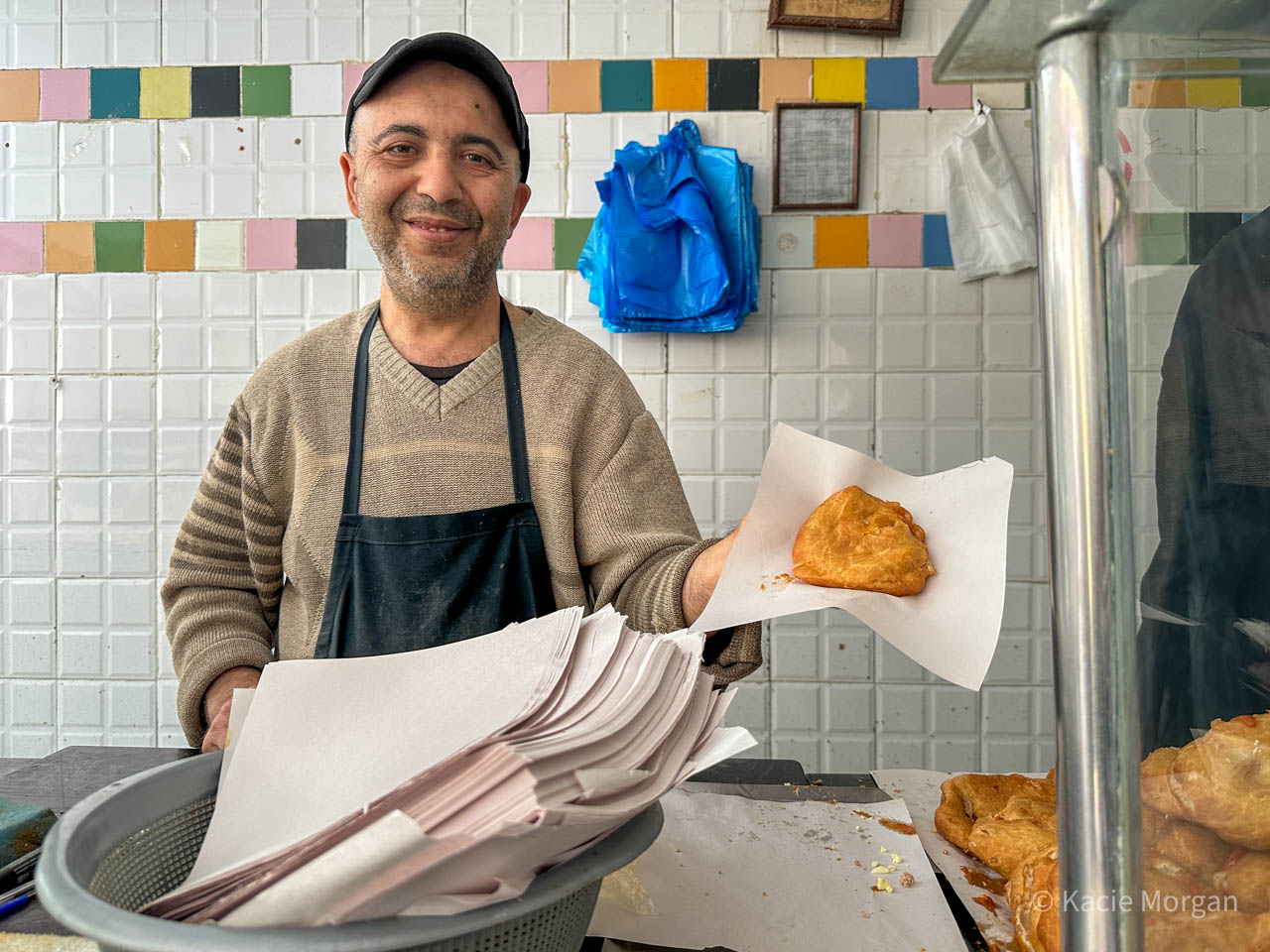
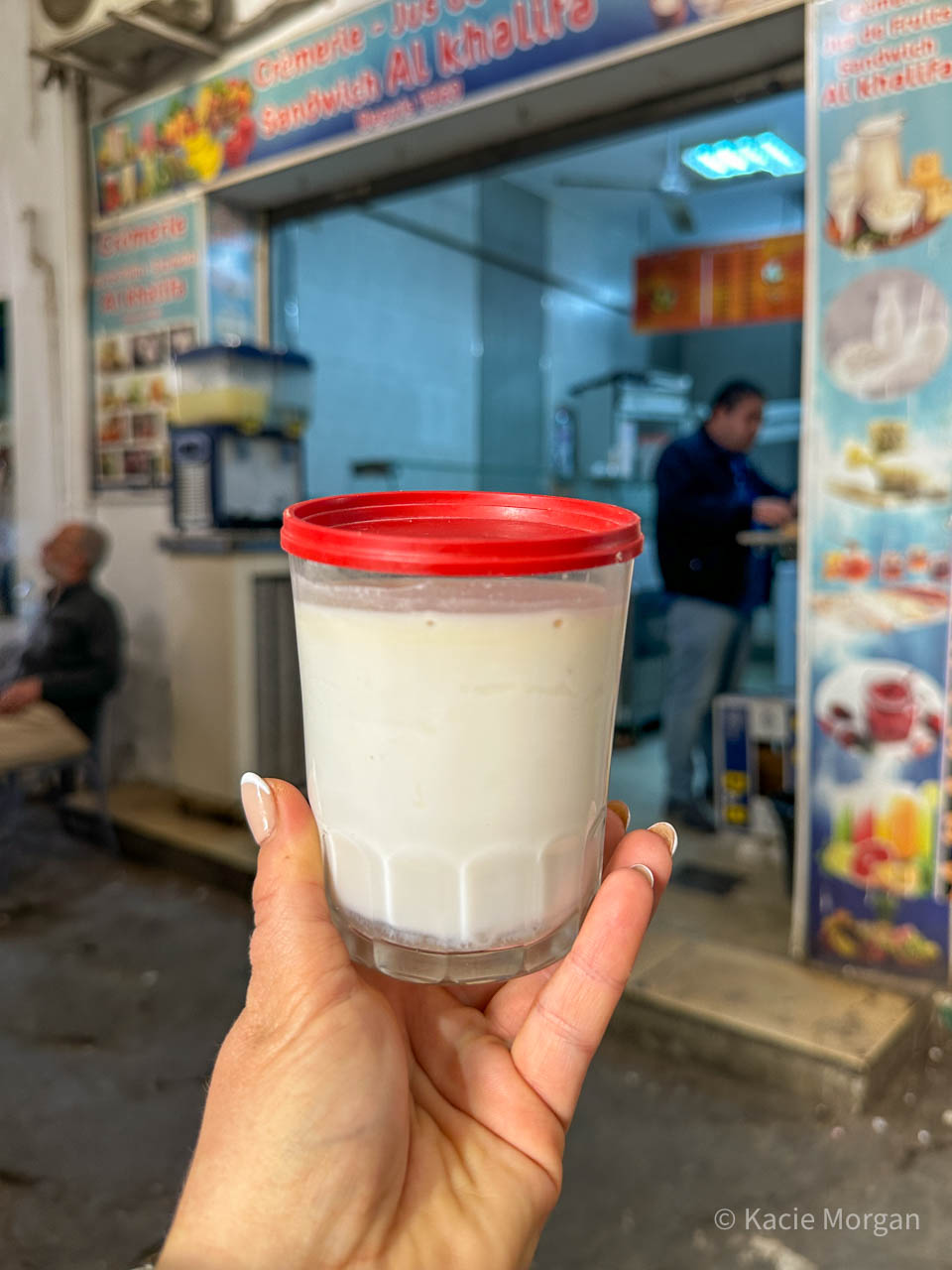
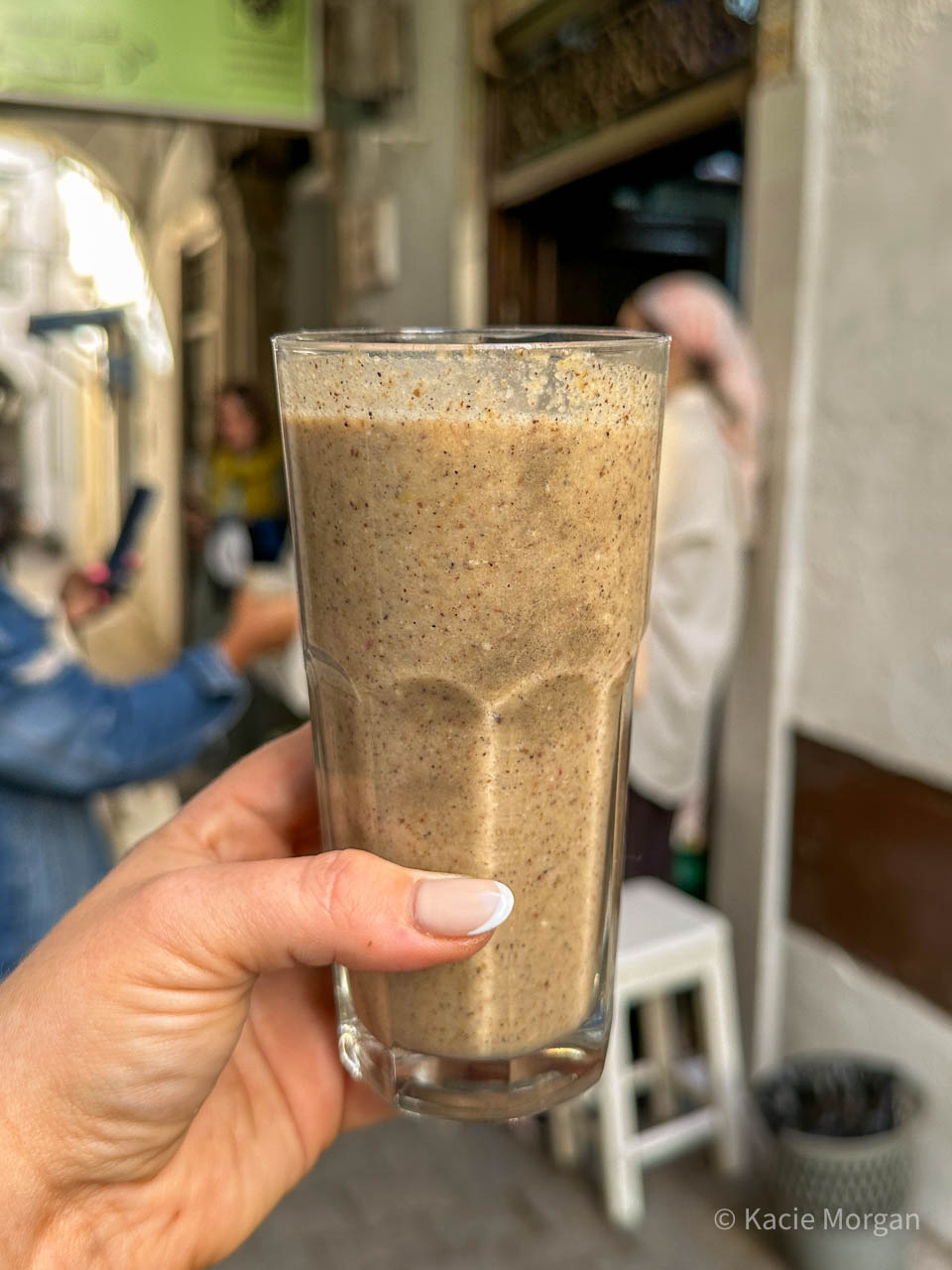
Less palatable were the runny sour milk and, although others enjoyed the mixed nut, plant-based milk shakes we ordered from quirky little hole-in-the-wall, Cocktails Am Hassine, I wasn’t entirely convinced.
Tasting Tunisian wine
Although many authentic Tunisian eateries don’t serve alcohol, you won’t struggle to order a glass of vino at more modern eateries. Despite its relative absence in many restaurants, however, wine-making in Tunisia dates back to ancient Carthage. Some of Tunisia’s oldest vineyards can be found in the aforementioned Cap Bon region, with Sawa Taste of Tunisia’s four-day Cap Bon Epicurean Tour including a local vineyard visit.
Tunisia’s oldest winery
The next stop on our Tunisian food tour takes us to modern Tunisia’s oldest winery, Les Celliers de Montfleurry for a tour and wine-tasting. Founded in 1895 by a French colonial immigrant, the winery has produced Tunisia’s most popular table wine, Koudiat for decades. Today, they’re one of the biggest wine producers in the country, producing up to 50,000 bottles every day.
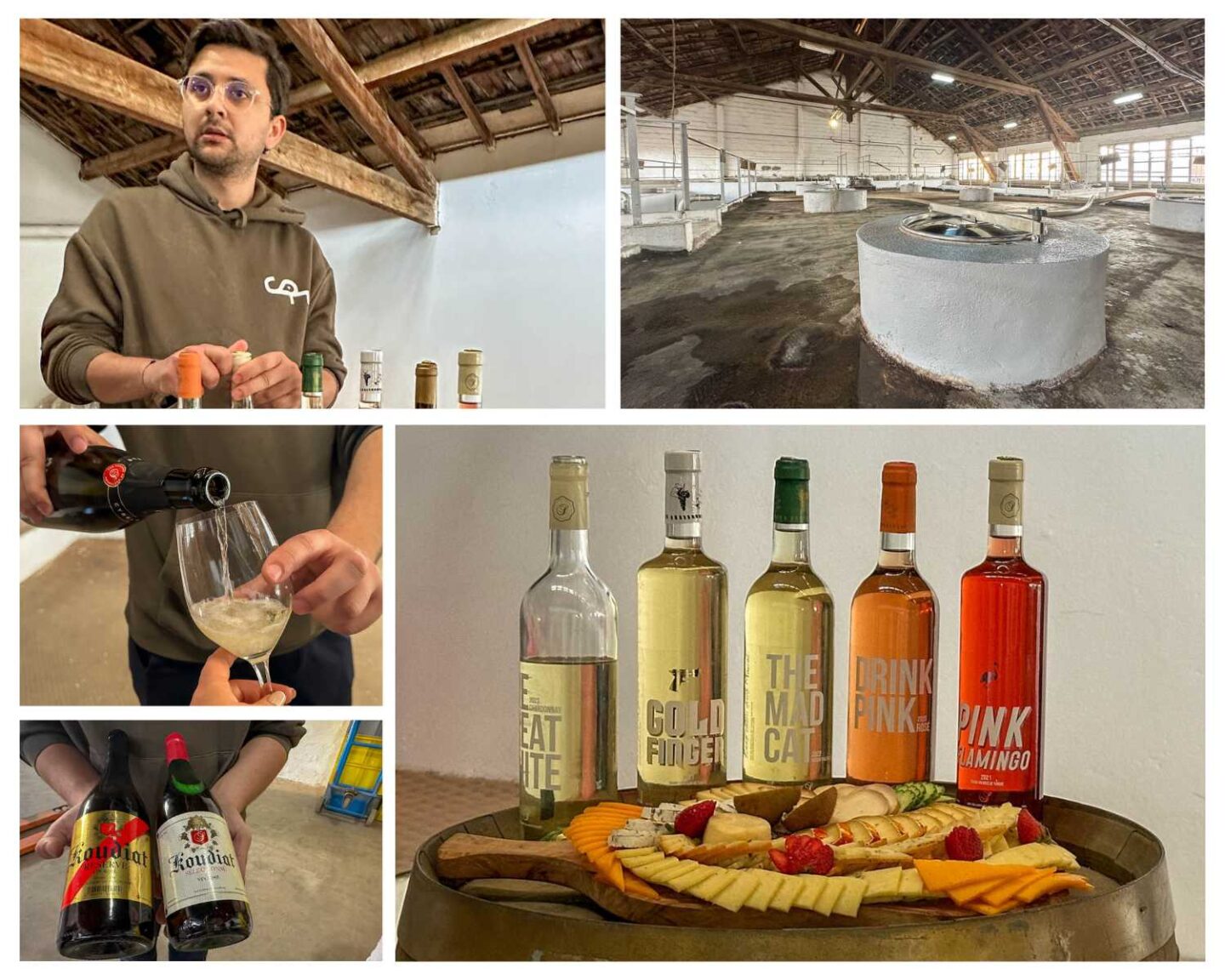
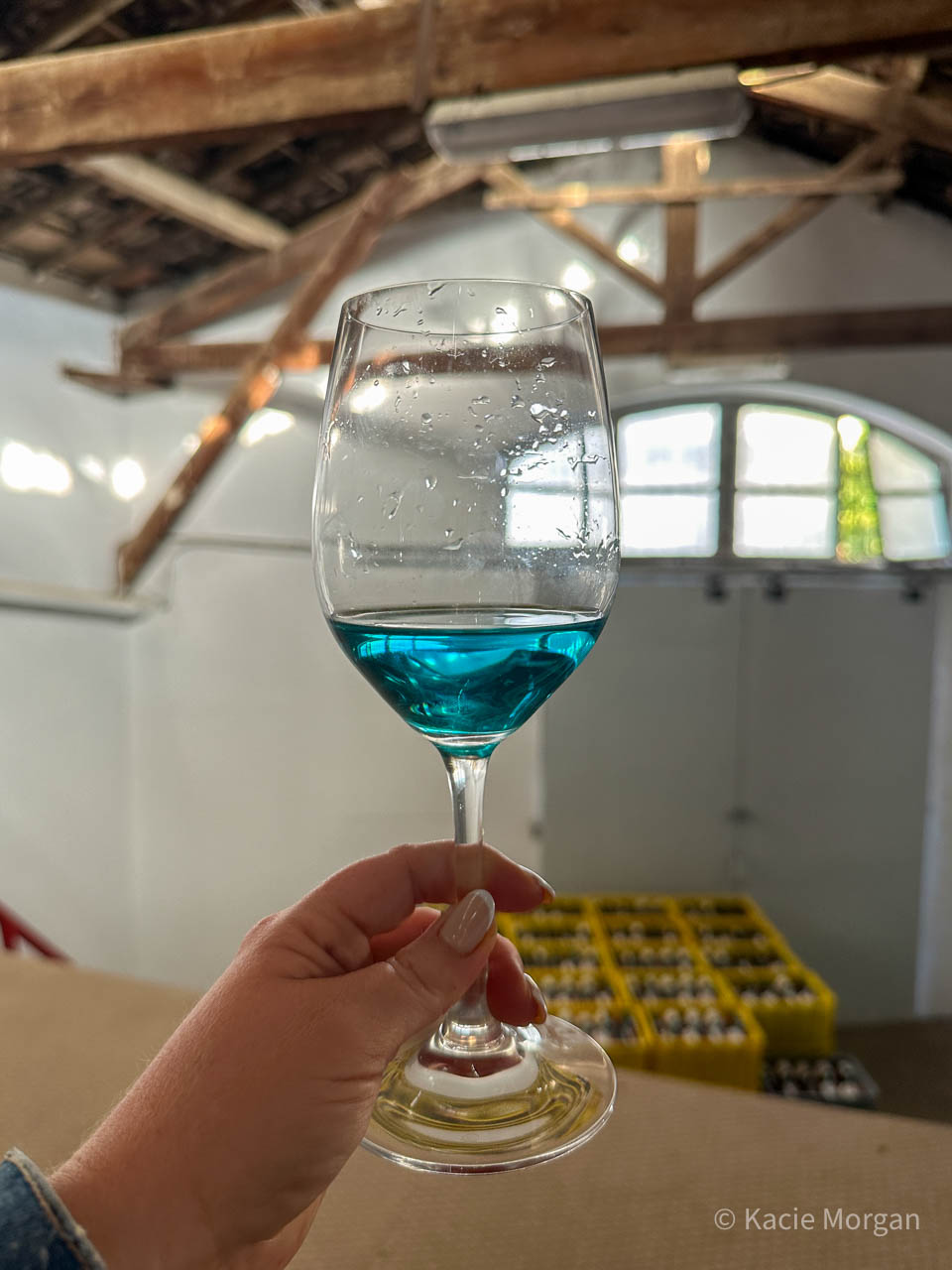
In recent years, under the oversight of Bordeaux-trained Tunisian oenologist, Fares Ben Mahmoud, Les Celliers de Montfleurry has introduced an innovative new series of single varietals using French and indigenous grapes and a range of naturally flavoured and coloured sparkling wines like this striking blue spirulana-based wine, Trocadero Bubbly Blu (priced at around 39 DT, or £10).
Sampling Tunisian olive oil
While Tunisian wine has a rich cultural heritage, this isn’t all we have to thank ancient Carthage for. Rumour has it that one of the oldest olive trees in the world was planted by the Carthinigians – the 2,500 year old patriarch of Echraf, based in Cap Bon.
Benefiting from the balmy Mediterranean climate, Tunisian olive oil is a staple of the country’s cuisine and culture, renowned for its beneficial health properties and its distinct, fruity and somewhat peppery flavour.

What remains of ancient Carthage can be seen by visiting the UNESCO-listed Carthage Archaeological Museum, on the outskirts of Tunis. Today, however, we’re heading to the affluent residential suburb surrounding the ancient city ruins to intimate boutique hotel and restaurant, Villa Didon Carthage, famed for its epic views over the old city.
Tasting award-winning Tunisian olive oil
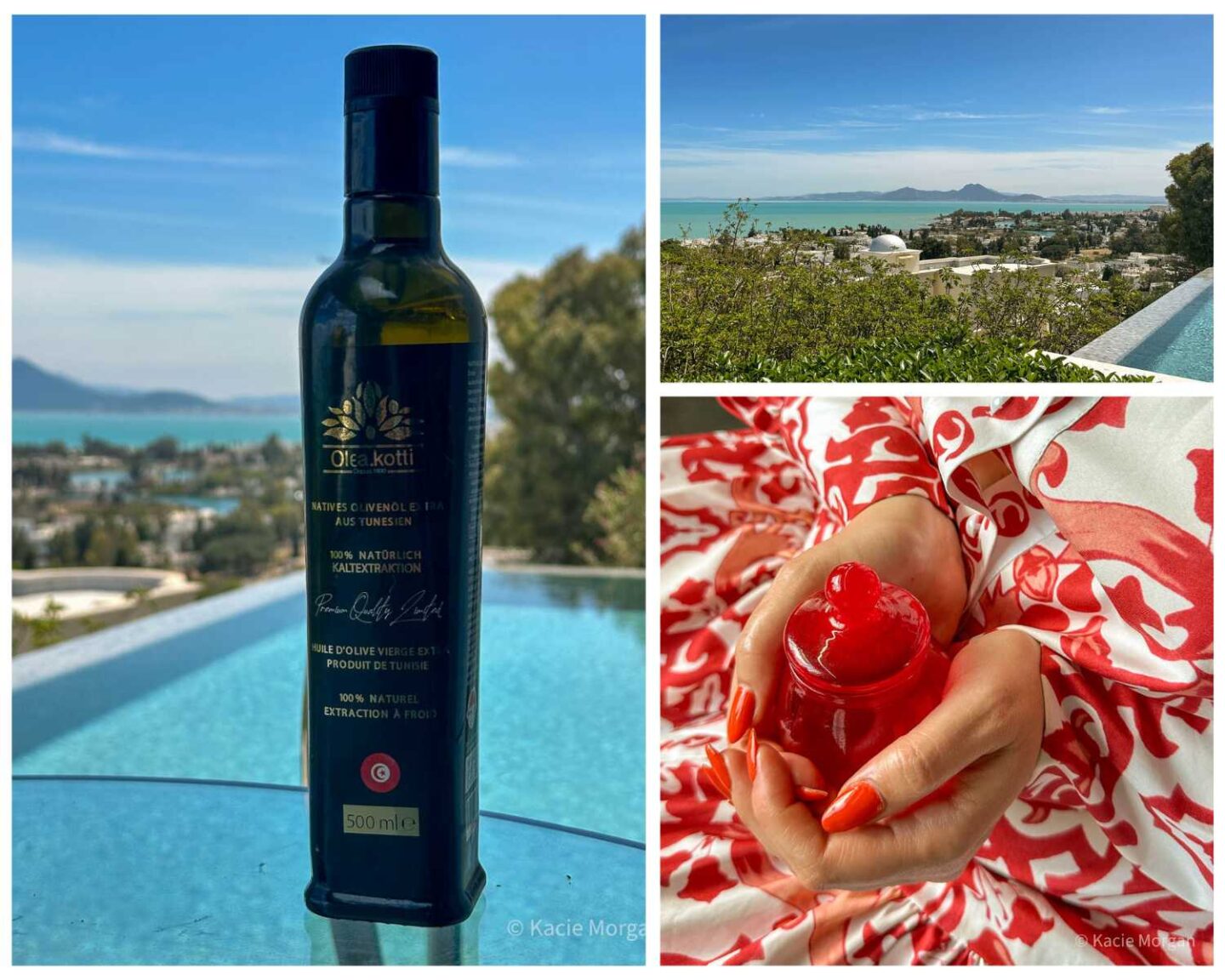
Brought up by three generations of olive tree-owning families, it’s hardly surprising that Mohammed Al Kotti is so passionate about olive oil. After giving up his career in pharmaceutical medicine to follow his dream of producing olive oil, he set up Olea Kotti in 2021.
Three years on, and his organic extra virgin, cold-pressed olive oil has racked up an accolade of international awards from as far afield as Japan, China, and Canada.
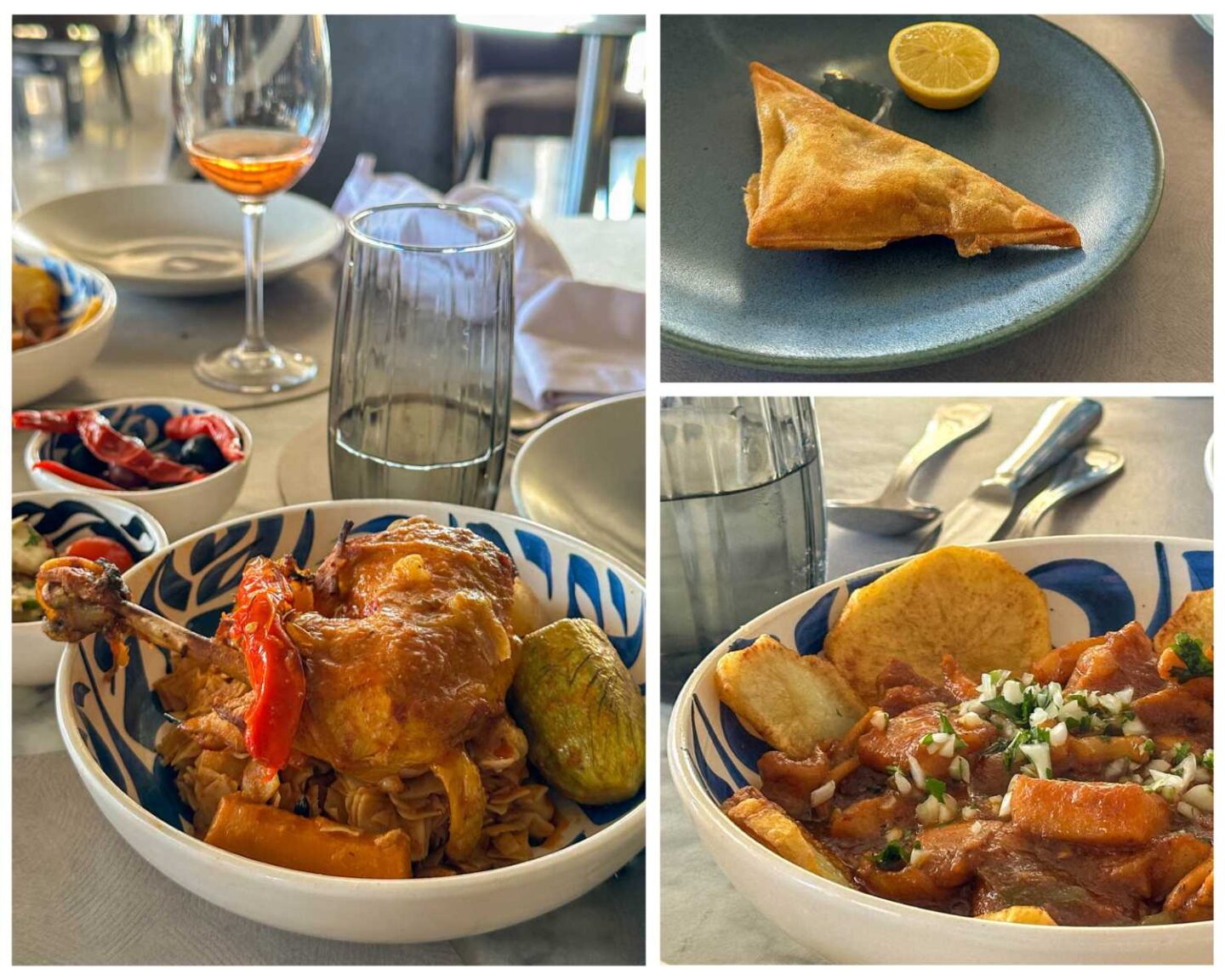
After an olive oil tasting, we enjoy a group lunch in Villa Didon’s restaurant, Le Rest’O. Memorable plates include roast chicken with nwasser (Tunisan square-shaped pasta), briq and cuttlefish tagine.
Sidi Bou Saïd: the Santorini of Tunisia
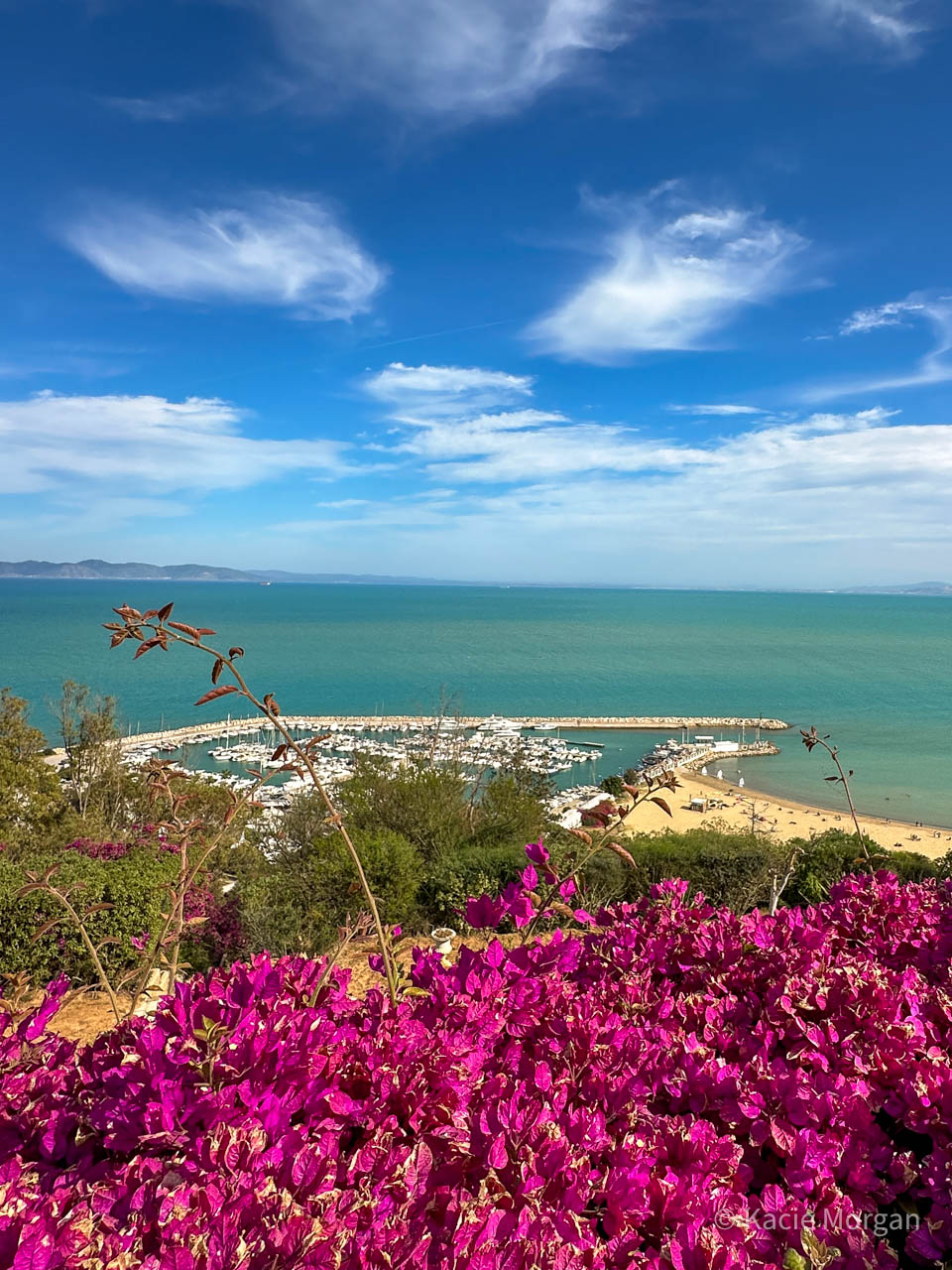
Standing atop the cliffs overlooking the Mediterranean Sea, the postcard-perfect village of Sidi Bou Saïd is Tunisia’s answer to Santorini in Greece, or Chafchaouen in Morocco. Famed for its white-washed houses headed up by bold blue doorways framed by pink bougainvillea, the village offers a calming escape from bustling Tunis, just a 20-minute drive from the capital city.

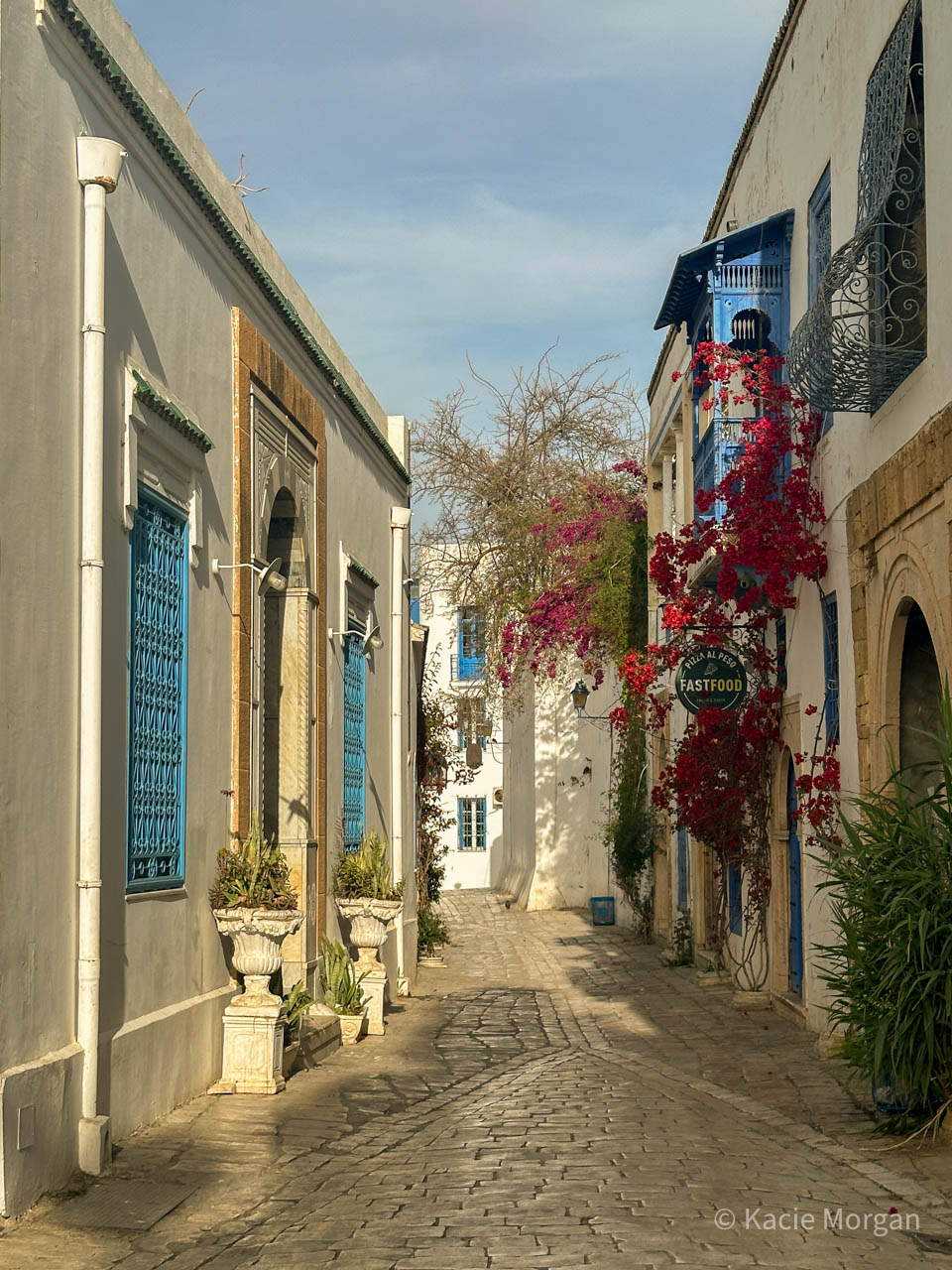
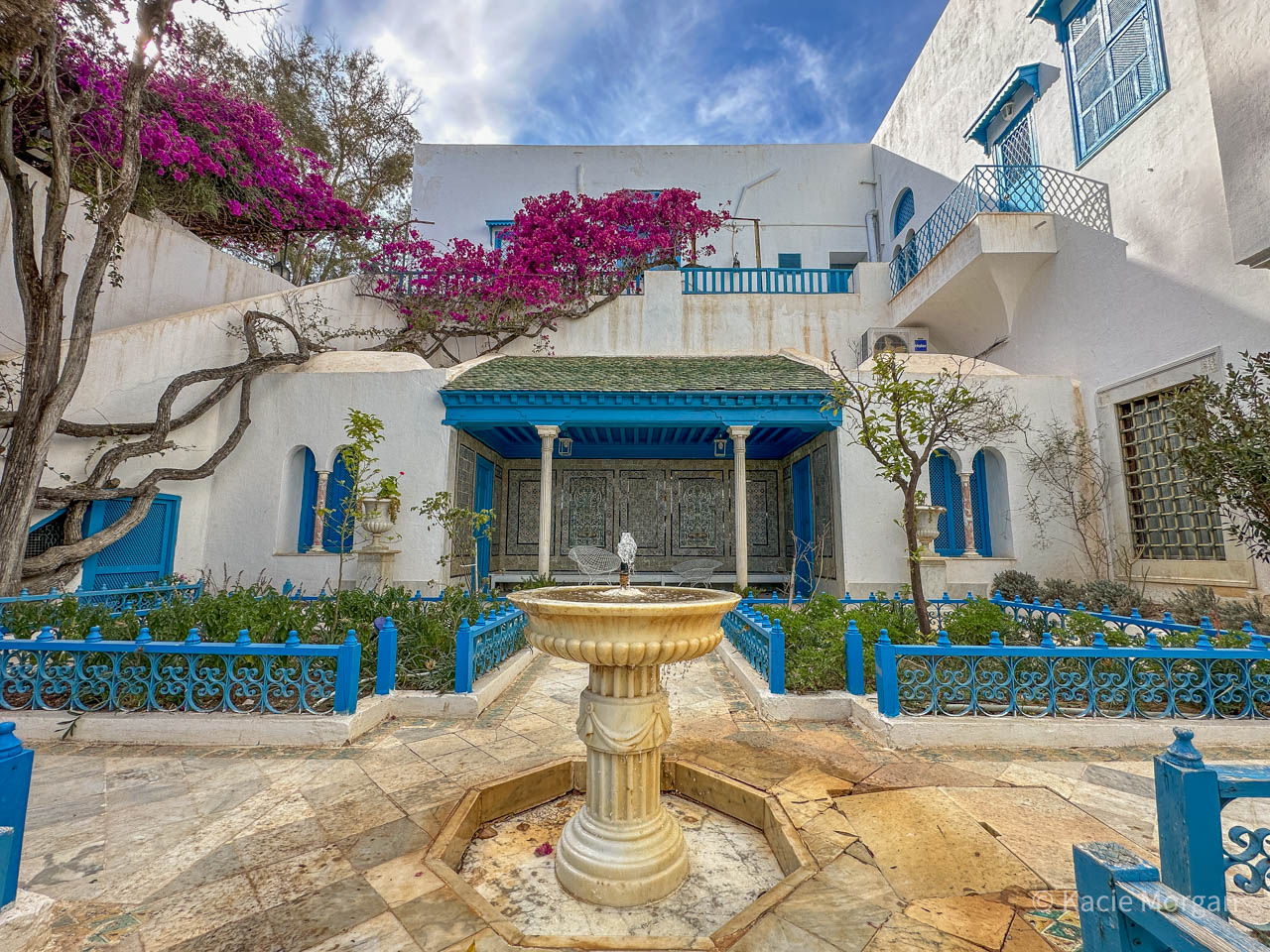
Once a sanctuary for Bohemian artists, rumour has it the village has French musicologist and patron of the arts, Baron Rodolphe d’Erlanger to thank for its iconic white and blue hues. After arriving in Sidi Bou Saïd in 1907, he invested in the construction of an elegant hilltop palace, Dar Ennejma Ezzhara (“The Star of Venus” or “Sparkling Star”) and lobbied the government to grant it protected status. Today, this extraordinary home is a museum also known as the Baron d’Erlanger’s Palace, with guided tours by passionate house historian, Winkie Williamson (originally from Swansea, Wales) available on some of Sawa’s Tunisian food tour itineraries.
Where to stay in Sidi Bou Saïd
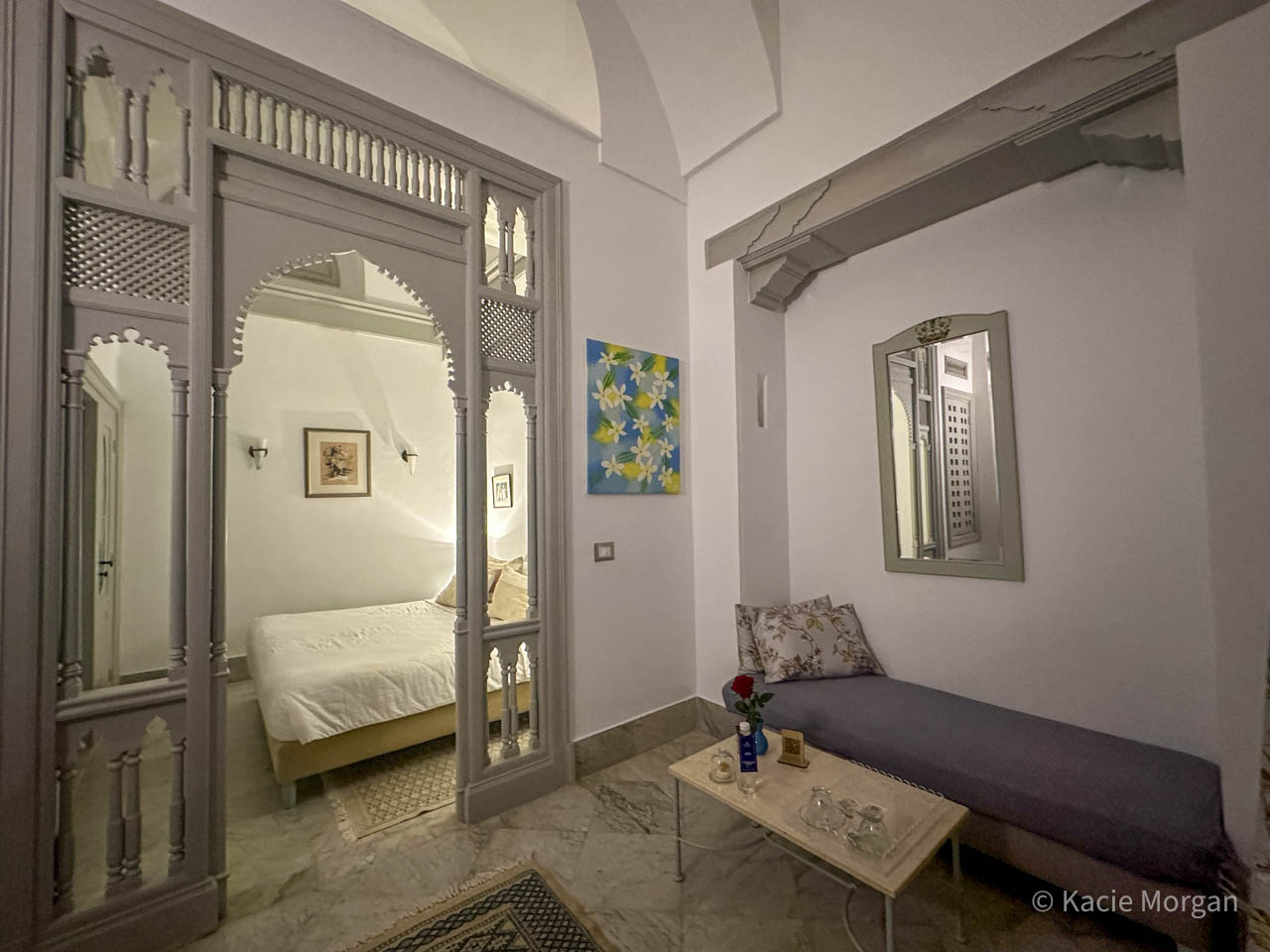
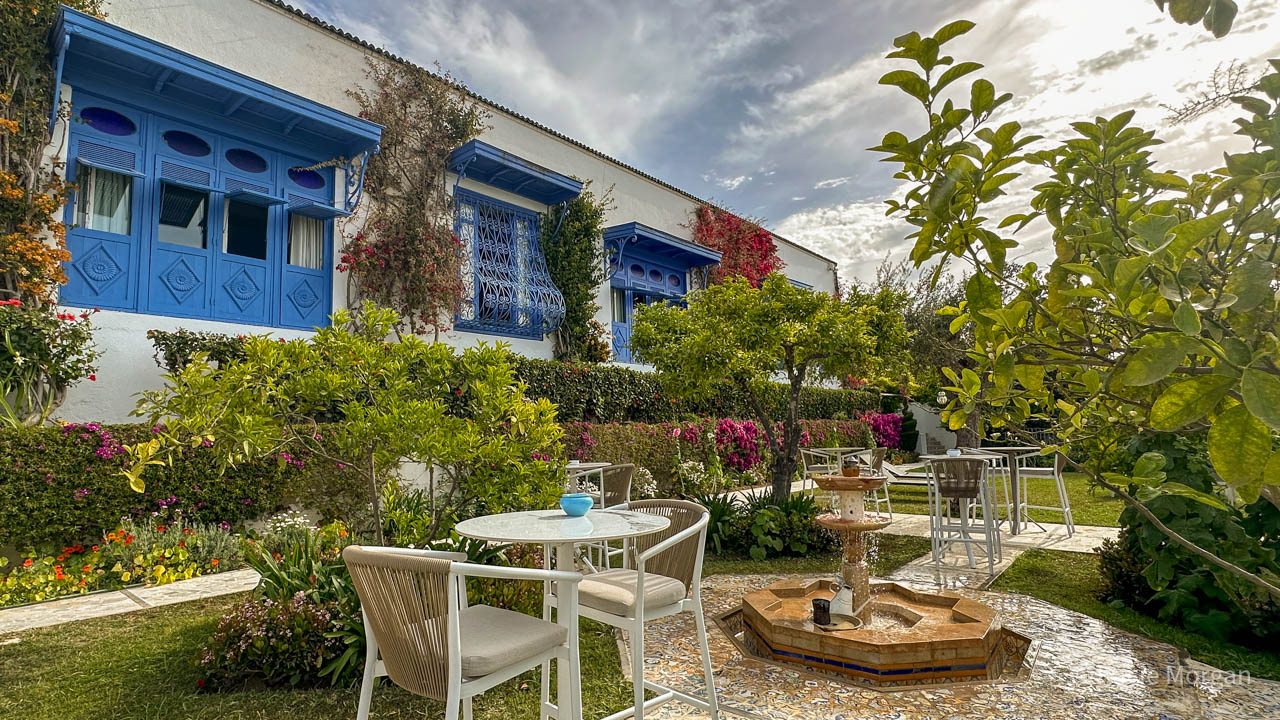
While exploring Sidi Bou Said and nearby Tunis, we enjoyed a two-night stay in the luxury boutique hotel Dar Said, home to 24 uniquely styled rooms built around a centre courtyard, alongside a hammam bath and outdoor pool.
Sitting in Dar Said’s flower-filled garden admiring the panoramic views of the Gulf of Tunis to the sound of trickling fountains is the perfect way to unwind after losing yourself in the labyrinth of surrounding cobbled streets.
What to eat in Sidi Bou Saïd
From local street food to independent restaurants, Sidi Bou Saïd offers a selection of eateries to choose from. Get comfy on a floor mat before sipping on mint tea with roasted almonds and nibbling on Tunisian pastries at the 100-year-old Cafe des Nattes, a typical Moorish-style cafe and shisha (or hookah) lounge.
For something sweet, a bambalouni is a must. Popular throughout the country, these traditional Tunisian deep fried doughnuts are synonymous with the aptly-named Bambalouni Sidi Bou Saïd. Established in 1932, this unsuspecting hole-in-the-wall set-up still draws long lines to this day.

Tunisian deep-fried doughnut, bambalouni
While the name of these Tunisian doughnuts derives from the word for the Italian doughnut, bombolone, they share little else in common with their Italian counterparts. While bombolone are filled, bambalouni are made using a yeast-based flour dough, shaped into rings and deep fried until golden. Sinfully sugary, these hot, puffy ring doughnuts are impossible to eat without licking your lips. Check out my Instagram Reel to hear what I thought.
Pick your fish in La Goulette
Just a quarter of an hour’s drive away from Sidi Bou Saïd, the port town of La Goulette is home to a string of restaurants, making it an ideal spot for a Tunisian food tour.
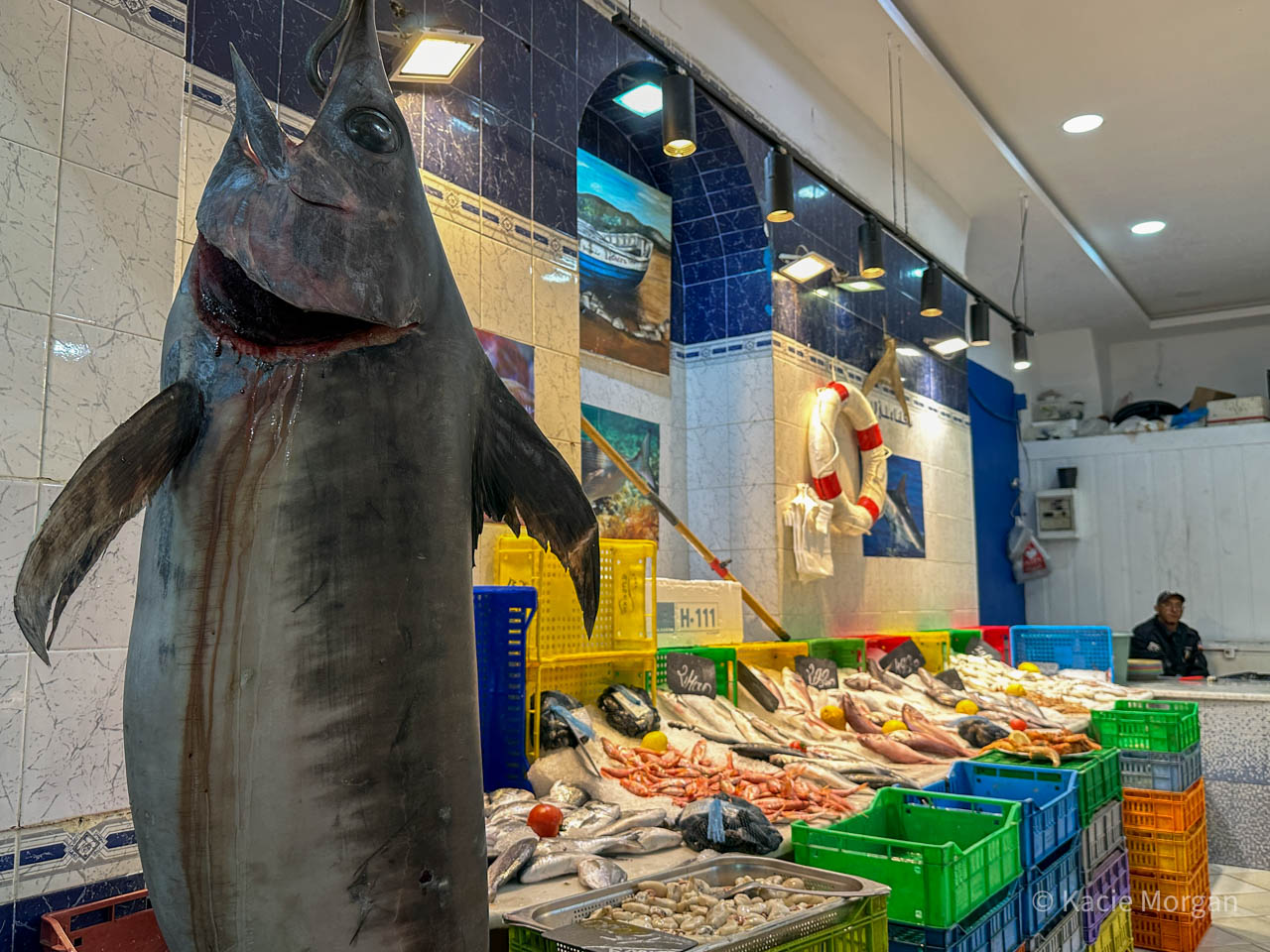
At Restaurant La Siréne à La Goulette, we’re greeted by an appealing display of freshly caught local fish and seafood, before proceeding to choose our cut. Passing through the restaurant to the dining space upstairs, I watch my swordfish sizzle on the grill.

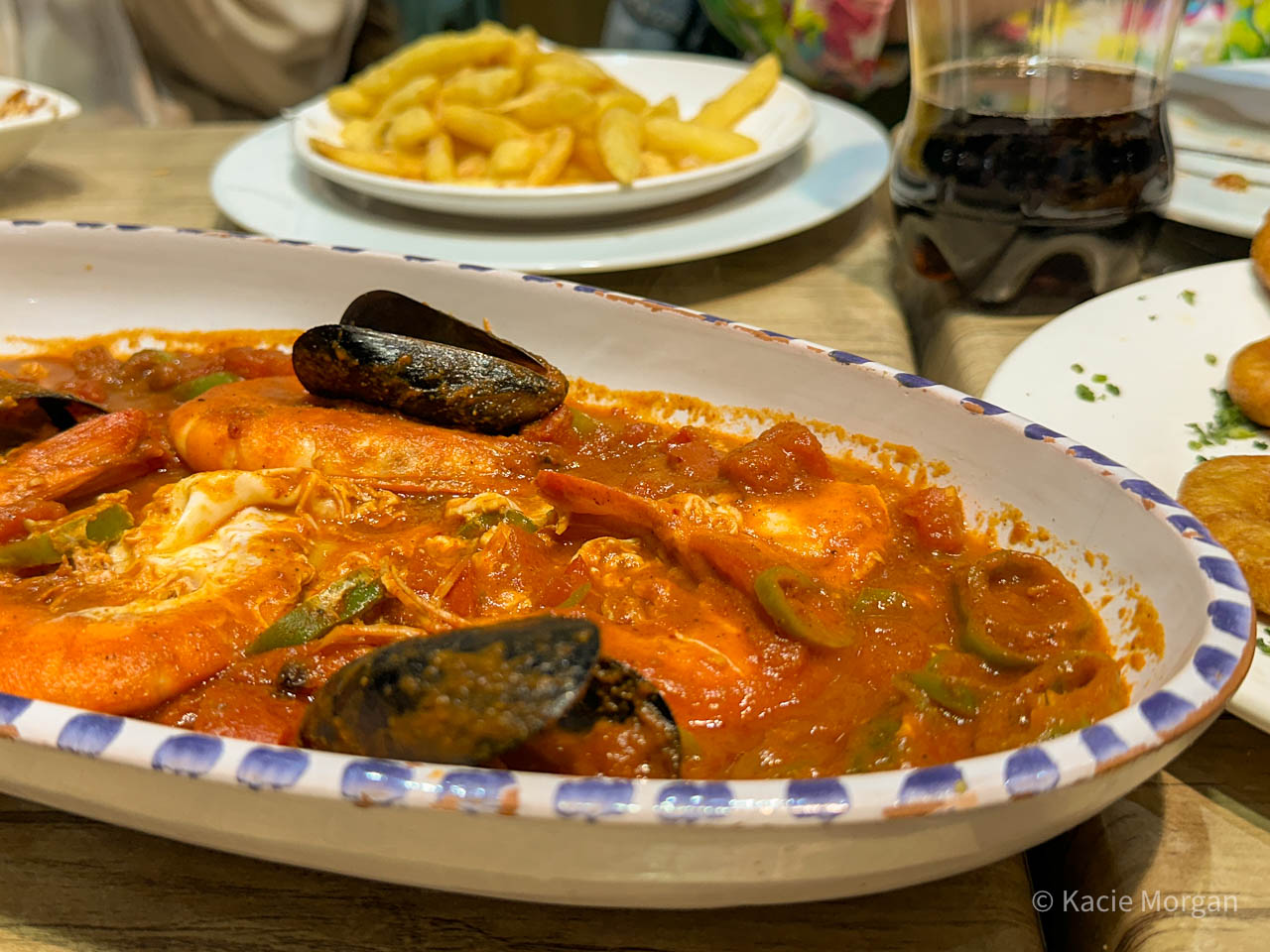
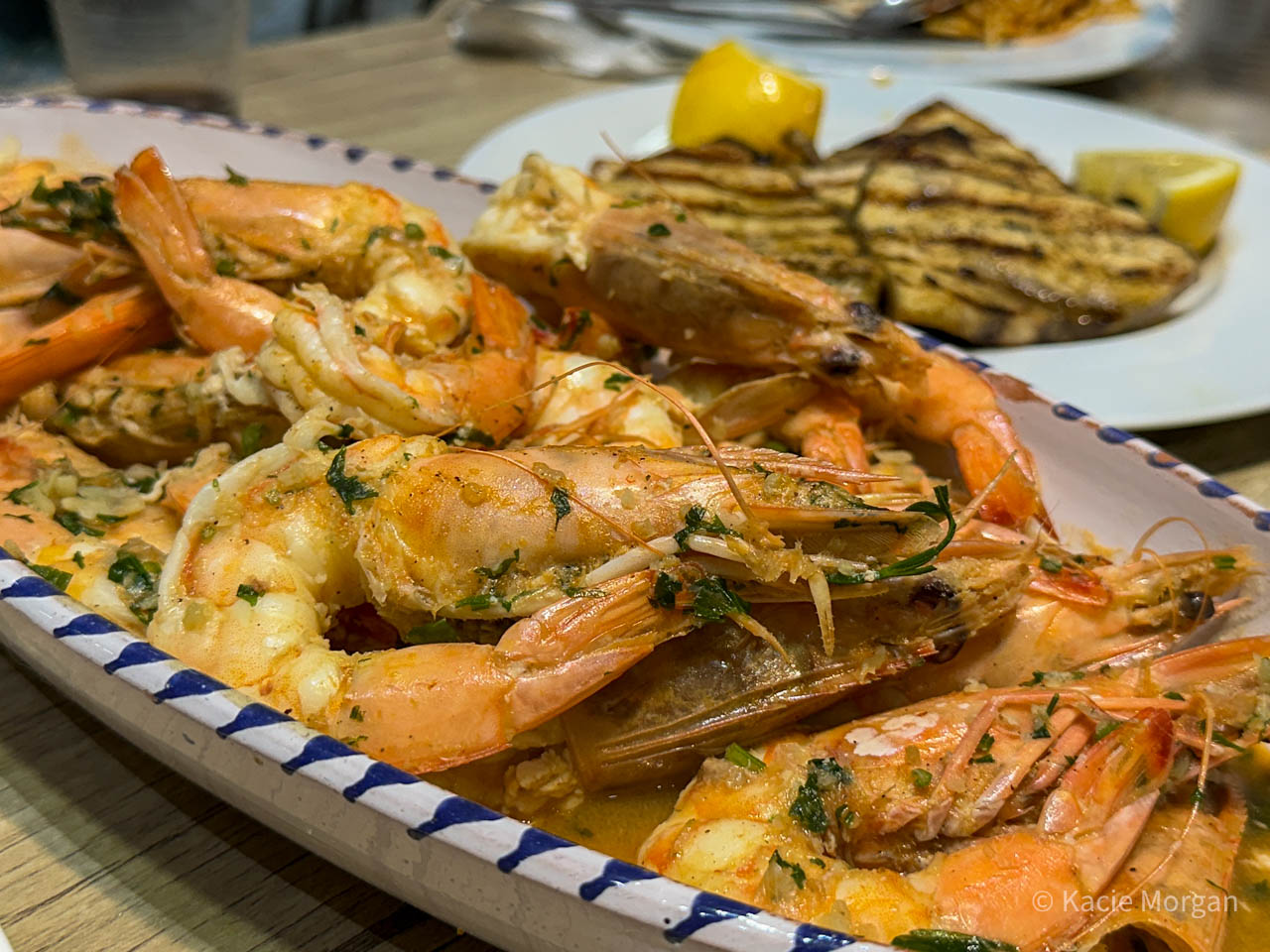
Juicy, meaty and laced with wispy char from the grill, my swordfish was simply served with a wedge of lemon on the side. Further highlights included the garlic prawns and the ojja fruits de mer: mixed seafood and poached eggs in a fiery, harissa-rich tomato sauce.
While Tunisia may not be at the forefront of our minds when we consider food travel destinations, slowly but surely, Tunisian cuisine is making its way onto the foodie radar. From iconic traditional Tunisian foods like cous cous and harissa, to lesser known locally loved dishes like lablebi and kafteji, this boundless cuisine entices culinary travellers with an endless variety of traditional local dishes.
Book your Tunisian food tour
Booking a Tunisian food tour with Sawa Taste of Tunisia is a wonderful way to immerse yourself in the diversity of the country’s cuisine, offering a unique introduction to authentic Tunisian dishes and traditional Tunisian restaurants, interwoven with intriguing stories of the country’s cultural and historical past from a local’s perspective. Discover more on Sawa Taste of Tunisia’s website.

Looking for ideas on places to stay in Tunisia? Check out my review of Hotel Royal Thalassa Monastir in eastern Tunisia.
I visited Tunisia as part of a press trip with Sawa Taste of Tunisia, funded by USAID Visit Tunisia with discounted air fare from Tunisian airline, Nouvelair.
I went to Tunisia about 30 years ago. It was a culture shock then and I still remember the food, lots of fragrant North African couscous and tagines. I remember having a brik too, a fried bread with egg in it I think!
Oh wow, I bet it’s changed a fair bit since then. Briq was definitely my favourite but I loved the lablabi too! The cous cous is amazing, the stuff I usually eat will never taste the same again!
Your post brings back all those delicious flavours we tried. Will have to go back!
Glad to hear you enjoyed the read! Definitely – we’ve still barely scratched the surface, although the figure showing up on my weighing scales right now would’ve suggested otherwise! 😀
What a beautifully detailed journey through Tunisian cuisine! I truly appreciate the care and passion poured into sharing every moment, flavor, and tradition. Thank you for highlighting not just the food, but the people and stories behind it. I feel like I’ve traveled with you—can’t wait to experience it in real life one day!
Glad you enjoyed the read, and hope you enjoy Tunisia when you’re able to visit.
Thank you for this flavorful glimpse into Tunisia’s culinary scene! I loved learning about harissa’s heritage and the focus on local, family-run food experiences. This tour sounds like the perfect way to explore authentic Tunisian cuisine and hidden regional gems!
Thank you, glad to hear you liked the post. Have you been to Tunisia yet?
What an incredible Tunisian food tour experience! I loved how you described the vibrant spices, street food culture, and the authenticity of each dish. Food tours are such a wonderful way to truly understand a country’s history and traditions through its flavors.
Reading about the rich sauces and aromatic spices reminded me how much I enjoy exploring global cuisines.
Thank you, glad you enjoyed the read. Have you been to Tunisia before?