
This is a sponsored post.
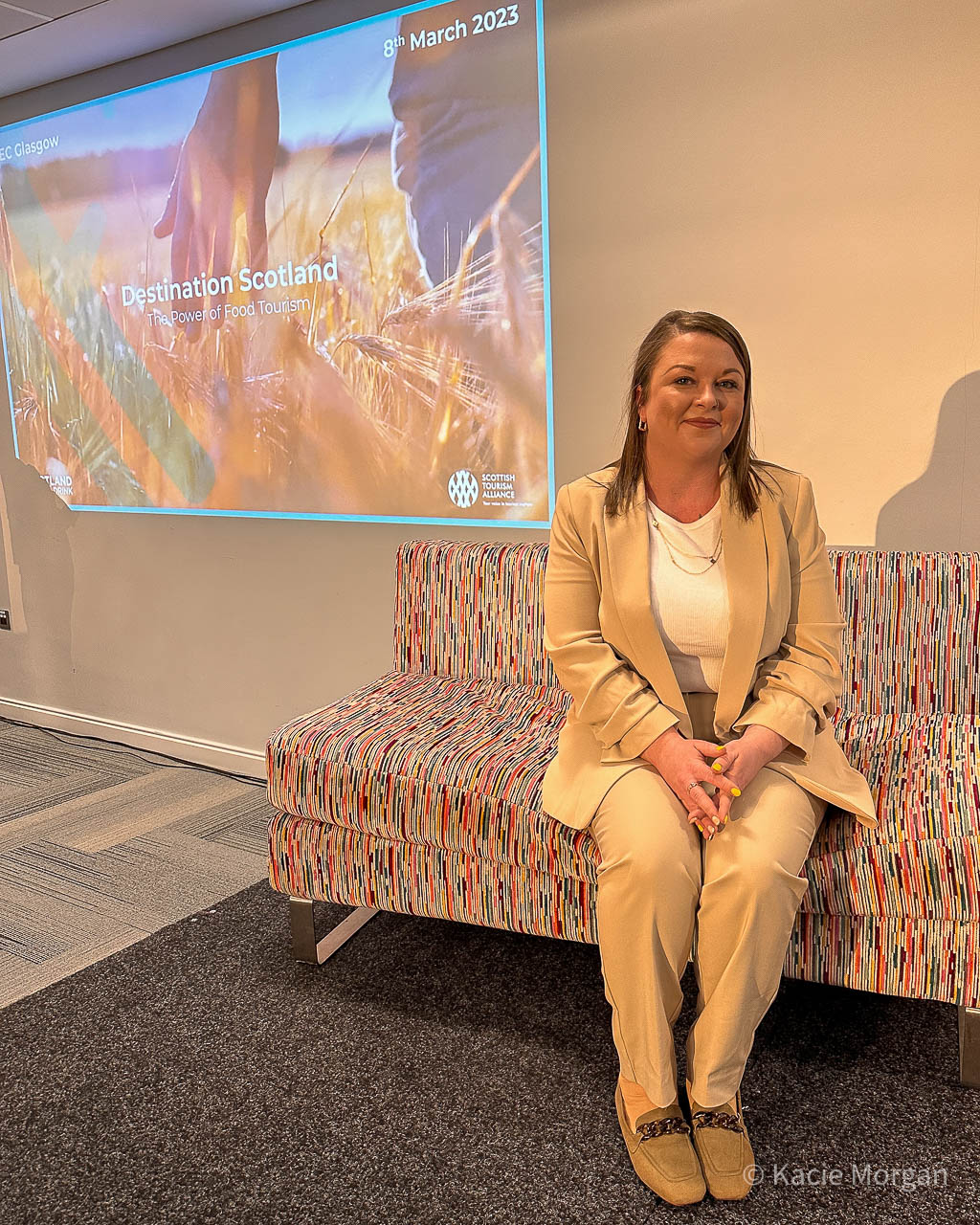
Imagine my excitement when Scotland Food and Drink and the Scottish Tourism Alliance invited me to speak about my blogging journey at their “Power of Food Tourism” conference at Glasgow SEC earlier his month.
Taking place alongside ScotHot – the premier event for the Scottish hospitality, travel and tourism industries – this engaging event was crammed with insightful discussions from a range of speakers, covering the latest developments in Scottish food and drink; and the wider world of food travel. Hosted by food innovator, Simon Preston, speakers included The Hairy Bikers, Ghillie Basan, World Food Travel Association, Taste Causeway, Scottish Agritourism, Visit Scotland, and others.
I was honoured to be invited to speak as part of such a stellar line-up. Although, if truth be told, I was actually pretty terrified too! You see, although I’ve gained some public speaking experience by working with Business Wales to deliver in-person and online talks to young people in educational settings across Wales as part of the Big Ideas Wales Role Model scheme, I’m not the most confident public speaker.
Judging by some of the lovely feedback I received after my talk, however, I think it’s safe to say that I just about pulled it off! 😀
So, how did I manage to do it, despite my nerves? Here are some of the steps I took to prepare:
6 tips for perfecting your public speaking skills
Make a plan
The very first step in preparing to speak publicly, is to think about what you’re going to say.
When deciding what to talk about, consider your audience. Who are they? How old are they? What are they hoping to gain from attending this conference, and what information can you share with them to help them?
Next, think about how long you’ve got in which to speak, and decide on how many key points you intend to make. Finally, choose the most relevant and most significant information to convey. Put pen to paper, and jot down the main points of your talk.
Practice makes perfect
Rehearse, rehearse, rehearse! Once you’ve planned what to say, practice going over it again and again, until you can do it from memory.
And don’t stop once you’ve finished delivering your next big talk, either; once you’ve got your first talk done and dusted, consider putting yourself forward for more public speaking events, so you can keep perfecting your skills. Signing up with a speakers agency can be a great way to find more speaking opportunities; many event organisers will look to an agency to find a suitable speaker, so this could end up sending a few good leads your way.
Consider using flash cards
If you’ll be delivering a particularly long talk, or you’re concerned that stage fright might make you forget what you want to say, consider jotting the key points of your presentation down onto some revision cards, or “flash cards”.
When I was preparing for my talk, I picked up some small, ring-bound flash cards in WH Smith which were particularly useful. In the end, I didn’t actually end up referring to them, but it felt reassuring to have them to hand just in case.
If you’re going to use flash cards, however, keep the size to a minimum and try not to wave them around or stare at them too much, so as not to distract the audience or appear too underprepared.
Join a local public speaking group
Public speaking groups can make for a wonderful way to practice your public speaking skills in a safe space, where you can be confident you’ll be supported and encouraged by like-minded people.
One well-known public speaking group is Toastmasters, which operates worldwide and usually runs local groups in different towns and cities throughout the UK.
However, if you do a little research, you’ll probably be able to find various public speaking groups and training events in your own community.
Create some slides
Displaying an illustrated set of slides alongside your talk can be a great way to maintain audience attention and get your point across in a more engaging way.
Plus, if you’ll be talking for a while, looking at your key points on the slides could act as a useful reminder of what you’re intending to say. Don’t overdo it with the text, though – less is definitely more.
Even if you’ll only be giving a short talk or perhaps a Q&A, it’s still a wise idea to show some slides in the background – even if they only contain a few photos, just to keep the audience engaged.
Record yourself
Once you’ve finished preparing for your talk and the big day has arrived, be sure to record your performance. Whether you start voice recording on your phone before you leave your seat or you ask a friend to help you out and record for you, it pays to be able to listen to your talk back afterwards to see how you did. This way, you can identify room for improvement, and plan how you can deliver an even better talk next time.
Hopefully, you’ll now be feeling more clued up on how to prepare for your big talk but, if you need any further advice, please don’t hesitate to get in touch through social media or by email – happy to help if I can! 🙂
Do you have any advice on how to improve your public speaking skills, which I haven’t mentioned here? Please feel free to comment below to share your thoughts with other readers.
This is a sponsored post.