
If you’ve ever queued for ten minutes at your favourite Cardiff coffee shop, watched the barista pull a perfect flat white, and wondered whether you could pull one yourself at home, you’re in good company. UK home espresso has quietly become one of the fastest-growing coffee categories of the last five years, and for good reason. The kit has improved, prices have come down, and the gap between cafe coffee and home coffee has shrunk further than most people realise.
The catch is that nobody really tells you how to bridge that gap without spending three weekends watching baristas on YouTube. This is the version I wish someone had given me when I started: practical, no jargon, and entirely doable in a normal UK kitchen.
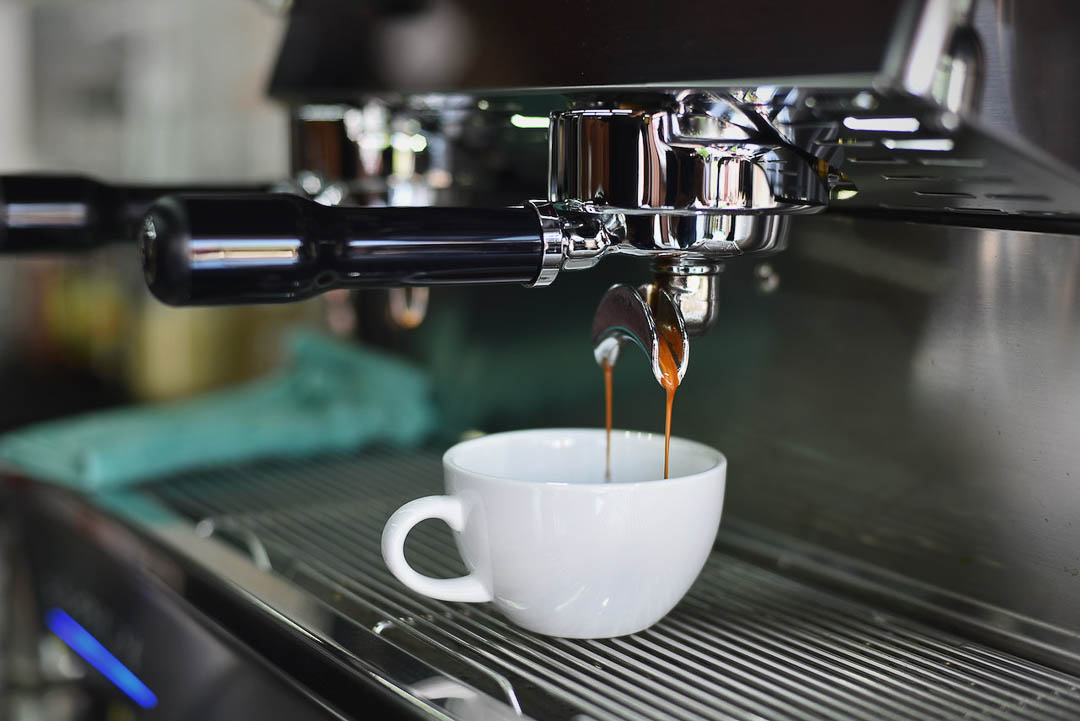
What “cafe-quality” actually means
Before going further, let’s be honest about what we’re chasing after here. Cafe-quality espresso doesn’t necessarily just refer to a shot of coffee identical to that of a specialty cafe pull. Instead, when we’re longing for a “cafe-quality” cup of coffee, we’re usually looking for coffee that is:
- Genuinely rich and balanced – not bitter or weak
- Topped with a proper crema (the golden-brown foam on top)
- Pulled in 25-30 seconds, with the right amount of resistance
- Steamed into milk that is silky and microfoamed, not foamy or boiled
Get these factors right consistently, and you’ll be making cafe-quality espresso in no time. It’s not about the fancy Instagrammable latte art – all you really need is a shot that tastes good. and milk that doesn’t squeak.
The five things that actually matter
You can ignore most of what the internet tells you. These five things are what actually move the needle at home.
1. Fresh, whole beans (and a decent coffee grinder)
The single biggest variable in home espresso is not the machine – it’s the bean. Pre-ground supermarket espresso – no matter how premium the packaging – is stale by the time it reaches your kitchen. The oils that carry flavour have already oxidised. You’ll struggle to make great espresso from it, no matter how much you spend on the machine.
Instead, buy whole beans from a UK roaster you trust, and grind them yourself within four weeks of the roast date. A burr grinder – not a blade grinder, – s non-negotiable. If you’re n a tight budget, prioritise the grinder over the machine.
2. The right type of machine
For home use, you have three realistic options:
- Semi-automatic. You grind, dose, tamp and start the shot; the machine handles temperature and pressure. The most popular choice and the best balance of cost, control and learning curve.
- Super-automatic. Bean-to-cup – the press-a-button option. Genuinely good now, especially for households where multiple people drink different drinks.
- Manual lever. Beautiful, demanding, slow. A hobby in its own right.
For most UK homes, a good semi-automatic is the right answer. Pro Coffee Gear’s range of home espresso machine options cover everything from compact starter units that fit on a small kitchen counter, to dual-boiler setups that rival what’s behind the bar at your local independent. The trick is buying one tier above what you think you need, then sticking with it for at least a year.
3. The dose, the tamp, the time
Remembering these three sets of numbers can help you to get the most from every shot:
- 18 grams in, 36 grams out is a sensible starting ratio for a double espresso – weigh both.
- Tamp evenly, not hard –aAround 15kg of pressure, distributed flat.
- 25-30 seconds – if the shot pours faster than this, your grind is too coarse. Any slower, and it’s too fine.
A small kitchen scale and a 30-second timer (or the stopwatch on your phone) are the only two extras you need. Most home espresso problems trace back to one of these three numbers being off.
4. Properly frothed milk without burnt hands)
For flat whites, cappuccinos and lattes, the milk is half the drink. Again, three rules:
- Use fresh, cold whole milk. Semi-skimmed froths but lacks body. Plant milks froth – some better than others – but barista versions are designed for the job.
- Purge the steam wand for two seconds before you start, to clear condensed water
- Position the wand just below the surface for the first few seconds to create microfoam, then submerge it deeper to spin the milk into a silky vortex.
Steam until the jug is just too hot to comfortably hold – to around 60 to 65 degrees. Don’t go further; scalded milk is the most common home espresso mistake.
5. Cleaning, honestly
Nothing makes a home machine produce bad coffee faster than poor cleaning. Wipe the steam wand immediately after every use. Backflush the group head once a week with a blind basket and cafe-grade cleaner. Descale every two to three months. The limescale in most UK water supplies, especially in the South East, is brutal on espresso machines.
This is the least glamorous part of home espresso and the part most home users skip. Don’t!
A realistic setup for a UK home
A starter setup that will genuinely make cafe-quality drinks in a UK kitchen looks something like this:
- A good semi-automatic espresso machine: £400 to £900 entry-level, £900 to £2,000 mid-range
- A burr grinder dedicated to espresso: £150 to £400
- A small set of accessories: 58 mm tamper, milk jug, scale, knock box, microfibre cloth
- A bag of fresh beans from a UK roaster, replenished every two to three weeks
For a kitchen with limited counter space, look for compact dual-purpose machines with built-in grinders, or a slim semi-auto paired with a small grinder. UK machines run on 230V, which gives them a slight thermal advantage over US-spec equivalents. That is one of the underrated perks of buying in the UK market.
Honest expectations
Your first week of espresso at home will be humbling. The shots will run too fast, then too slow. The milk will foam too much, then not enough. Don’t throw the machine out of the window. By week three, you’ll have a routine. By month two, you’ll be making drinks you’d happily pay £4.50 for at your favourite cafe or coffee shop.
The other honest truth: you’ll also save yourself £3-4 on the cost of your daily cup of coffee, for as long as you own the machine. Most home espresso kits pay for themselves within 12-18 months, for daily drinkers. If you’re buying a coffee on the way to work most mornings, you could save more than you realise.
Cafe-quality espresso at home is not a barista skill. It is a setup decision plus a small number of repeatable habits. Buy the right kit, buy good beans, weigh your shots, steam your milk properly, and clean your machine. That is it.
You don’t need to train as a barista to drink like one. You just need to be a little patient for the first month, and then you get to enjoy the coffee for the next ten years.
What are your tips for brewing your own coffee at home? Let me know in the comments below.