
My Coastal Foraging with Craig experience formed part of a wider press trip organised by Milford Waterfront.
Wild foraging is enjoying somewhat of a heyday in the UK at the moment, with more of us than ever before heading out into the great outdoors to forage for wild foods.
However, while foraging is a wonderful way to source fresh, sustainable food at little to no cost – at a time when living costs are soaring – it also works wonders for the mind and soul too, as I discovered while coastal foraging with Craig Evans in Pembrokeshire, south-west Wales.

Coastal Foraging with Craig Evans
When I meet Craig, I’m shocked to discover he’s actually a retired bank manager, with past experience in the RAF and woodland conservation. With his extensive knowledge of the local waterways and coastal environment, I’d assumed he was a former fisherman, or perhaps even a marine biologist.
In fact, Craig’s encyclopedic knowledge of the Welsh coastline predates his career. Ever since he was a young boy, he has fond memories of cockle-picking at Carmarthen Bay in Pembrokeshire with his father.
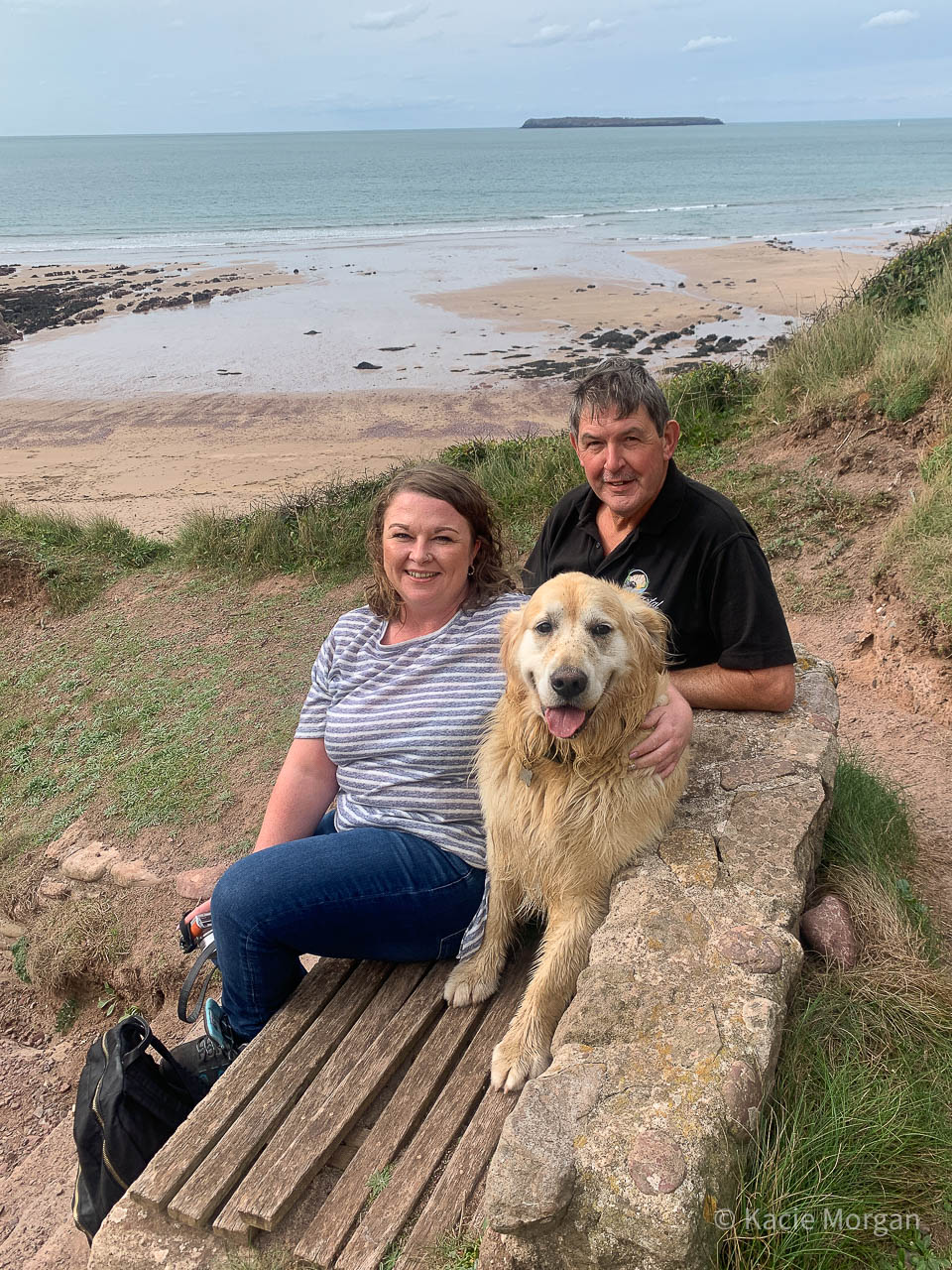
Now, years on, Craig’s lifelong-passion for the shores of south-west Wales – and the coastal creatures and seaside shrubs that live among them – has inspired him to run his own coastal foraging courses.
Featured by the likes of BBC’s Love To Cook with Mary Berry, Great Coastal Railway Journeys with Michael Portillo; and Channel 4’s Best Of British By The Sea with Ainsley Harriott and Grace Dent, Craig’s coastal foraging courses have grown incredibly popular since launching around five years ago.
What can you forage by the sea?
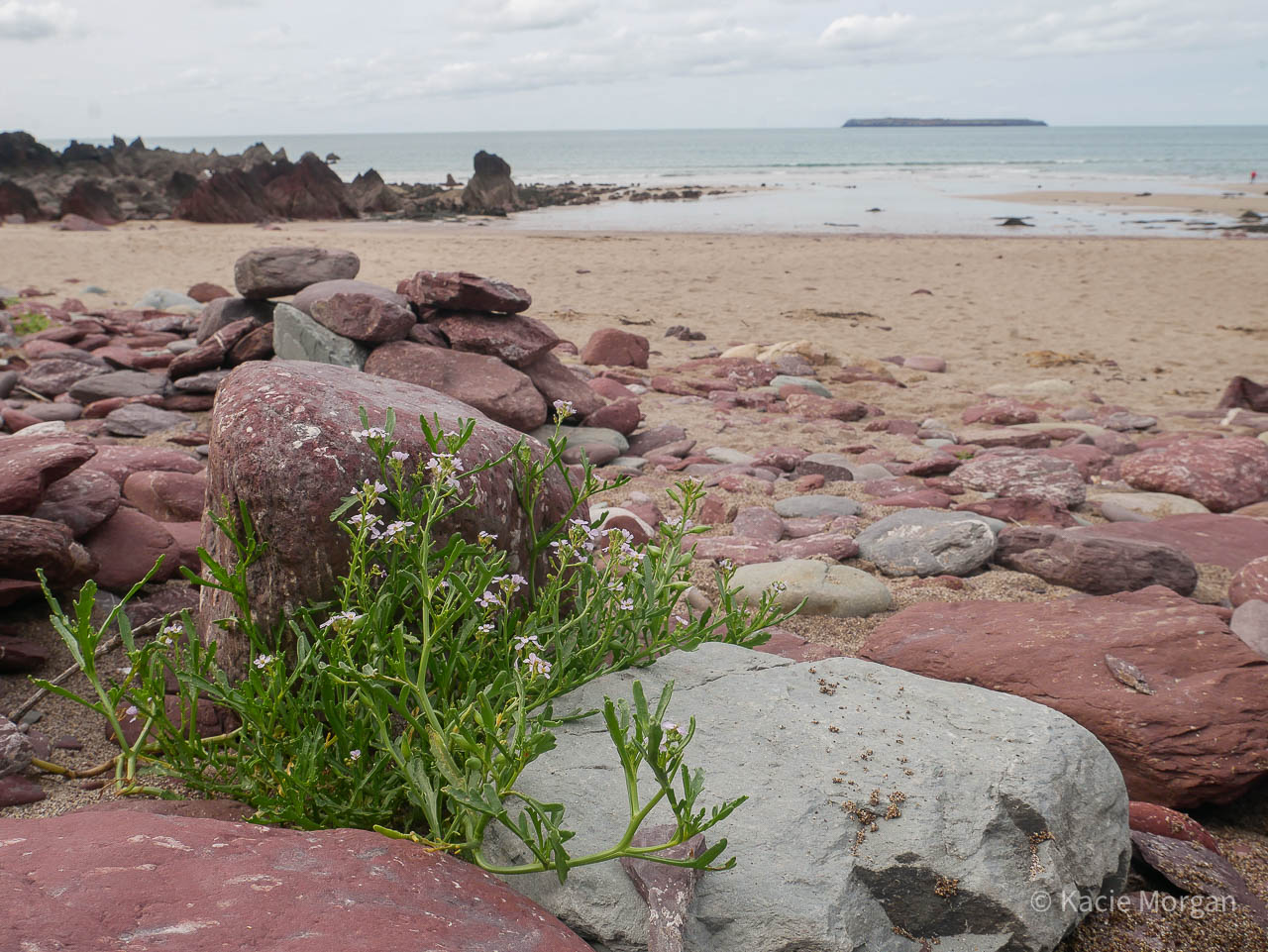
Accompanied by Craig’s faithful golden retriever, Llew, we begin our coastal foraging adventure at West Dale beach in Pembrokeshire, south-west Wales. Here, we find several kinds of edible seaweed and hardy coastal shrubs like sea lettuce, rock samphire, sea rocket, sea radish, sea beet, and sea carrot.
I sample my first ever limpet. With a rigid, chewy ring of cartilage around the outer circumference and a somewhat bland flavour, it’s not exactly to my liking. Thankfully, Craig has much tastier finds in-store for us later on.

Afterwards, we head to nearby East Dale beach. Ankle-deep in salty sea water, we fish around in rock pools for shrimps, prawns, peri winkles, 5-6 species of small fish, peri winkles, small brown crabs, barnacles, a Macropodian crab (i.e. long-legged spider crab), a sea sponge, sea spaghetti, sea lettuce, and more.

Our wicker basket bustling with foraged fishy finds, we retreat to a sunny, grassy bank overlooking the Gann Flat estuary for a beachside campfire using a Swedish candle (or a ‘Solva stove’, if you ask Craig).

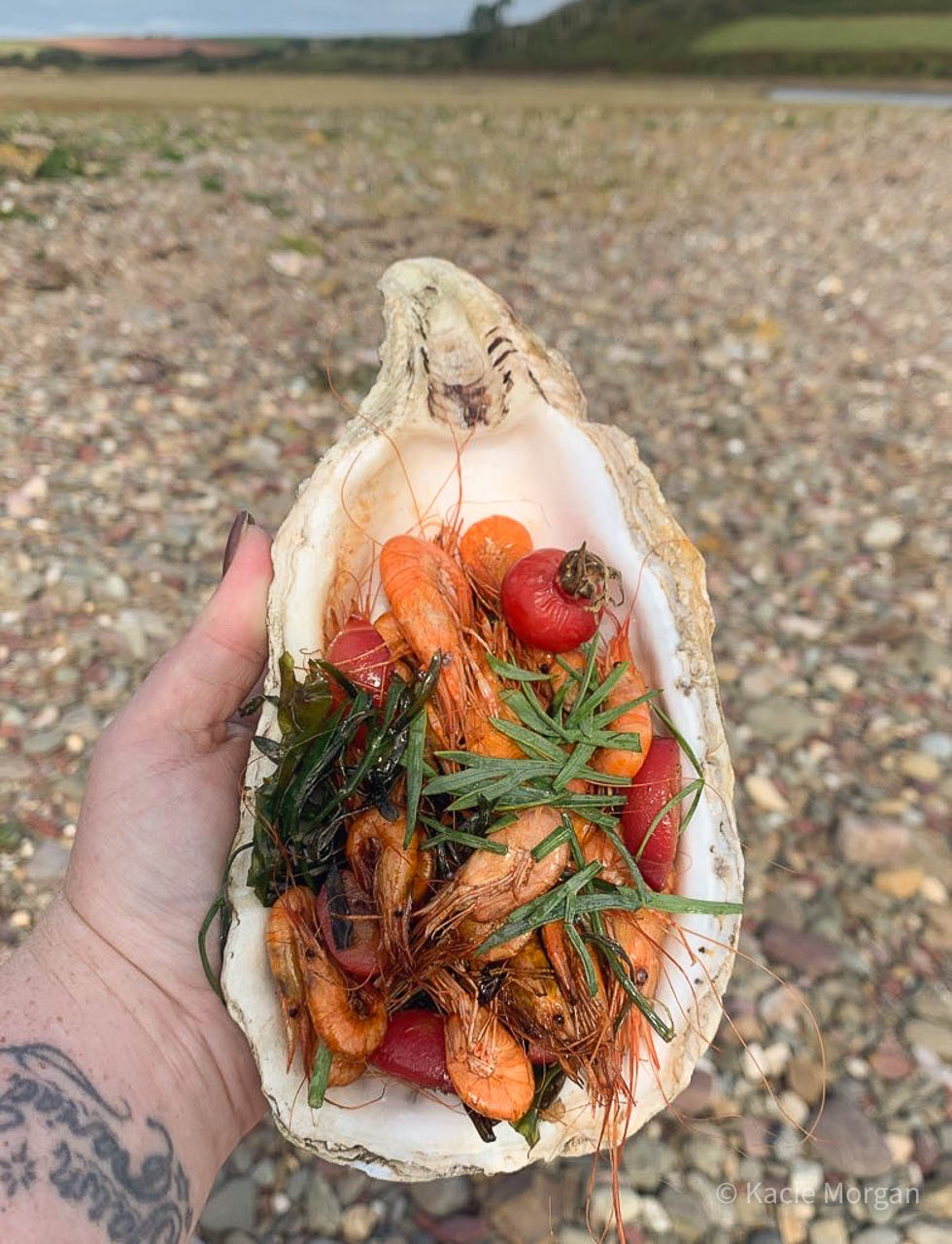
Frying chopped raw garlic bulbs (foraged with permission from a local landowner) and rock samphire in unsalted Carmarthenshire butter, Craig adds our foraged prawns and shrimps to the pan, along with halved crab apples.
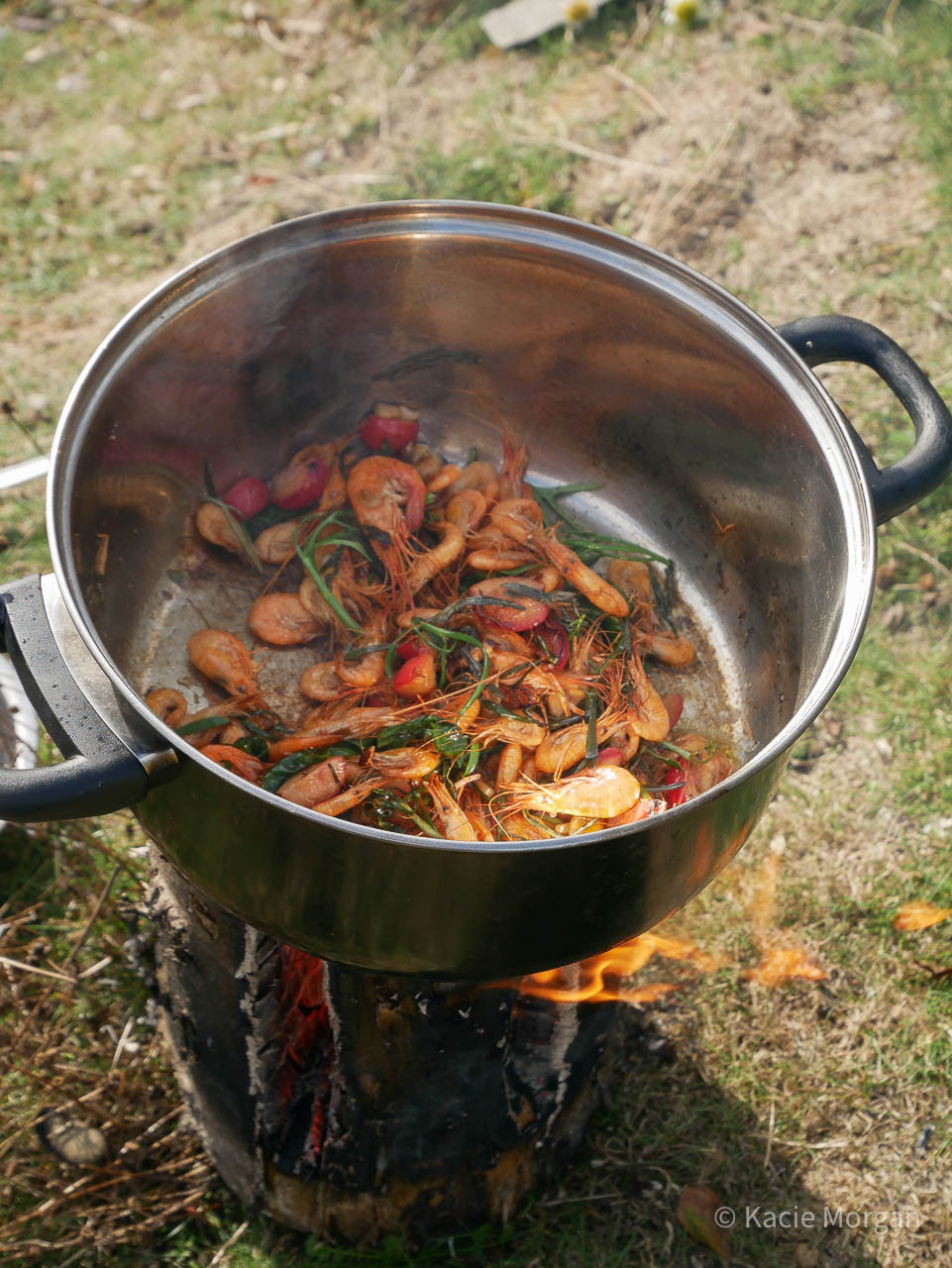
Once cooked, he ladles the contents of the pan into oyster shells. We cradle them in our hands; plucking out the shrimps and prawns, peeling off the shells like sweet wrappers, and ravenously popping them into our mouths. Let’s just say, a prawn stir fry will never be quite the same again.
How to book a coastal foraging course with Craig
Craig runs coastal foraging courses along 150 miles of the south-west Wales coastline, from Pembrey in Carmarthenshire to St. David’s in north Pembrokeshire. However, most courses take place within a 10-20 minute drive of Tenby or Saundersfoot.
Enjoy a six-hour introduction to coastal life in the intertidal zone on the Classic course (£80 p.p.), or delve deeper into life beneath the waters of south-west Wales on Craig’s seven-hour Extreme Low Tide course (£120 p.p.) Group and special interest courses are also available, including corporate bookings.
Where to stay in Pembrokeshire or Carmarthenshire
To round off your coastal foraging experience, book yourself into a stunning seaside cottage for a night or two so you can relax while in south-west Wales.
With over 23,000 luxury coastal cottages in prime UK locations starting from under £500 per week, Simply Sea Views offers the indulgence of a five-star seaside stay, without the price tag. To get the best bang for you buck, book to stay before March, when availability is higher and prices are lower.
Select from over 1,000 beach and sea-view holiday cottages in Pembrokeshire alone, with popular picks including Temple Cottage in Square and Compass, and high-end harbourside apartment, Ship Ahoy! in Tenby.

Meanwhile, in Carmarthenshire, choose from the likes of a Scandinavian-style log cabin, Little Trees in Pendine; or Poet’s Cottage, near the iconic Dylan Thomas Boathouse in Laugharne, Carmarthenshire.
And, if you plan on travelling with your canine companion, you’ll find a selection of 750+ dog-friendly coastal cottages in Pembrokeshire over on Dog Friendly Retreats. Highlights include the Cow Shed in Marloes, Caldey Cottage in Roch, and The Old Dairy in St Twynnells.
Where is the best place for coastal foraging in the UK?
While I might be slightly biased, south-west Wales (and in particular, the Pembrokeshire and Carmarthenshire coastline where Craig runs his courses) is ideal territory for coastal foraging. Home to some of the cleanest waters in the UK, these shores are teeming with different species of fish and coastal creatures, alongside edible shrubs and various forms of seaweed including dulse, laver, sea lettuce, and sea spaghetti.
However, that’s not to rule out coastal foraging at other top UK coastal destinations like Falmouth, Cornwall; the Jurassic Coast in Dorset; or East Neuk in Fife, Scotland, for example.
Is foraging legal in the UK?
Foraging fruit, flowers, fungi or foliage is legal on any UK land, provided it’s for personal consumption. However, you must seek the landowner’ permission before foraging on private land, and foraging for commercial purposes is deemed as theft. Plan your route in advance by checking local by-laws, and look out for relevant signage as you go.
It’s illegal to dig up or uproot plants without permission from the landowner or occupier (including wild garlic bulbs), or to remove plants from Sites of Special Scientific Interest (SSSIs) and National Natural Reserves (NNRs).
Foraging endangered species is strictly forbidden. Consider familiarising yourself with the IUCN’s Red List of Threatened Species to avoid any potential damage that may arise from careless foraging.

Whether you’re a seafood lover or a keen culinary traveller, no doubt you’ll appreciate the warm, fuzzy feeling that comes with foraging for wild foods along the West Wales coastline, before gathering around a crackling campfire to cook and devour the fruits of your labour. Perched on that dry, grassy bank, basking in the subtle warmth of the autumnal Welsh sunshine; listening to the pan sizzling away on the ‘Solva stove’; staring into the flickering flames and inhaling the fishy aromas, I’ve never felt so in my element.
Thank you to Craig Evans, lovely Llew and the team at Milford Waterfront for one of the best experiences I’ve had during 12 (going on 13!) years of food and travel writing.

My Coastal Foraging with Craig experience formed part of a wider press trip organised by Milford Waterfront.
That definitely sounds like a fun experience for the warmer months, I love this part of Wales!
It was really good fun! I did it in around October I think. I would rather do it in the summer to be fair!
I only recently learned about coastal foraging, so I absolutely loved your post! What an incredible experience – I will definitely have to look into going to Pembrokeshire so I can learn all the ins and outs of coastal foraging with Craig!
Glad you enjoyed the read, Lannie! 🙂 I really loved coastal foraging with Craig and Llew; I’d love to do it again in the future. Similarly, I’ve just been reading your blog post on Scottish seafood platters. I am heading to Scotland (Glasgow) for the first time in March and I can’t wait!
I want to do this. 100%. My next trip to the UK – this is going to happen. The way you described the whole experience – sounds like perfection. And I know my hubby would love this too. I’d just add a bottle of white wine and a sunset.
I bet you’d love it, Karletta. I agree it could be more enjoyable during the summer months, with a good sunset! 😀